Maharashtra Urban Challenge Fund: ₹44,800 crore for 423 cities launched
Synopsis
Maharashtra has activated a ₹44,800 crore Urban Challenge Fund covering all 423 urban local bodies — and the most consequential detail is structural: at least 50 per cent of project funding must come from municipal bonds, bank loans, or PPP. That is a direct bet on market-linked city finance, not just government grants, and it will test whether smaller Maharashtra towns can actually raise capital at scale.
Key Takeaways
The Maharashtra Urban Development Department issued a GR on 22 July launching the Urban Challenge Fund across 423 Urban Local Bodies .
Development projects worth ₹44,800 crore will be executed under the scheme, running from 2025–26 to 2030–31 , extendable by three years .
Funding split: up to 25% from the Centre, minimum 50% via municipal bonds, bank loans or PPP, and 25% from the state or ULB.
A loan repayment guarantee mechanism has been introduced for cities with populations below 1,00,000 .
Cities with populations above 20 lakh will get priority funding for convention centres, sports facilities, and wellness parks.
Implementation bodies include PMUs , District-Level Monitoring Committees, and SPVs where required.
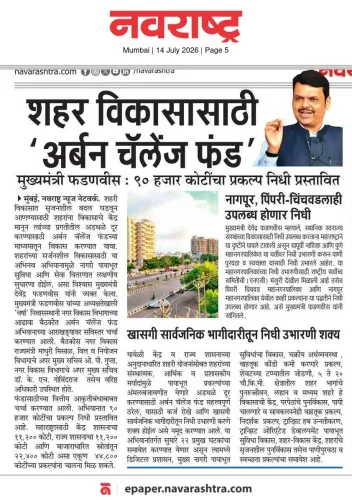
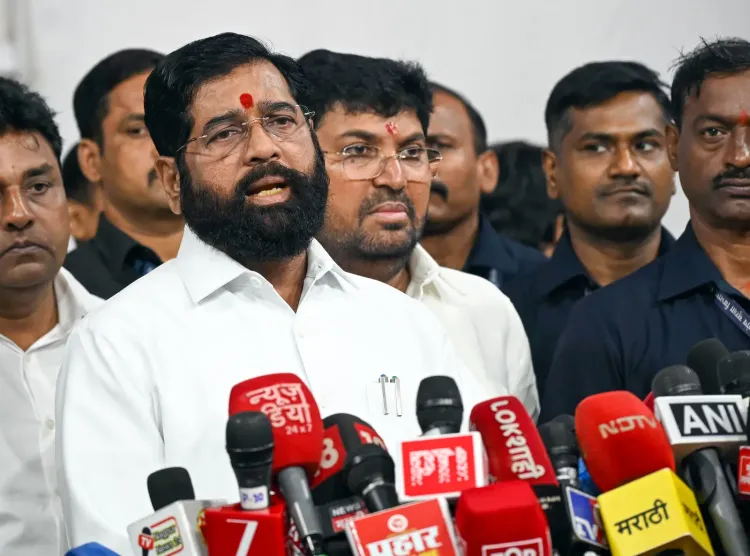
The Maharashtra Urban Development Department on Wednesday, 22 July issued a Government Resolution (GR) formally launching the Urban Challenge Fund across all 423 Urban Local Bodies (ULBs) in the state, unlocking development projects worth ₹44,800 crore. The announcement was made by Deputy Chief Minister and Urban Development Minister Eknath Shinde, who described the initiative as a transformative blueprint for Maharashtra's cities.
How the Fund Works
The scheme operates on a blended financing model spanning 2025–26 to 2030–31, with a provision to extend the duration by an additional three years if required. Under the funding structure, up to 25 per cent will come from the Central Government, a minimum of 50 per cent must be raised through municipal bonds, bank loans, or Public-Private Partnerships (PPP), and the remaining 25 per cent will be contributed by the State Government or the concerned Urban Local Body.
Notably, a loan repayment guarantee mechanism has been introduced specifically for cities with a population of less than 1,00,000, making it easier for smaller towns to access market funds and execute large-scale projects.
Key Focus Areas
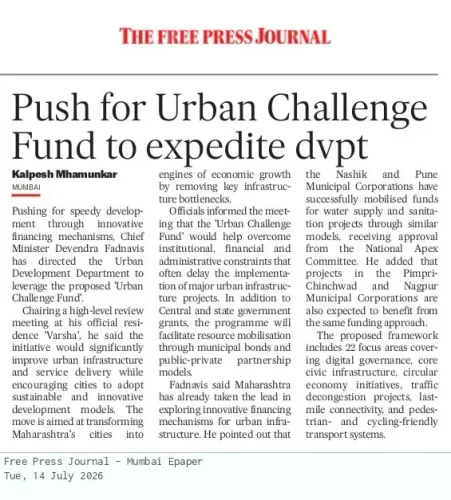
Deputy CM Shinde outlined three primary pillars: water and sanitation, creative urban redevelopment, and transforming cities into economic growth hubs. Funding will be channelled into digital governance and trunk infrastructure, traffic decongestion and last-mile connectivity, revitalisation of heritage markets and old city areas, non-motorised transport and Transit-Oriented Development (TOD), urban flood mitigation, integrated waste management, and riverfront development.
In cities with a population exceeding 20 lakh, priority will be given to convention centres, recreational hubs, state-of-the-art public libraries, sports facilities, water sports centres, meditation centres, and wellness parks.
Implementation Architecture
To ensure effective project execution, the state will establish Project Development and Management Consultants (PDMC), Project Management Units (PMU), District-Level Advisory and Monitoring Committees, and dedicated Campaign Management Units in each city. Special Purpose Vehicles (SPVs) may also be set up where necessary for specific projects.
What the Government Said
'The Urban Challenge Fund is not merely a financial scheme, but a transformative blueprint for developing Maharashtra's cities. This initiative will build modern infrastructure, strengthen civic services, boost investments, generate employment opportunities and enhance the quality of life for citizens,' said Deputy CM Shinde. He added that the state remains committed to making Maharashtra's cities 'more resilient, competitive, sustainable and economically self-reliant.'
This comes amid a broader national push to strengthen urban local body finances, as municipal corporations across India grapple with infrastructure backlogs and limited revenue generation capacity. The fund's emphasis on market-linked financing — with municipal bonds as a core instrument — signals a structural shift in how Maharashtra plans to fund city-level growth going forward.
Point of View
Which is the right structural nudge. But Maharashtra's smaller towns have historically struggled to issue municipal bonds, and a loan guarantee mechanism alone may not be sufficient to unlock capital markets for the weakest bodies. The scheme's success will hinge on whether the state's implementation architecture — PMUs, PDMCs, and SPVs — can build municipal credit capacity fast enough to match the fund's ambition. If execution lags, ₹44,800 crore risks becoming another headline number attached to a GR that outpaced ground reality.
NationPress
21 Oct 2026
Frequently Asked Questions
What is the Maharashtra Urban Challenge Fund?
The Maharashtra Urban Challenge Fund is a state government scheme that unlocks ₹44,800 crore in development projects across all 423 Urban Local Bodies in Maharashtra. It runs from 2025–26 to 2030–31 and uses a blended financing model combining Central funds, state contributions, and market-linked instruments such as municipal bonds and PPP.
How will the Urban Challenge Fund be financed?
Up to 25 per cent of project funding will come from the Central Government, a minimum of 50 per cent must be raised through municipal bonds, bank loans, or Public-Private Partnerships, and the remaining 25 per cent will be provided by the state government or the relevant Urban Local Body.
Which cities are eligible for the Urban Challenge Fund?
All 423 Urban Local Bodies in Maharashtra are eligible. Smaller cities with populations below 1,00,000 benefit from a loan repayment guarantee mechanism to help them access market funds, while cities with populations above 20 lakh get priority for premium civic infrastructure such as convention centres and sports facilities.
What types of projects will the fund cover?
The fund covers a wide range of urban infrastructure — from digital governance, traffic decongestion, and last-mile connectivity to heritage market revitalisation, urban flood mitigation, integrated waste management, Transit-Oriented Development, riverfront development, and land bank management.
Who announced the Urban Challenge Fund and when?
Deputy Chief Minister and Urban Development Minister Eknath Shinde announced the fund on 22 July, the same day the Maharashtra Urban Development Department issued the formal Government Resolution activating the scheme.