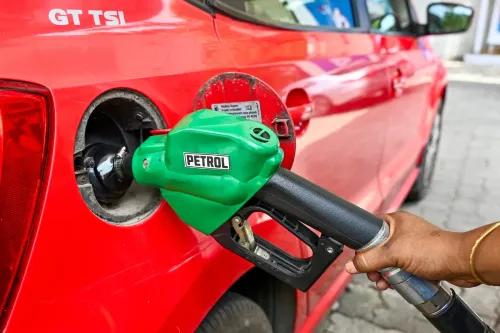
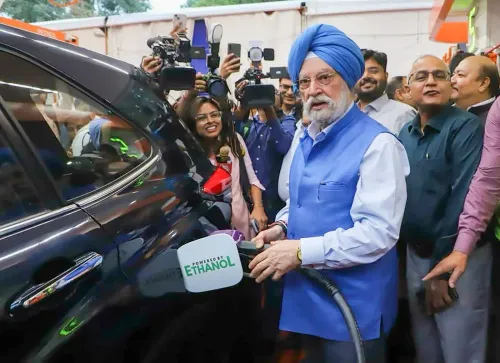
Ethanol blending beyond 20% in petrol: Govt rules out move without scientific review
Synopsis
India hit its 20% ethanol blending target five years early — but the government is pumping the brakes on going further. MoS Suresh Gopi told the Rajya Sabha that any push beyond E20 requires full scientific review, even as the programme has already saved ₹1.97 lakh crore in foreign exchange and cut 952 lakh tonnes of CO2 emissions.
Key Takeaways
MoS Suresh Gopi told the Rajya Sabha on 20 July that no decision has been taken to raise ethanol blending beyond 20 per cent (E20) .
Any future increase will require comprehensive scientific and technical studies and consultations with automobile manufacturers, oil companies, and research institutions.
India achieved its E20 target five years ahead of schedule , with blending rising from 1.53% in 2013-14 to 20% in the 2025-26 supply year .
The programme has saved more than ₹1.97 lakh crore in foreign exchange, cut 316 lakh tonnes of crude imports, and reduced 952 lakh tonnes of CO2 emissions since 2014-15 .
Analysis of 2.84 crore vehicle service records by a leading passenger vehicle manufacturer found no damage attributable to E20 fuel.
More than 20 crore two-wheelers and 3 crore petrol cars have used E15-plus and E19-E20 blends for up to three-and-a-half years without verified widespread engine failure.
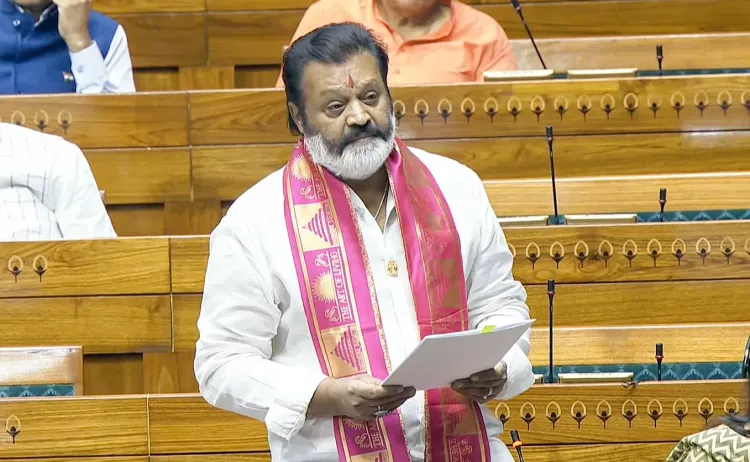
The Indian government has not taken any decision to raise ethanol blending in petrol beyond the current 20 per cent (E20) level, Minister of State for Petroleum and Natural Gas Suresh Gopi told the Rajya Sabha on Monday, 20 July. Any future increase, the minister stated in a written reply, would be considered only after comprehensive scientific and technical studies and consultations with all relevant stakeholders.
Government's Position on E20 and Beyond
'Any proposal to increase the blending level would be considered only after comprehensive scientific and technical studies and consultations with automobile manufacturers, oil marketing companies and research institutions,' Gopi said in his written reply to the upper house.
The minister's statement comes amid ongoing public debate and media reports questioning the safety of high-ethanol blends for older vehicles not certified for E20 use. The government's position signals that no push to E25 or higher is imminent, and that the current programme will be consolidated before any further escalation.
India's Ethanol Blending Journey: A Milestone Achieved Early
India achieved its 20 per cent ethanol blending target five years ahead of its original schedule — a significant policy win. The average blending level climbed from approximately 1.53 per cent in 2013-14 to 20 per cent during the 2025-26 ethanol supply year, the result of more than two decades of phased implementation across the country's fuel distribution network.
Notably, this progression represents one of the fastest ethanol blending scale-ups among major emerging economies, driven by a combination of government mandates, procurement guarantees for farmers, and infrastructure investment by oil marketing companies.
Economic and Environmental Gains Since 2014-15
According to Gopi, the ethanol blending programme has delivered measurable economic and environmental benefits since 2014-15. These include:
Foreign exchange savings of more than ₹1.97 lakh crore, a reduction in crude oil imports of nearly 316 lakh tonnes, a cut of approximately 952 lakh tonnes in carbon dioxide emissions, and additional income of over ₹1.66 lakh crore generated for farmers who supply sugarcane and other feedstocks to the ethanol value chain.
Vehicle Safety Concerns: What the Data Shows
Addressing widespread concerns — amplified through media reports and social media — about engine failures, fuel pump damage, corrosion, and water contamination linked to E20 fuel, the minister said these issues have been scientifically examined and found to lack verified evidence of widespread impact.
He cited data showing that more than 20 crore two-wheelers and over 3 crore petrol cars — including many manufactured before E20 certification standards were introduced — have been running on E15-plus and E19-E20 fuel for between two-and-a-half to three-and-a-half years without confirmed widespread engine failure or vehicle breakdown.
Industry data cited by the minister further reinforced this position. One leading passenger vehicle manufacturer analysed service records of 2.84 crore vehicles during 2025-26, including around 1.5 crore vehicles not certified for E20, and found no damage attributable to the fuel. A leading two-wheeler manufacturer reported similar findings, according to Gopi.
What Comes Next
With E20 now embedded in India's fuel supply, the policy focus is expected to shift toward ensuring consistent blending quality and expanding feedstock diversity — including rice, maize, and agricultural waste — beyond the traditional sugarcane base. Any decision on higher blending targets will hinge on the outcomes of scientific consultations that have not yet been formally commissioned, according to the government's current position.
Point of View
Arguably, overdue in its transparency. The real gap in the Rajya Sabha reply is the absence of a timeline or formal mandate for the scientific study that would determine whether E25 or E30 is viable. Without that, 'we will study it' risks becoming an indefinite deferral. Meanwhile, the vehicle compatibility data cited — covering 2.84 crore service records — is substantial, but it comes from industry sources with a stake in the outcome. An independent verification mechanism would strengthen public trust considerably. The programme's farmer-income and forex-savings numbers are significant; the next chapter needs equally rigorous accountability on fuel quality consistency across India's fragmented retail fuel network.
NationPress
21 Jul 2026
Frequently Asked Questions
Has the Indian government decided to increase ethanol blending beyond 20% in petrol?
No. The government has not taken any decision to raise ethanol blending beyond the current E20 (20 per cent) level, MoS Suresh Gopi stated in the Rajya Sabha on 20 July. Any future proposal will be considered only after comprehensive scientific, technical, and stakeholder consultations.
When did India achieve its 20% ethanol blending target?
India achieved the 20 per cent ethanol blending target during the 2025-26 ethanol supply year, five years ahead of its originally planned schedule. Blending levels rose from about 1.53 per cent in 2013-14 over more than two decades of phased implementation.
What are the benefits of India's ethanol blending programme?
Since 2014-15, the programme has saved more than ₹1.97 lakh crore in foreign exchange, reduced crude oil imports by nearly 316 lakh tonnes, cut around 952 lakh tonnes of CO2 emissions, and generated over ₹1.66 lakh crore in additional income for farmers.
Is E20 fuel safe for vehicles not certified for it?
According to government-cited industry data, more than 20 crore two-wheelers and 3 crore petrol cars — including many not certified for E20 — have used E15-plus and E19-E20 blends for two-and-a-half to three-and-a-half years without verified widespread engine failure. One leading manufacturer's analysis of 2.84 crore vehicle service records found no damage attributable to E20 fuel.
What would it take for India to move to ethanol blending above 20%?
The government has said any proposal to go beyond E20 would require comprehensive scientific and technical studies, plus consultations with automobile manufacturers, oil marketing companies, and research institutions. No formal study has been commissioned yet, according to the minister's Rajya Sabha reply.