Gujarat power demand hits record 29,822 MW, up 36.6%; state seeks 5,000 MW more from Centre
Synopsis
Gujarat's electricity demand has crossed 29,822 MW — a record — driven by weak monsoon, El Niño, farm irrigation loads, and pre-Diwali industrial activity. With a 36.6% year-on-year spike and evening solar gaps stressing the grid, the state is racing to secure coal, expand battery storage, and lock in enough central allocation to power its grid through 2032.
Key Takeaways
Gujarat recorded its highest-ever peak demand of 29,822 MW on 16 October 2025 , up 36.6% from 21,822 MW a year earlier.
Daily electricity consumption reached 574 million units on 16 October, a 27% rise year-on-year.
Agricultural load alone hit a daily peak of 12,000 MW ; pre-Diwali industrial activity added further pressure.
The Union Ministry of Coal has assured 10–11 railway rakes of coal daily until November, rising to 13–14 rakes from December.
Gujarat has 192 MW of operational BESS capacity, with contracts signed for 2,742 MW/5,517 MWh more; a 500 MW/1,000 MWh facility is due by March 2027 .
The state has requested more than 5,000 MW from central thermal stations to meet projected 2031-32 demand, and signed an MoU with NPCIL for a 4,200 MW nuclear project.
Gujarat recorded its highest-ever peak electricity demand of 29,822 MW on 16 October 2025, a 36.6% surge over the 21,822 MW logged in October the previous year, according to a presentation at a high-level state government review meeting. The state has since moved on multiple fronts — ramping up coal supplies, expanding battery storage, and formally requesting an additional 5,000 MW allocation from the Centre to manage a structural demand surge driven by weather, agriculture, and pre-Diwali industrial activity.
Scale of the Demand Surge
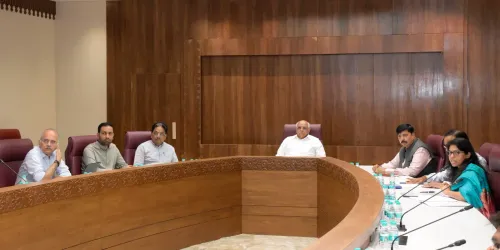
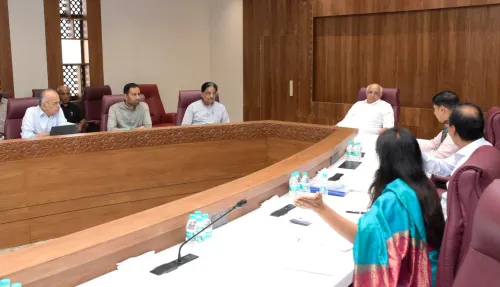
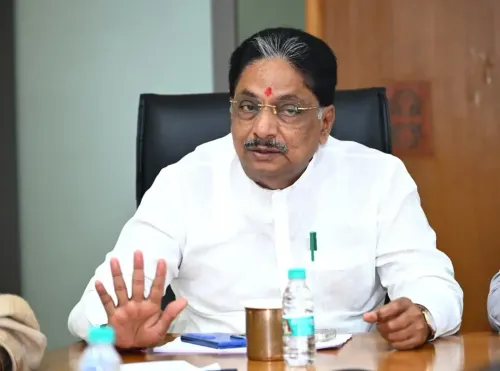
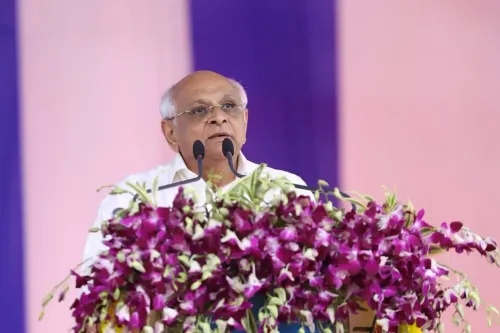
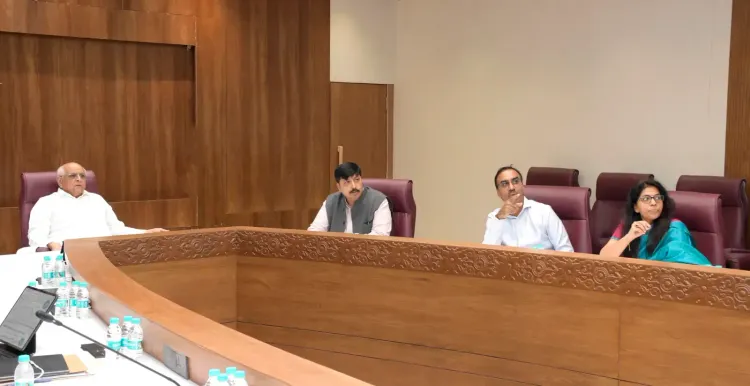
Gujarat's daily electricity consumption also climbed to 574 million units on 16 October, compared with 457 million units in October last year — a rise of approximately 27%. Demand during September and October alone has jumped by roughly 12%, or 4,000 MW, against comparable periods in previous years. The review meeting, chaired by Chief Minister Bhupendra Patel at his official residence on Tuesday, was attended by Energy Minister Rushikesh Patel, Minister of State for Energy Kaushik Vekariya, Chief Secretary Manoj Kumar Das, and senior officials from the energy sector.
Why Demand Has Spiked
The state government attributed the surge to persistently high temperatures following a weak monsoon, compounded by the effects of El Niño, which have significantly elevated cooling-related consumption. Agricultural demand has added further pressure, with the agricultural load alone reaching a daily peak of 12,000 MW as the government continues supplying electricity for irrigation of standing crops. Industrial activity ahead of Diwali has provided an additional jolt. Meanwhile, lower rainfall in Gujarat and neighbouring states has curtailed hydroelectric generation, while reduced wind speeds have dented wind power output. Solar generation drops to zero after sunset, creating acute pressure during evening peak hours between 5 pm and 11 pm, during which the state is relying heavily on coal- and gas-based plants.
Immediate Measures: Coal and Central Allocation
To shore up coal availability, the state government conducted high-level discussions in Delhi, resulting in an assurance from the Union Ministry of Coal of 10 to 11 railway rakes of coal daily until November, rising to 13 to 14 rakes a day from November onwards. Gujarat has separately secured 329 MW from NTPC's Farakka plant for November and 551 MW on a long-term basis from Assam's share of central power generation. The existing 716 MW power purchase arrangement with NTPC's Barauni-I and Dadri-I thermal stations has been extended by one year until March 2028. The state has also requested an additional 500 MW from the Centre's unallocated power pool. The State Load Dispatch Centre and electricity distribution companies are operating round the clock to maintain grid frequency and balance.
Battery Storage Expansion
Gujarat currently operates 192 MW of Battery Energy Storage System (BESS) capacity. Contracts for projects with a combined capacity of 2,742 MW and storage of 5,517 MWh have been completed. A 500 MW/1,000 MWh facility is expected to become operational by March 2027, while tendering for a further 1,000 MW/4,000 MWh of storage is under way. The state generates approximately 12,000 MW of solar power during the day and is working to maximise its use, including by shifting agricultural electricity consumption to daylight hours to reduce evening grid stress.
Long-Term Capacity Road Map
Over 1,300 MW from central thermal generating stations and more than 1,200 MW from central hydroelectric stations have been allocated to Gujarat, with supplies expected in phases from 2028-29. The state has requested a further allocation of more than 5,000 MW from central thermal stations to meet projected demand by 2031-32. Gujarat Urja Vikas Nigam Limited (GUVNL) is expected to issue a tender for 4,000 MW under the SHAKTI scheme, with supply anticipated from 2030-31. A memorandum of understanding has been signed with the Nuclear Power Corporation of India Limited (NPCIL) for a 4,200 MW nuclear power project, with the first unit targeted for 2032. An 800 MW thermal plant at Ukai is under construction and scheduled to begin generation in September 2029. Land acquisition and in-principle approvals for new thermal projects at Sinor, Wanakbori, and Gandhinagar are also in progress. Chief Minister Patel directed the Energy Department to expedite work across power supply, storage, and long-term capacity planning.
Point of View
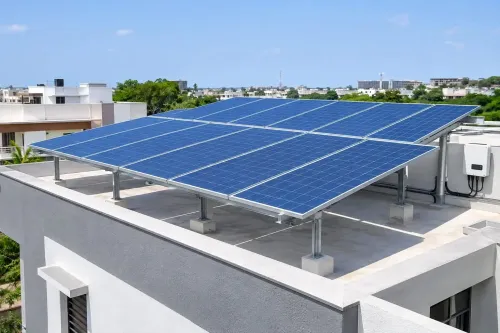
Expanding irrigation networks, and a rooftop-solar build-out that still leaves evenings grid-dependent are structural, not seasonal. The state's aggressive battery storage pipeline and nuclear MoU signal that Gujarat's planners understand the depth of the gap; the risk is the time lag — most of the new capacity arrives between 2027 and 2032, leaving a window of several years where coal rakes and central allocations remain the only real buffer. The Centre's ability to keep supplying those allocations as multiple states compete for the same constrained thermal pool is the question that Tuesday's meeting did not fully answer.
NationPress
20 Oct 2026
Frequently Asked Questions
What is Gujarat's highest-ever electricity demand and when was it recorded?
Gujarat recorded its highest-ever peak electricity demand of 29,822 MW on 16 October 2025, a 36.6% increase over the 21,822 MW logged in October the previous year. Daily consumption also hit 574 million units on the same date, up 27% year-on-year.
Why has electricity demand in Gujarat spiked so sharply?
The surge is driven by a combination of persistently high temperatures following a weak monsoon and El Niño effects, elevated agricultural irrigation loads peaking at 12,000 MW a day, and pre-Diwali industrial activity. Reduced hydroelectric output due to lower rainfall and weaker wind power generation have compounded the supply-side pressure.
How much additional power has Gujarat sought from the Centre?
Gujarat has formally requested more than 5,000 MW from central thermal stations to meet projected demand by 2031-32. In the near term, it has also sought 500 MW from the Centre's unallocated power pool and secured 329 MW from NTPC's Farakka plant for November.
What is Gujarat's battery energy storage capacity and expansion plan?
Gujarat currently has 192 MW of operational Battery Energy Storage System capacity. Contracts for an additional 2,742 MW with 5,517 MWh of storage have been finalised, and a 500 MW/1,000 MWh facility is expected to be operational by March 2027. Tendering for a further 1,000 MW/4,000 MWh of storage is under way.
What long-term power projects are planned for Gujarat?
Gujarat has signed an MoU with NPCIL for a 4,200 MW nuclear power project with the first unit expected in 2032, and an 800 MW thermal plant at Ukai is due in September 2029. GUVNL is set to tender 4,000 MW under the SHAKTI scheme for supply from 2030-31, while over 2,500 MW from central thermal and hydroelectric stations is allocated for delivery from 2028-29.