Himalayan marmot droppings reveal climate change clues in high-altitude ecosystems
Synopsis
Scientists have found that Himalayan marmot droppings — containing preserved pollen, fungal spores and elemental signatures — could serve as a powerful new proxy for tracking climate change and vegetation shifts in the high Himalayas. Published in PLOS ONE by BSIP researchers, the study also has direct implications for snow leopard conservation, since marmots are a key prey species.
Key Takeaways
Birbal Sahni Institute of Palaeosciences (BSIP) researchers published the study in PLOS ONE , announced on 19 November 2026 .
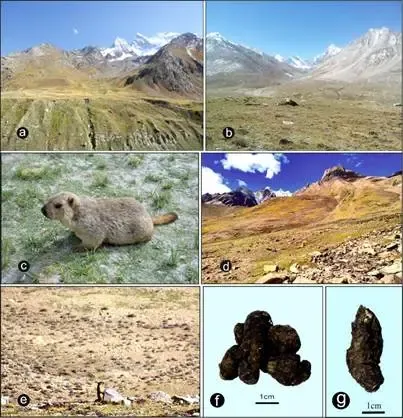
The team analysed pollen grains , fungal spores , and elemental signatures from Himalayan marmot ( Marmota himalayana ) droppings across two Himalayan regions .
The marmot is identified as a potential indicator species for vegetation and climate change in the higher Himalayas.
Findings establish a modern reference for palaeoecological and coprolite studies , aiding reconstruction of past ecological change.
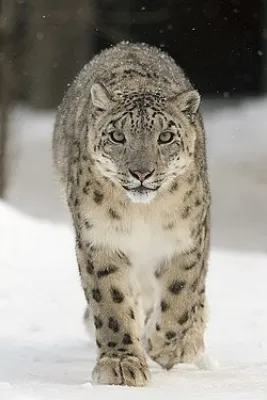
The research could also support snow leopard conservation , as marmots are a vital prey species for the endangered big cat.
Droppings of the Himalayan marmot (Marmota himalayana) could unlock critical insights into environmental conditions across the higher Himalayas, helping scientists gauge the impact of climate change on fragile alpine ecosystems, according to a study published in PLOS ONE by researchers from the Birbal Sahni Institute of Palaeosciences (BSIP), an autonomous institute under the Department of Science and Technology. The findings were announced on Thursday, 19 November 2026.
What Researchers Studied
The BSIP team analysed pollen grains, fungal spores, and elemental signatures preserved in the faeces — technically known as coprolites — of the Himalayan marmot, an herbivorous mammal that inhabits high-altitude, cold, and dry regions of the Himalayas. Samples were drawn from two distinct Himalayan regions and compared using statistical methods.
Researchers employed Field Emission Scanning Electron Microscopy coupled with Energy-Dispersive X-ray Spectroscopy (FESEM–EDS) to identify the elemental composition of the droppings, alongside palynological analysis to identify preserved pollen and fungal spores.
Key Findings
According to the official statement from the Ministry of Science and Technology, 'the Himalayan marmot could be a strong indicator species for understanding vegetation and climate changes in the higher Himalaya.' The study further confirmed that shifts in marmot habitat can signal changes in altitude linked to evolving environmental conditions.
This combination of pollen, fungal spore, and elemental analysis, researchers noted, establishes a valuable modern reference dataset for future palaeoecological and coprolite studies — essentially creating a biological archive that future scientists can use to reconstruct past ecological conditions.
Why It Matters for Climate and Conservation
The implications extend well beyond academic research. The study's findings could directly inform biodiversity conservation strategies, particularly because marmots are a critical prey species for the snow leopard — one of the Himalaya's most endangered apex predators. A better understanding of marmot habitat requirements could, in turn, support conservation planning for snow leopard populations.
Notably, the research also opens pathways for environmental monitoring, climate research, and the sustainable management of Himalayan ecosystems — regions that are disproportionately vulnerable to warming temperatures and shifting precipitation patterns.
Broader Significance for Palaeoecology
By establishing a modern reference framework, the BSIP study positions marmot droppings as a novel proxy for reconstructing historical ecological change in high-altitude environments. This comes amid growing scientific urgency to build robust baseline data for Himalayan ecosystems, which face accelerating pressure from both climate change and human activity.
The study underscores the value of unconventional biological indicators — in this case, animal faeces — as tools for understanding large-scale environmental shifts that conventional monitoring methods may miss at remote altitudes.
Point of View
But applying it systematically to the Himalayas — where instrument records are sparse and terrain makes conventional monitoring costly — is a meaningful methodological step. The real value of the BSIP study lies in building a modern reference baseline: without one, ancient coprolite data from ice cores or sediment layers cannot be reliably interpreted. What the study does not yet address is temporal resolution — how quickly marmot habitat shifts can be detected, and at what lag relative to actual climate variables. That gap will determine whether this tool is useful for real-time monitoring or only for retrospective analysis.
NationPress
19 Nov 2026
Frequently Asked Questions
What did researchers discover about Himalayan marmot droppings?
Researchers from the Birbal Sahni Institute of Palaeosciences found that Himalayan marmot droppings preserve pollen grains, fungal spores, and elemental signatures that reflect local vegetation and environmental conditions. This makes the marmot a potential indicator species for tracking climate and vegetation changes in high-altitude Himalayan ecosystems.
Where was the Himalayan marmot study published?
The study was published in the peer-reviewed journal PLOS ONE. It was conducted by scientists at the Birbal Sahni Institute of Palaeosciences (BSIP), an autonomous institute under India's Department of Science and Technology.
How does marmot faeces help track climate change?
Marmot droppings preserve biological and chemical markers — including pollen, fungal spores, and elemental data — that reflect the surrounding vegetation and habitat conditions at the time of deposition. By analysing these markers, scientists can infer past and present shifts in altitude and vegetation driven by changing climate, creating a biological archive of environmental change.
What conservation implications does the study have?
The study has direct implications for snow leopard conservation, as Himalayan marmots are a key prey species for the endangered big cat. Better understanding of marmot habitat requirements and shifts could inform conservation strategies for both marmots and the predators that depend on them.
What analytical methods were used in the study?
Researchers used palynological analysis to identify preserved pollen and fungal spores, statistical methods to compare samples from two Himalayan regions, and Field Emission Scanning Electron Microscopy coupled with Energy-Dispersive X-ray Spectroscopy (FESEM-EDS) to determine the elemental composition of the droppings.