Jal Shakti Minister Paatil inaugurates NWA underpass in Pune
Synopsis
Jal Shakti Minister C. R. Paatil visited Pune's National Water Academy on 19 November 2026, inaugurating a new underpass linking its two Sinhagad Road campuses and interacting with faculty and trainees, linking the event to India's Viksit Bharat 2047 water security goals.
Key Takeaways
Union Jal Shakti Minister C.
Paatil visited the National Water Academy (NWA) in Pune on 19 November 2026 .
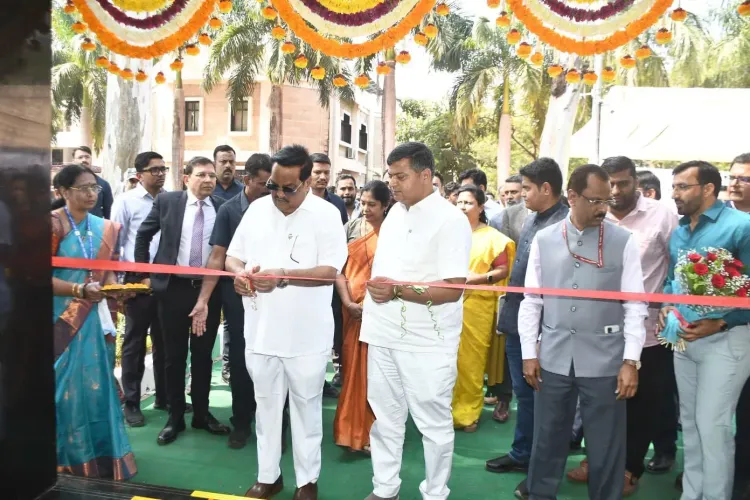
He inaugurated a newly built underpass on Sinhagad Road connecting the academy's two campus blocks.
Paatil interacted with faculty members and trainee officers and participated in a tree-plantation programme .
The NWA trains officers from the Central Water Commission and other institutions in modern water resource management techniques.
The visit was framed within the government's Viksit Bharat 2047 vision and PM Modi's push for a water-secure India through technology and skilled human resources.
The Ministry of Jal Shakti was created in May 2019 by merging two water-related ministries to unify national water governance.
A new underpass quietly stitches together two halves of a campus — and in doing so, signals a sharper government push to build the human infrastructure behind India's water security. Union Jal Shakti Minister C. R. Paatil visited the National Water Academy (NWA) in Pune on Thursday, 19 November 2026, inaugurating a newly constructed underpass that connects the academy's two campuses on either side of Sinhagad Road, and later joined a tree-plantation drive on the premises.
What the underpass actually solves at Sinhagad Road
The NWA's two teaching and residential blocks have long sat on opposite sides of a busy arterial road — a daily inconvenience for faculty, trainees, and staff alike. The new underpass removes that friction entirely, creating a seamless, safer passage between the two zones. Paatil also interacted with faculty members and officers currently undergoing training at the academy, underscoring that the visit was as much about people as it was about bricks.
NWA's role in training India's water managers
The National Water Academy functions as the premier training arm under the Central Water Commission (CWC) — itself the apex technical body of the Ministry of Jal Shakti. It trains officers from central and state government institutions in modern water resource management techniques, from dam safety and hydrology to irrigation planning and flood forecasting. In his post, Paatil described the academy as playing a 'crucial role in strengthening the nation's water security by imparting training in modern technologies and systems of water resource management.'
The Ministry of Jal Shakti was created in May 2019 by merging the Ministry of Water Resources with the Ministry of Drinking Water and Sanitation — a consolidation designed to unify India's fragmented water governance under one roof. The Jal Shakti Abhiyan, launched the same year, embedded water conservation as a national time-bound campaign, and institutional capacity building at bodies like the NWA has been a consistent thread running through that effort.
Viksit Bharat 2047 and the bet on trained officers
Paatil tied the visit explicitly to Prime Minister Narendra Modi's long-range national vision. 'Under the visionary leadership of respected Prime Minister Shri Narendra Modi ji, work is continuously being done to make India a water-secure nation through water conservation, modern technology and skilled human resources,' he said. He expressed confidence that NWA-trained officers would contribute to both better water resource management and the realisation of the Viksit Bharat @2047 goal — the government's blueprint for a fully developed India by the centenary of Independence.
The framing is deliberate. Viksit Bharat 2047 increasingly serves as the connective tissue across government departments, linking sectoral milestones — a training campus upgrade here, a new underpass there — to a single national arc. For the Jal Shakti ministry, the argument is straightforward: you cannot build water infrastructure at scale without a steady pipeline of technically skilled officials who know how to manage it.
The officers being trained inside that Pune campus today are, in the government's telling, the engineers of India's water-secure future. Whether the pipeline produces enough of them — and fast enough — is the question worth watching.
Point of View
Meaningful in daily utility — doubles as a signal that the government is investing in the ecosystem around water management, not just flagship dam or river-linking projects. Tying the event explicitly to Viksit Bharat 2047 is also textbook ministry communications: it locates a routine campus visit within the largest possible national arc, amplifying political salience without announcing new policy. The harder question the ministry has not yet answered publicly is whether the volume and quality of NWA-trained officers is actually keeping pace with the rapid expansion of Jal Jeevan Mission infrastructure on the ground.
NationPress
19 Nov 2026
Frequently Asked Questions
What is the National Water Academy in Pune?
The National Water Academy (NWA) in Pune is a premier training institute under the Central Water Commission, Ministry of Jal Shakti. It trains central and state government officers in modern water resource management, hydrology, irrigation planning, and dam safety techniques.
What did C. R. Paatil inaugurate at the National Water Academy?
On 19 November 2026, Union Jal Shakti Minister C. R. Paatil inaugurated a newly constructed underpass on Sinhagad Road, Pune, that connects the two campus blocks of the National Water Academy. He also participated in a tree-plantation programme and interacted with faculty and trainee officers.
What is Viksit Bharat 2047 and how does it relate to water security?
Viksit Bharat 2047 is the Indian government's national vision to make India a fully developed nation by 2047, the centenary of Independence. The Jal Shakti ministry links it to water security by emphasising that trained water resource officers and modern technology are essential to achieving the goal.
When was the Ministry of Jal Shakti created?
The Ministry of Jal Shakti was created in May 2019 by merging the Ministry of Water Resources, River Development and Ganga Rejuvenation with the Ministry of Drinking Water and Sanitation, to unify water governance under a single ministry.
What is the Central Water Commission?
The Central Water Commission (CWC) is the apex technical organisation under the Ministry of Jal Shakti, responsible for water resources planning, development, and management in India. It also oversees training programmes for water resource professionals through bodies like the National Water Academy.