Will Hyundai Motor Reveal Its AI Strategy and Humanoid Robot at CES 2026?
Synopsis
Hyundai Motor Group is set to unveil its AI robotics strategy and the next-generation humanoid robot, Atlas, at CES 2026. This innovative presentation promises to showcase cutting-edge technologies and highlight Hyundai's commitment to advancing AI in robotics while enhancing its electric vehicle capabilities through a new battery R&D center in South Korea.
Key Takeaways
Hyundai Motor Group will reveal its AI strategy and humanoid robot at CES 2026.
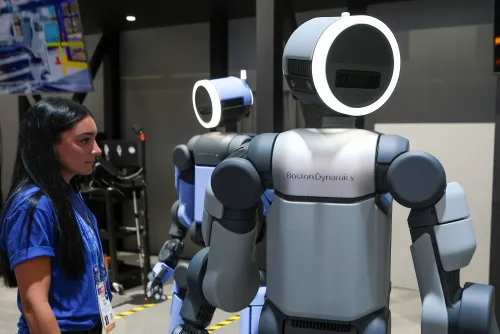
The humanoid robot, Atlas , is developed by Boston Dynamics .
The event highlights the theme of human-robot collaboration .
Hyundai is establishing a comprehensive AI-based production ecosystem.
A new battery R&D center will enhance EV competitiveness.
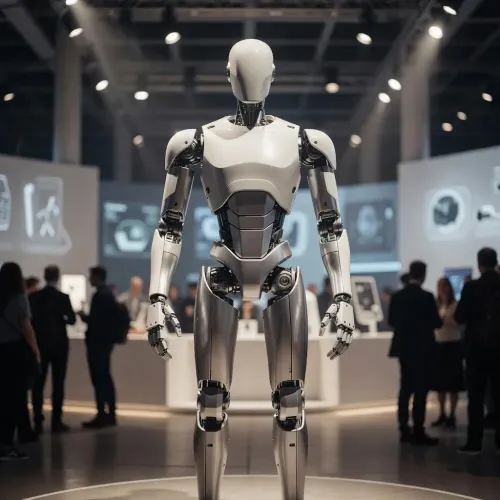
Seoul, Dec 22 (NationPress) - On Monday, Hyundai Motor Group announced its plans to showcase its artificial intelligence (AI) robotics strategy at the Consumer Electronics Show (CES) 2026. The event will also mark the debut of its next-generation humanoid robot, Atlas, created by its US subsidiary, Boston Dynamics.
The group is set to deliver a keynote presentation on Jan. 5 (local time) at the Mandalay Bay Convention Center in Las Vegas, under the theme "Partnering Human Progress: AI Robotics, from the Lab to Life," as reported by Yonhap news agency.
This session will include live demonstrations of advanced AI robotics technologies, strategies for human-robot collaboration, and an outline of plans to build a comprehensive AI robotics ecosystem.
A significant highlight of the event will be the on-stage reveal of Atlas, which is expected to serve as a prime illustration of how Hyundai's AI robotics technologies can be effectively utilized in real-world settings.
Furthermore, Hyundai Motor will present its vision for integrating robotics technologies within its software-defined factory concept. The group's goal is to merge robotics with software in manufacturing, positioning itself as a leader in comprehensive AI-based production solutions.
In addition, Hyundai Motor Group is establishing a large-scale battery research and development (R&D) center in South Korea to enhance its electric vehicle (EV) competitiveness.
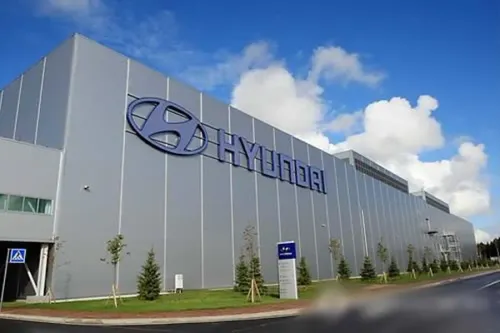
The company recently celebrated the topping-out of the Future Mobility Battery Campus in Anseong, located about 70 kilometers south of Seoul, marking steady progress since construction began in January 2025.
Hyundai has invested 1.2 trillion won (approximately $818.3 million) in this facility, which covers 111,000 square meters, symbolizing the group's vision to lead the future of mobility through next-generation battery R&D infrastructure. The campus is expected to be completed by the end of 2026, as reported by Yonhap news agency.
This new battery campus will act as the group's first all-encompassing battery R&D hub, allowing the company to develop core battery capabilities and integrate various battery technology research functions.
Point of View
It's crucial to highlight the transformative potential of Hyundai's upcoming announcements at CES 2026. Their focus on AI robotics and battery technology not only showcases their innovative prowess but also signifies a shift towards a more integrated and advanced automotive industry, which could have far-reaching impacts on how we perceive mobility and technology in daily life.
NationPress
24 Sept 2026
Frequently Asked Questions
What is Hyundai Motor Group unveiling at CES 2026?
Hyundai Motor Group will unveil its AI robotics strategy and debut its next-generation humanoid robot, Atlas.
Where will the CES 2026 event take place?
The event will be held at the Mandalay Bay Convention Center in Las Vegas.
What are the goals of Hyundai's new battery R&D center?
The new battery R&D center aims to strengthen Hyundai's electric vehicle competitiveness and develop core battery capabilities.
What is the significance of the Atlas robot?
Atlas serves as a key example of how Hyundai's AI robotics technologies can be applied in real-world environments.
When is the expected completion date for the new battery campus?
The battery campus is scheduled for completion by the end of 2026.