Nvidia, Unitree and Sharpa unveil H2+ humanoid robot reference design
Synopsis
Nvidia CEO Jensen Huang unveiled the H2+ humanoid robot reference design at Computex 2026, combining Unitree Robotics' H2 body, Sharpa's Wave five-fingered hands, and Nvidia's Isaac GR00T AI brain — a cross-border blueprint that could set the standard architecture for the next wave of commercial humanoid robots.
Key Takeaways
Nvidia , Unitree Robotics , and Sharpa jointly unveiled the H2+ humanoid robot reference design on 1 June 2026 .
The announcement was made by Nvidia CEO Jensen Huang during a keynote at Computex in Taipei .
The H2+ integrates Unitree 's H2 robot body, Sharpa 's Wave five-fingered hands, and Nvidia 's Isaac GR00T foundational AI models.
The reference design covers the full development pipeline: data collection, policy training, and real-world deployment.
Huang identified data as 'the hardest problem' for agentic, robotic, and physical AI systems.
Competitors in the humanoid space include UBTech Robotics , Galbot , and AgiBot .
Nvidia has joined forces with Chinese robotics firm Unitree Robotics and Singapore-based robotic hand maker Sharpa to launch the H2+, a new humanoid robot reference design aimed at accelerating development across the global robotics industry. Nvidia CEO Jensen Huang unveiled the collaboration on Monday, 1 June 2026, during a keynote address at Computex in Taipei, Asia's largest technology expo.
What is the H2+ reference design?
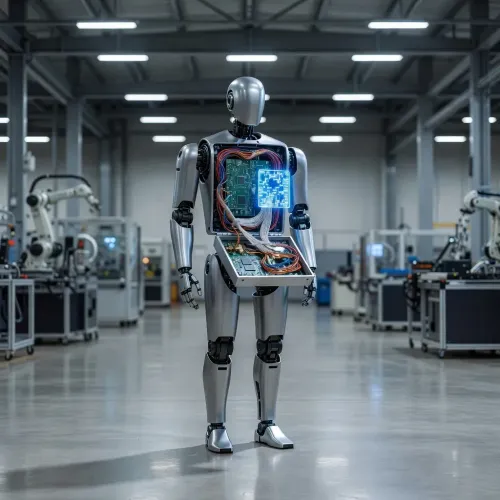
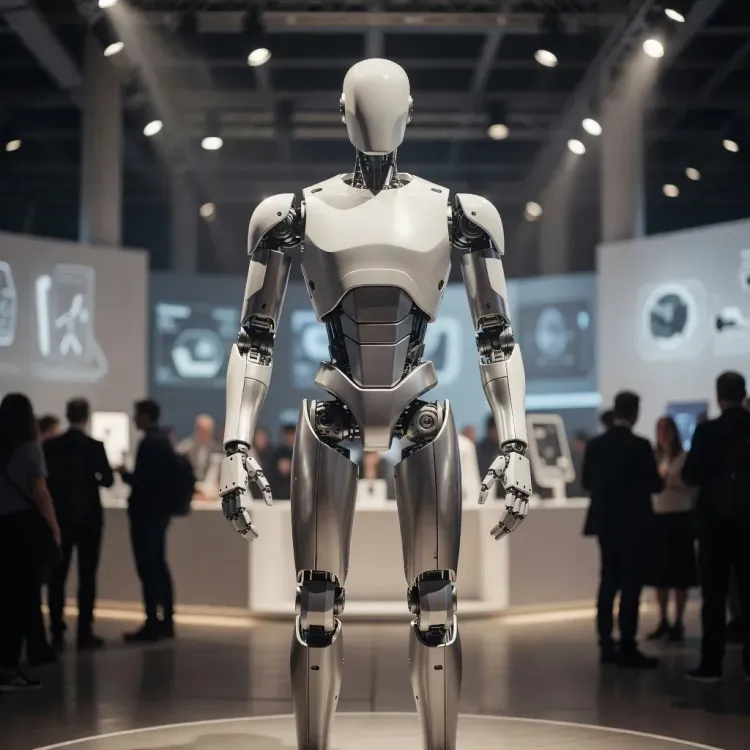
The H2+ combines Unitree Robotics' human-sized H2 humanoid robot body with Sharpa's flagship Wave five-fingered robotic hands. The system's reasoning capabilities — effectively the robot's 'brain' — are powered by Nvidia's Isaac GR00T foundational AI models. In the robotics industry, reference designs serve as open blueprints that developers can adopt and customise for their own applications.
The design is intended to streamline the full development workflow for engineers, covering data collection, policy training, and real-world deployment. According to the company, the goal is to support industry-wide humanoid robotics research by removing friction at each stage of the pipeline.
Why it matters
'For agentic systems, robotic systems and physical AI, data is the hardest problem,' Huang said in his keynote. 'You've seen us moving up this ladder,' he added, signalling Nvidia's intent to become an indispensable supplier of both software and hardware to the humanoid robotics sector.
The H2+ announcement positions Nvidia as a platform-layer player in physical AI — the same strategic role it has carved out in data-centre computing. By contributing reference designs, the company embeds its silicon and software deep into third-party development cycles before products ever reach the market.
The competitive backdrop
The humanoid robotics space has attracted intense competition, with firms including UBTech Robotics, Galbot, and AgiBot all racing to deliver commercially viable bipedal machines capable of performing real-world tasks. Nvidia's decision to partner with a Chinese hardware champion in Unitree Robotics and a Singapore-based dexterity specialist in Sharpa reflects the cross-border supply chains that define the sector.
The collaboration also underscores the growing importance of dexterous manipulation — the ability to handle objects with human-like precision — as a key differentiator for humanoid platforms targeting industrial and logistics deployments.
What's next
The H2+ reference design is expected to lower the barrier to entry for robotics developers globally, with Nvidia's Isaac GR00T models providing a common AI foundation that teams can build upon rather than develop from scratch. As the humanoid industry moves from prototype showcases toward commercial-scale deployment, how quickly developers adopt and iterate on the H2+ blueprint will be a key indicator of Nvidia's traction in physical AI — and of whether open reference architectures can meaningfully accelerate the sector's timeline.
Point of View
Nvidia is replicating the platform playbook that made CUDA synonymous with AI compute. What mainstream coverage underplays is the geopolitical dimension — pairing a US chip giant with a Chinese hardware maker and a Singapore dexterity specialist signals that humanoid supply chains remain stubbornly cross-border, even as chip-war restrictions tighten elsewhere. The real test is whether Isaac GR00T becomes the default AI layer for humanoid development the way CUDA became default for neural-network training. If it does, Nvidia wins the physical AI era before most rivals have shipped a commercial unit.
NationPress
18 Oct 2026
Frequently Asked Questions
What is the Nvidia H2+ humanoid robot?
The H2+ is a humanoid robot reference design created by Nvidia, Unitree Robotics, and Sharpa, unveiled at Computex 2026 in Taipei. It combines Unitree's H2 robot body, Sharpa's Wave five-fingered hands, and Nvidia's Isaac GR00T AI models to give developers a ready-made blueprint for building and deploying humanoid robots.
Who announced the H2+ and when?
Nvidia CEO Jensen Huang announced the H2+ on Monday, 1 June 2026, during his keynote address at Computex in Taipei, Asia's largest technology expo.
What is Nvidia Isaac GR00T?
Isaac GR00T is Nvidia's suite of foundational AI models designed to act as the 'brain' for humanoid robots. It provides advanced reasoning capabilities and is intended to be a common AI foundation that robotics developers can build upon for real-world deployment.
Why is Nvidia partnering with Unitree Robotics and Sharpa?
Nvidia is partnering with Unitree Robotics for its proven human-sized H2 robot body and with Sharpa for its dexterous Wave five-fingered hands, combining hardware expertise from both firms with Nvidia's AI software. The collaboration allows Nvidia to embed its platform into third-party development cycles and position itself as an indispensable supplier in the humanoid robotics industry.
Who are Nvidia's main competitors in humanoid robotics?
The humanoid robotics sector includes active competitors such as UBTech Robotics, Galbot, and AgiBot, all of which are developing bipedal machines aimed at commercial and industrial applications. Nvidia's H2+ reference design is a direct effort to establish its Isaac GR00T platform as the industry standard before rivals consolidate their own AI stacks.