Can India and Ireland Collaborate Effectively in AI and Rural Broadband?

Synopsis
India and Ireland are poised for a transformative partnership in AI, quantum communications, and rural broadband. Communications Minister Jyotiraditya Scindia highlights the need for collaboration to enhance digital infrastructure and connectivity, paving the way for future-ready solutions. The meeting with Irish Minister Jack Chambers showcases the potential for shared innovation and economic growth.
Key Takeaways
Strong potential for collaboration in AI and broadband.
India's ICT transformation since 2014 highlights its digital prowess.
5G coverage and low data tariffs enhance connectivity.
Ireland's National Broadband Plan offers insights into universal connectivity.
The partnership could foster innovation and economic growth.
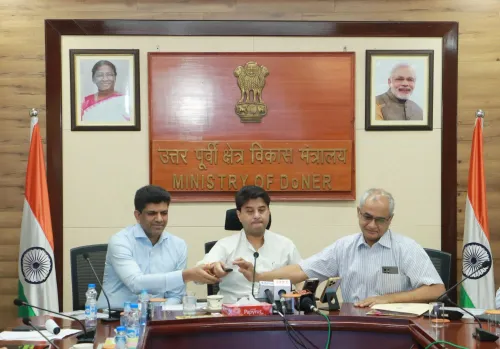
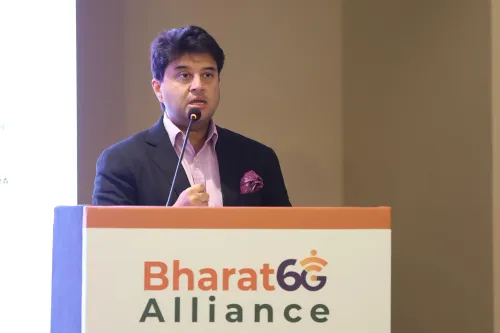
New Delhi, Feb 17 (NationPress) As vibrant and innovation-focused democracies, India and Ireland possess significant opportunities to work together in the realms of quantum communications, artificial intelligence, regulatory innovation, and rural broadband services, stated Communications Minister Jyotiraditya Scindia on Tuesday.
During a bilateral discussion with Irish Minister Jack Chambers in New Delhi, Scindia expressed eagerness for Ireland’s backing of India’s bid at the International Telecommunication Union (ITU).
“We can build a resilient and future-ready digital alliance together,” the minister remarked.
This meeting aimed at enhancing collaboration in telecommunications, digital infrastructure, emerging technologies, and regulatory frameworks, reaffirming the robust and friendly relationship shared by both nations.
An official statement revealed that both parties recognized the strong synergies between India’s extensive capabilities and rapid deployment abilities, and Ireland’s research-oriented innovation ecosystem and EU-compliant regulatory framework.
The discussion highlighted the potential for structured cooperation between the Department of Telecommunications (DoT) and Ireland’s Commission for Communications Regulation (ComReg), bolstered by contributions from academia, startups, and industry players.
Scindia informed the Irish representatives about India’s ICT transformation journey since 2014.
He pointed out that India represents one of the largest digital ecosystems globally, boasting more than 1.23 billion telecom subscribers and nearly a billion internet users. The coverage of 5G extends to around 99.9% of districts, with data tariffs averaging approximately USD 0.10 per GB, ensuring accessibility and affordability of connectivity.
The minister underscored the availability of low-cost voice and data tariffs, which rank among the most affordable worldwide, and highlighted India’s achievements in establishing Digital Public Infrastructure (DPI).
He specifically mentioned the transformative effects of the Unified Payments Interface (UPI), which has emerged as a global model for interoperable digital payments, along with the Direct Benefit Transfer (DBT) system, which facilitates direct government fund transfers into beneficiaries’ bank accounts, enhancing both transparency and efficiency.
Minister Chambers shared insights regarding Ireland’s National Broadband Plan, indicating that it provides valuable lessons for achieving universal, meaningful, and affordable connectivity, especially in rural and remote regions.
He also recognized the significant role of the Indian community in driving the Irish economy, fostering innovation, and job creation. The Irish minister mentioned Ireland’s multi-billion-euro fibre rollout initiative nationwide and noted the robust and expanding trade relations between India and Ireland, which constitute a significant portion of India’s trade with the European Union.
Both parties emphasized the necessity of close collaboration within the ITU framework and the exchange of best practices across regulatory and technological domains.
Point of View
The collaboration between India and Ireland in technology and telecommunications presents a unique opportunity to enhance digital infrastructure and connectivity. This partnership not only strengthens bilateral ties but also contributes significantly to the global technological landscape, underscoring the importance of shared innovation and progress.
NationPress
26 Sept 2026
Frequently Asked Questions
What areas of collaboration are India and Ireland focusing on?
India and Ireland are looking to collaborate in quantum communications, artificial intelligence, regulatory innovation, and rural broadband services.
What is the significance of the International Telecommunication Union (ITU) in this context?
The ITU plays a crucial role in global telecommunications governance, and India's candidature for a position within the organization is supported by Ireland, reflecting both countries' commitment to international cooperation.
How does India rank globally in terms of digital connectivity?
India is one of the world's largest digital ecosystems, with over 1.23 billion telecom subscribers and nearly a billion internet users, offering some of the lowest data tariffs globally.
What is the Unified Payments Interface (UPI)?
The UPI is a transformative digital payment system in India that enables seamless and interoperable financial transactions, making it a global model for digital payments.
How can the collaboration benefit rural areas?
The collaboration aims to enhance connectivity in rural and remote areas, ensuring that all communities have access to meaningful and affordable broadband services.