India Aims for Global Leadership in 6G Technology Standards: Scindia

Synopsis
Union Telecom Minister Jyotiraditya Scindia highlights that 6G technology will revolutionize internet access, providing equal opportunities globally, with India at the forefront of this transformative journey.
Key Takeaways
6G technology aims to provide equal access to opportunities globally.
India is preparing to be a key player in 6G development .
It has the potential to bridge the digital divide in rural areas.
India processes nearly 20 billion UPI transactions monthly.
6G could enable advanced applications like remote surgeries and holographic learning .
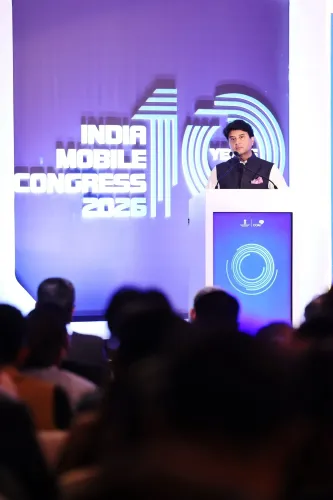
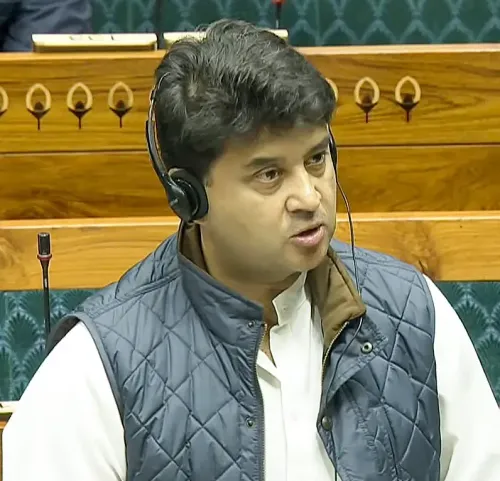
New Delhi, March 18 (NationPress) Union Telecom Minister Jyotiraditya Scindia stated on Wednesday that the future of 6G technology will encompass more than just enhanced internet speeds; it aims to foster equal access to opportunities globally, with India poised to play a pivotal role in this evolution.
During an international workshop focused on telecom standardization, the minister described 6G as a monumental leap forward in human advancement.
He emphasized that this technology will extend beyond mere speed and latency, leading to the development of an “intelligent internet of everything,” driven by artificial intelligence, immersive technologies, and real-time connectivity.
“6G holds the promise of closing the digital divide by ensuring that cutting-edge technology is available to all,” explained Scindia.
“It can create new prospects in sectors like healthcare, education, and agriculture, particularly in remote and rural areas,” he elaborated.
Scindia highlighted that India is actively preparing to be a significant contributor to 6G development, especially in areas like intellectual property rights and global standardization.
“Numerous specialized working groups are already in action to fortify India’s influence in defining global 6G standards,” he pointed out.
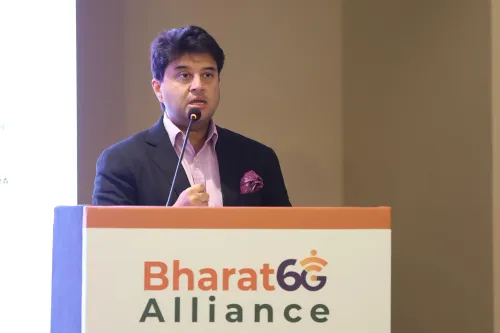
The minister acknowledged the efforts of the Bharat 6G Alliance, which is positioning India to participate in international conversations as global standards progress.
However, he clarified that decisions regarding spectrum allocation for 6G will be made subsequently by international organizations such as the International Telecommunication Union and the 3rd Generation Partnership Project once standardization is finalized.
Scindia also underscored India’s robust digital framework, mentioning that platforms like the Unified Payments Interface and Aadhaar have demonstrated how technology can be scaled effectively to cater to a vast population.
“India processes nearly 20 billion UPI transactions monthly, accounting for over half of the world’s digital transactions,” he remarked.
With affordable data and expanding broadband penetration, he noted that India has laid a strong foundation for the forthcoming phase of digital expansion.
“In this framework, 6G could facilitate advanced applications such as remote robotic surgeries, AI-enhanced farming, and holographic education, thereby narrowing access gaps across various sectors,” Scindia concluded.
Point of View
India's proactive approach towards the development of 6G technology showcases its commitment to becoming a global leader in telecommunications. By addressing the digital divide and focusing on accessibility, India is not only positioning itself strategically but also enhancing its role in global technology discussions.
NationPress
17 Sept 2026
Frequently Asked Questions
What is 6G technology?
6G technology is the next generation of telecommunications that aims to provide faster internet speeds, lower latency, and a more intelligent internet of everything, integrating AI and immersive technologies.
How will 6G impact remote areas?
6G is expected to bridge the digital divide by making advanced technologies accessible in healthcare, education, and agriculture, particularly in remote and rural regions.
What role is India playing in 6G development?
India is actively preparing to be a key player in the development of 6G technology, focusing on intellectual property rights and global standard-setting through dedicated working groups.
When will spectrum allocation decisions for 6G be made?
Decisions regarding spectrum allocation for 6G will be made later by global bodies, including the International Telecommunication Union and the 3rd Generation Partnership Project, after the standardization process is completed.
What is the Bharat 6G Alliance?
The Bharat 6G Alliance is an initiative aimed at positioning India as a significant participant in international discussions surrounding the evolution of global 6G standards.