India exports first ODOP honey consignment from Assam's Baksa to US
Synopsis
India's first ODOP honey export — 20 metric tonnes from Assam's tribal-belt Baksa district — has reached the US market, with local beekeepers earning 43% more than farm gate prices. It's a rare instance of a government scheme delivering a direct, measurable income gain for indigenous farming communities in an Aspirational District.
Key Takeaways
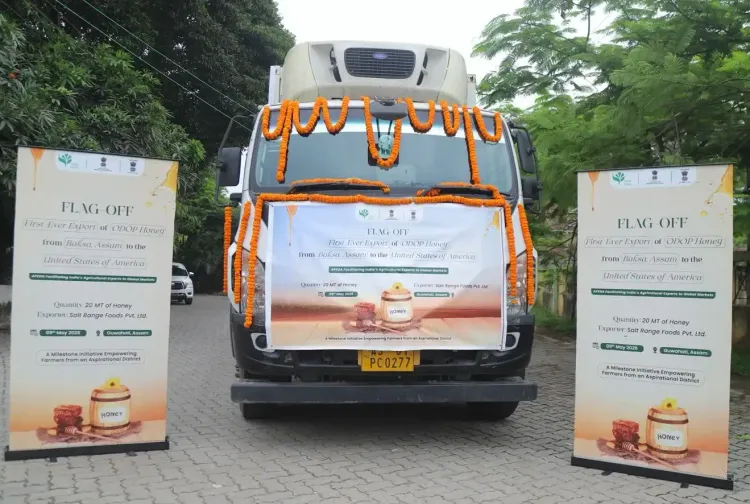
India exported its first ODOP -tagged honey consignment of 20 metric tonnes from Baksa district, Assam to the United States on 9 May 2025 .
The shipment was handled by Salt Range Foods Pvt.
Ltd. , an APEDA-registered Assam-based exporter.
Local producers are receiving nearly 43 per cent higher price realisation compared to prevailing farm gate prices.
Assam produced approximately 1,650 metric tonnes of honey in FY2023-24 , according to National Horticulture Board data.
The initiative aims to integrate farmers from Aspirational Districts into global value chains and boost India's value-added agricultural exports.
India has exported its first-ever consignment of honey under the One District One Product (ODOP) initiative, with 20 metric tonnes of honey shipped from Assam's Baksa district to the United States, the Ministry of Commerce and Industry announced on Saturday, 9 May. The milestone shipment was facilitated by the Agricultural and Processed Food Products Export Development Authority (APEDA) and marks a significant step in integrating India's Aspirational Districts into global agricultural value chains.
The Historic Shipment
The consignment was exported by Assam-based, APEDA-registered firm Salt Range Foods Pvt. Ltd., making it the first ODOP-tagged honey export under the initiative. The flagging-off was supported by APEDA, which facilitated compliance with international food safety and quality standards by strengthening infrastructure and providing testing and laboratory equipment at the processing facility.
Why Baksa and Assam Stand Out
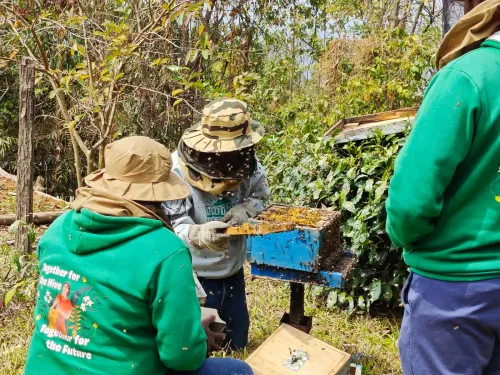
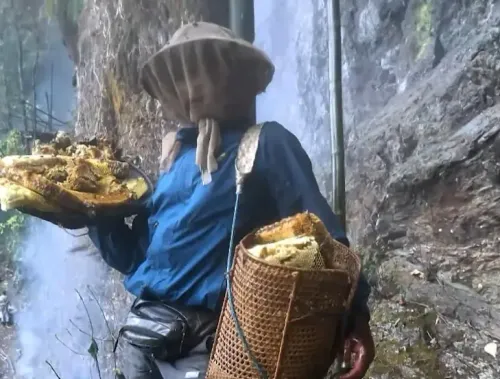
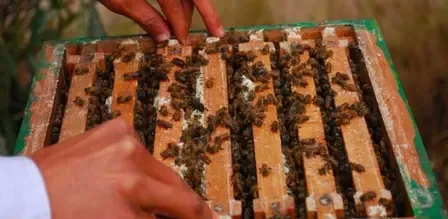
Officials noted that Assam holds strong potential for honey production owing to its rich biodiversity, abundant forest resources, and traditional beekeeping practices followed by indigenous communities including the Karbi, Mishing, and Bodo tribes. According to National Horticulture Board data, Assam produced approximately 1,650 metric tonnes of honey during FY2023-24. Major honey-producing regions in the state include Baksa, Kokrajhar, Chirang, Udalguri, and Tamulpur — all located within the Bodoland Territorial Region (BTR). Baksa's honey has been specifically identified under the ODOP initiative for its natural purity, rich floral diversity, and near-organic characteristics.
Impact on Local Farmers and Beekeepers
The government stated that producers are receiving nearly 43 per cent higher price realisation compared to prevailing local farm gate prices — a tangible income boost for beekeepers and farmers in the region. The initiative is designed to integrate farmers from Aspirational Districts into global value chains while promoting sustainable rural livelihoods. This comes amid broader efforts to expand India's value-added agricultural exports and reduce dependence on raw commodity trade.
The ODOP Programme and Its Broader Goals
The ODOP programme aims to identify and promote one unique product from each district across India, with the dual objective of supporting local economies and generating employment. The Baksa honey export is being seen as a template for replicating similar export-linked models from other Aspirational Districts. Notably, this is among the first instances where a tribal-belt agricultural product has been directly linked to a premium export market under a structured government framework.
What's Next
With the first consignment successfully dispatched, APEDA is expected to scale up support for additional districts in Assam and other northeastern states. The success of this shipment could pave the way for more ODOP products from the region entering international markets, strengthening India's agricultural export profile in the years ahead.
Point of View
Not a projected one. Most ODOP announcements stop at identification and branding; this one has closed the loop with an actual export transaction. The real question is whether APEDA can replicate this model at scale across the northeast's other Aspirational Districts, many of which have unique forest products with premium export potential but lack the processing infrastructure and compliance support that made this shipment possible. If this remains a one-off showcase rather than a scalable template, its policy value will be limited.
NationPress
9 May 2026
Frequently Asked Questions
What is India's first ODOP honey export?
India exported its first consignment of honey under the One District One Product (ODOP) initiative — comprising 20 metric tonnes — from Assam's Baksa district to the United States. The shipment was facilitated by APEDA and exported by Salt Range Foods Pvt. Ltd.
What is the ODOP initiative?
The One District One Product (ODOP) programme identifies and promotes one unique product from each district in India to support local economies, generate employment, and boost exports. Baksa district has been identified for its high-quality, near-organic honey.
How does this export benefit local farmers?
Local beekeepers and farmers are receiving nearly 43 per cent higher price realisation compared to prevailing local farm gate prices. The initiative also aims to integrate farmers from Aspirational Districts into global agricultural value chains.
Why is Assam well-suited for honey production?
Assam's rich biodiversity, abundant forest resources, and traditional beekeeping practices of indigenous communities — including the Karbi, Mishing, and Bodo tribes — make it a strong honey-producing state. Assam produced around 1,650 metric tonnes of honey in FY2023-24, according to National Horticulture Board data.
Which regions in Assam produce the most honey?
The major honey-producing regions in Assam are Baksa, Kokrajhar, Chirang, Udalguri, and Tamulpur, all located within the Bodoland Territorial Region (BTR).