India IIP rises 6.7% in July as manufacturing, investment cycle strengthen

Synopsis
India's July IIP print of 6.7% looks solid on the surface — but the real story is the investment cycle. Capital goods surging 16.1% and 19 of 23 manufacturing sub-sectors expanding suggests this isn't a one-sector rally. The weak spot: consumer non-durables slipped 1%, flagging a rural demand gap that could test the resilience narrative in the quarters ahead.
Key Takeaways
India's IIP grew 6.7 per cent year-on-year in July , supported by broad-based manufacturing expansion.
Manufacturing output rose 7.3 per cent ; electricity and gas supply grew 8.7 per cent .
Capital goods surged 16.1 per cent and consumer durables rose 10.5 per cent , signalling investment and discretionary demand strength.
19 of 23 manufacturing industry groups recorded positive growth in July.
Consumer non-durables declined 1 per cent , pointing to softness in everyday consumption and rural demand.
Analysts flag crude oil prices , inflation, and weather disruptions as key risks to the outlook.
India's Index of Industrial Production (IIP) expanded 6.7 per cent year-on-year in July, driven by a 7.3 per cent surge in manufacturing and 8.7 per cent growth in electricity and gas supply, according to the latest official data. Economists and industry analysts say the numbers confirm that industrial activity remains broadly resilient despite persistent global headwinds and elevated energy prices.
Key Developments in the July IIP Data
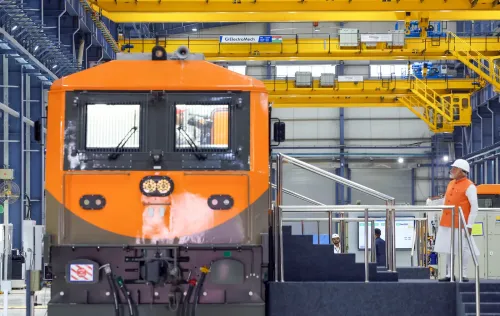
Manufacturing growth was notably broad-based: 19 of 23 industry groups recorded positive output during the month. Capital goods led the charge with a 16.1 per cent rise, while infrastructure and construction goods expanded 6.9 per cent — both seen as leading indicators of sustained investment activity. Intermediate goods grew 10 per cent and consumer durables rose 10.5 per cent, adding further breadth to the expansion.
At the item level, standout performers included switchgear and circuit-protection apparatus, UPS and solid-state drives, auto components, passenger and commercial vehicles, construction machinery, pumps, and turbines — a spread that analysts say reflects genuine industrial momentum rather than sector-specific spikes.
What Experts Said
Rajani Sinha, Chief Economist at CareEdge Ratings, said industrial activity had remained 'largely resilient in the current fiscal despite global uncertainties and elevated energy prices.' She described the capital goods and infrastructure goods numbers as 'encouraging for investment activity.'
Shashwat Singh, Fundamental Analyst at Bajaj Broking, characterised the July print as showing 'a clear investment-led growth pattern,' pointing to the strength across capital goods, intermediate goods, and consumer durables. He highlighted electrical equipment, motor vehicles, other transport equipment, and machinery as the leading manufacturing sub-groups.
Rajeev Sharan, Head of Research at Brickwork Ratings, said strong consumer durables growth — covering vehicles and appliances — indicated that 'discretionary and credit-linked purchases remained firm.'
Where the Caution Lies
The outlook is not uniformly positive. Consumer non-durables declined 1 per cent in July, pointing to softness in everyday consumption — a segment closely tied to rural demand and wage growth. Sinha flagged that rising inflation and weather-related disruptions could weigh on rural purchasing power in the months ahead.
Singh identified crude oil prices and geopolitical developments as the key variables to watch, given their direct bearing on energy costs and downstream industrial demand.
What the Numbers Mean for the Broader Economy
This comes amid a global environment marked by uneven recovery, sticky inflation in advanced economies, and supply-chain reconfiguration. India's manufacturing resilience — particularly the investment goods cycle — positions the economy to absorb external shocks better than peers, analysts argue. Notably, the broad participation across 19 of 23 sub-sectors reduces the risk that headline growth is being carried by a single outlier segment.
With the investment cycle gathering pace and capital formation indicators trending upward, the focus will now shift to whether private consumption — especially in rural markets — can keep pace as the fiscal year progresses.
Point of View
But it is not self-sustaining if rural consumption stays soft. India has seen this pattern before: a capex-heavy first half that flatters industrial data, followed by a demand-side correction when government spending moderates. The real test of this cycle's durability is whether private capex — not just public infrastructure — is doing the lifting, and whether wage growth in rural India catches up before the festive season spending window closes.
NationPress
13 Oct 2026
Frequently Asked Questions
What did India's IIP data for July show?
India's Index of Industrial Production grew 6.7 per cent year-on-year in July, driven by a 7.3 per cent rise in manufacturing and 8.7 per cent growth in electricity and gas supply. The growth was broad-based, with 19 of 23 manufacturing industry groups recording positive output.
Which sectors led industrial growth in July?
Capital goods led with a 16.1 per cent rise, followed by intermediate goods at 10 per cent and consumer durables at 10.5 per cent. At the item level, electrical equipment, motor vehicles, construction machinery, and auto components were among the top performers.
What is the concern despite strong IIP numbers?
Consumer non-durables declined 1 per cent in July, signalling weakness in everyday consumption linked to rural demand. Experts also flagged rising inflation, weather-related disruptions, and crude oil price volatility as risks to the near-term outlook.
What does the IIP data mean for India's investment cycle?
Analysts say the strong capital goods and infrastructure goods numbers confirm that India's investment cycle is gathering pace. CareEdge Ratings and Bajaj Broking both described the July data as consistent with an investment-led growth pattern that provides a positive base for industrial activity ahead.
Who are the key analysts commenting on the July IIP data?
Rajani Sinha, Chief Economist at CareEdge Ratings; Shashwat Singh, Fundamental Analyst at Bajaj Broking; and Rajeev Sharan, Head of Research at Brickwork Ratings, all provided assessments of the July IIP figures, broadly affirming industrial resilience while noting select demand-side risks.