Japanese biz leaders back Modi's India as open, stable investment hub
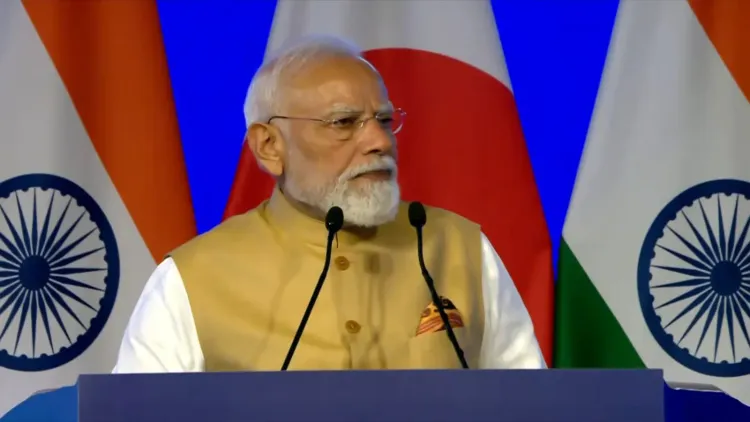
Synopsis
At the India-Japan Joint Economic Forum in New Delhi, over a dozen Japanese CEOs and industry heads — from Suzuki to IHI Corporation to Synspective — lined up to call India a more open, stable, and attractive investment hub under PM Modi. The breadth of sectors represented, from green ammonia to AI to space, signals that the India-Japan partnership is moving well beyond traditional manufacturing.
Key Takeaways
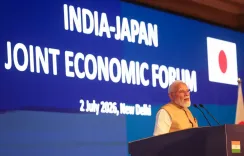
Japanese industry leaders gathered at the India-Japan Joint Economic Forum in New Delhi on 2 July praised India's investment climate under PM Narendra Modi .
Susumu Okamoto of Choshu Industry said India has become more open and stable, with Japanese manufacturing expertise set to complement India's industrial growth.
Kazuhiro Nakashoji of Yaqumo highlighted the remarkable expansion of India's startup ecosystem since 2018 .
Hiroshi Ide of IHI Corporation flagged a joint green ammonia opportunity, with India as producer and Japan as export market.
Toshihiro Suzuki of Suzuki described India as an emerging global manufacturing and export hub.
Leaders from sectors including space, AI, beverages, and clean energy all cited complementary India-Japan strengths as the basis for deeper collaboration.
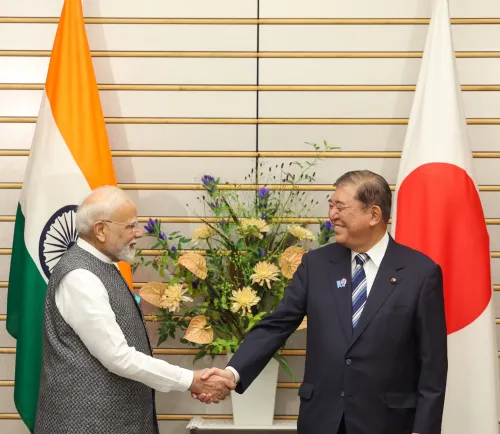
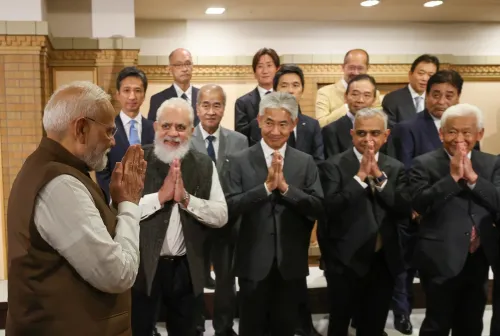
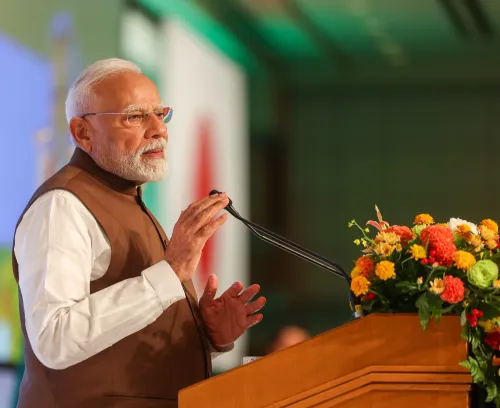
A cross-section of Japanese industry leaders on Thursday, 2 July voiced strong confidence in India as an investment destination, crediting Prime Minister Narendra Modi's leadership for making the country more open, stable, and globally competitive. The endorsements came on the sidelines of the India-Japan Joint Economic Forum in New Delhi, where executives from sectors spanning manufacturing, space technology, beverages, and artificial intelligence outlined plans and perspectives on deepening bilateral ties.
Manufacturing and Industrial Strengths
Susumu Okamoto, President and Representative Director of Choshu Industry, said India has grown more open and stable under Modi's stewardship. 'Japanese companies can complement India's rapid industrial growth by bringing decades of manufacturing expertise and advanced technology, creating a mutually beneficial partnership for both countries,' he said.
Haruyuki Hiratani, CEO and COO of Takasago Fluidic Systems, pointed to complementary national strengths — Japan's depth in mechanical engineering and India's growing lead in software and data capabilities. Toshihiro Suzuki, Representative Director and President of Suzuki, described India as emerging as a major manufacturing and export hub for global markets, a view echoed by Tatsutoshi Suzuki, Executive Chairman of Toho Koki Seisakusho Co. Ltd., who called India 'a vast and promising market offering long-term growth opportunities.'
Startups, Innovation and the Digital Edge
Kazuhiro Nakashoji, Founder and CEO of Yaqumo, described the expansion of India's startup ecosystem since 2018 as remarkable. 'The Prime Minister's efforts in fostering innovation and entrepreneurship... the government's focus on startups has created an ecosystem with impressive scale and momentum,' Nakashoji noted.
Motoyuki Arai, Founder and CEO of Synspective, highlighted how Japan's hardware strengths and India's excellence in artificial intelligence and analytics provide a powerful foundation for future collaboration — an assessment that aligns with the growing number of India-Japan deep-tech joint ventures in recent years.
Space, Green Energy and Strategic Sectors
Tushar Jadhav, Co-Founder and CEO of Manastu Space, said the strong personal relationship between Prime Minister Modi and Japan's leadership has significantly boosted bilateral cooperation, particularly in the space sector. Hiroshi Ide, President and CEO of IHI Corporation, pointed to the green energy opportunity, highlighting the potential for both countries to jointly develop a green ammonia ecosystem — with India as a production hub and Japan as a key export market.
Business Climate and Bilateral Ties
Taka Sanno, President and CEO of Suntory India Pvt. Ltd., said India has become an increasingly attractive investment destination owing to its progressive business environment. Kosuke Kiryu, Managing Director of Tanita India Private Limited, called Modi's leadership 'amazing' and said his efforts have significantly strengthened India-Japan ties.
Yuriko Kato, Founder and CEO of M2Labo, described Modi as 'a great man in the world' and said India and Japan are the 'best match' for innovation-led growth. Pankaj Garg, President and CEO of Innovation thru Energy, described the partnership as a natural win-win, adding that India-Japan relations are stronger than ever.
The forum comes at a time when India and Japan are deepening strategic and economic cooperation across defence, semiconductors, clean energy, and digital infrastructure — with the bilateral relationship widely regarded as one of Asia's most consequential partnerships heading into the second half of the decade.
Point of View
Green ammonia majors, AI firms, and consumer goods companies all singing from the same sheet. That range signals a maturing of the bilateral relationship beyond the traditional auto-and-manufacturing lane. Yet forums like these tend to produce more goodwill than binding commitments. The real measure will be actual FDI inflows from Japan into India in the next 12-18 months, particularly in semiconductors and clean energy, where both governments have made public pledges. Enthusiasm at a forum is not a factory on the ground.
NationPress
2 Jul 2026
Frequently Asked Questions
What is the India-Japan Joint Economic Forum?
The India-Japan Joint Economic Forum is a bilateral platform that brings together business and industry leaders from both countries to discuss investment opportunities, trade, and strategic economic cooperation. The 2 July edition in New Delhi drew executives from sectors including manufacturing, space, AI, clean energy, and consumer goods.
Why are Japanese business leaders confident in India's growth?
Japanese executives cited India's improved business environment, stable policy framework under PM Modi, a rapidly expanding startup ecosystem, and complementary national strengths — Japan's manufacturing and hardware depth paired with India's software, AI, and data capabilities — as key reasons for their confidence.
Which Japanese companies expressed interest in India at the forum?
Companies represented included Suzuki, IHI Corporation, Synspective, Yaqumo, Suntory India, Tanita India, Choshu Industry, Takasago Fluidic Systems, Toho Koki Seisakusho, M2Labo, and Innovation thru Energy, among others, spanning sectors from manufacturing and beverages to space and AI.
What is the green ammonia opportunity mentioned at the forum?
Hiroshi Ide, President and CEO of IHI Corporation, highlighted the potential for India and Japan to jointly build a green ammonia ecosystem, with India serving as a production hub leveraging its renewable energy capacity and Japan as a primary export market for the clean fuel.
How has India's startup ecosystem grown since 2018?
Kazuhiro Nakashoji of Yaqumo described the growth as remarkable, attributing it to the Modi government's sustained focus on fostering innovation and entrepreneurship. India has grown into one of the world's largest startup ecosystems by number of registered startups and unicorn count over this period.