NCB holds Manipur JCC meet to tighten drug trafficking crackdown in Northeast
Synopsis
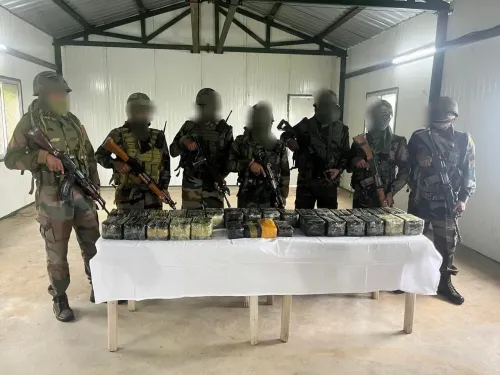
With over a dozen agencies at the table in Imphal, the NCB's quarterly JCC meeting for Manipur signals that India's anti-drug push in the Northeast is shifting from isolated raids to a sustained, intelligence-driven, multi-agency architecture — all while a 398-km unfenced Myanmar border keeps the pressure unrelenting.
Key Takeaways
The NCB held the quarterly Joint Coordination Committee (JCC) meeting for Manipur in Imphal on 2 July 2025 , chaired by Deputy Director General R.
More than 15 agencies attended, including the NIA , ED , DRI , BSF , CRPF , and Assam Rifles .
Discussions covered emerging trafficking routes, transnational syndicates, joint interrogations, and financial investigations.
Manipur CM Yumnam Khemchand Singh met NCB's Sudhakar on 1 July , reaffirming state commitment to anti-drug enforcement.
Manipur shares a 398-km unfenced border with Myanmar ; Mizoram shares 510 km with Myanmar and 318 km with Bangladesh .
Both states sit on the edge of the 'Golden Triangle' , one of the world's largest illicit narcotics-producing zones.
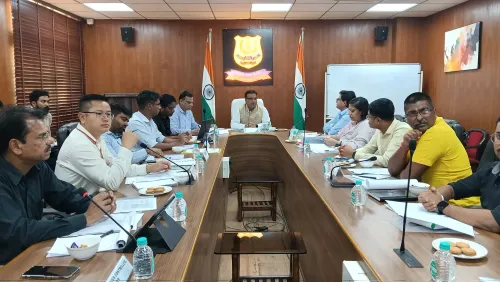
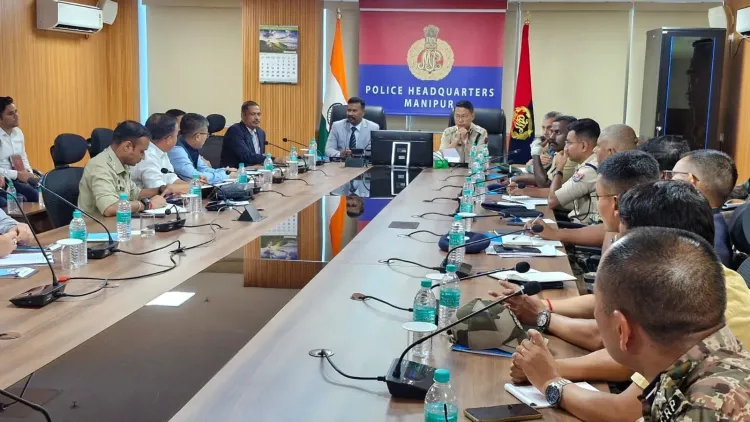
The Narcotics Control Bureau (NCB) on Thursday, 2 July convened the quarterly Joint Coordination Committee (JCC) meeting for Manipur at the state Police Headquarters in Imphal, reinforcing that inter-agency coordination is central to India's push for a 'Drug-Free India'. The high-level gathering brought together more than a dozen enforcement bodies to address the escalating narcotics challenge across the Northeast.
Key Agencies at the Table
The meeting was chaired by NCB Deputy Director General (Northeast Region) R. Sudhakar and attended by senior officials from the National Investigation Agency (NIA), Directorate of Revenue Intelligence (DRI), Enforcement Directorate (ED), Income Tax Department, and Customs. Security forces including the Assam Rifles, Border Security Force (BSF), Central Reserve Police Force (CRPF), and Railway Protection Force (RPF) were also represented, alongside the Anti-Narcotics Task Force (ANTF) Manipur, Bureau of Civil Aviation Security (BCAS), Subsidiary Intelligence Bureau (SIB), and other law enforcement agencies.
What the Discussions Covered
Deliberations centred on the prevailing narcotics scenario across the Northeast, emerging trafficking patterns, evolving modus operandi, and newly identified smuggling routes. The JCC reviewed major narcotics cases with particular focus on transnational drug syndicates and the mapping of interstate and international linkages. Agencies also discussed intelligence sharing protocols, joint interrogation of arrested traffickers, coordinated operations, and financial investigations aimed at dismantling organised drug networks.
NCB Chief Meets Manipur CM
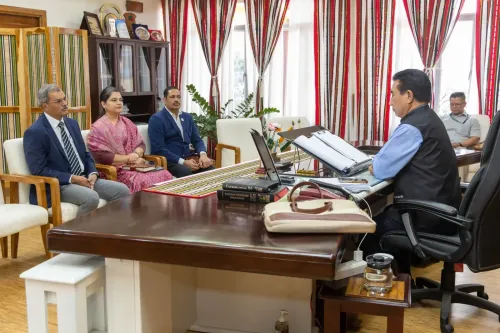
A day before the JCC meeting, on Wednesday, 1 July, Deputy Director General Sudhakar met Manipur Chief Minister Yumnam Khemchand Singh to discuss measures to intensify anti-drug initiatives in the state. According to an official from the Chief Minister's Office, Singh reiterated that his government is 'resolutely pursuing its fight against drug trafficking and narcotics abuse through a comprehensive strategy involving both enforcement and intelligence-based operations.' The meeting focused on strengthening intelligence gathering, enhancing coordination among state, Central, and international agencies, and ensuring effective enforcement of the Narcotic Drugs and Psychotropic Substances (NDPS) Act, 1985.
Why the Northeast Remains a High-Risk Zone
Both Manipur and Mizoram have emerged as critical drug trafficking corridors due to their long, unfenced international borders with Myanmar, which forms part of the 'Golden Triangle' — one of the world's largest illicit narcotics-producing regions. Five Manipur districts — Churachandpur, Tengnoupal, Chandel, Kamjong, and Ukhrul — share a 398-km unfenced border with Myanmar, making them acutely vulnerable to cross-border smuggling. Mizoram compounds the challenge further, sharing a 510-km unfenced border with Myanmar and a 318-km unfenced border with Bangladesh.
What Comes Next
The JCC framework is designed as a recurring mechanism, with quarterly meetings intended to sustain operational momentum rather than serve as one-off reviews. With transnational syndicates adapting their routes and methods, enforcement agencies are expected to follow up the Imphal deliberations with coordinated field operations and enhanced financial intelligence. The political commitment signalled by the Chief Minister's meeting with the NCB adds state-level weight to what has largely been a Central-agency-led effort.
Point of View
A Golden Triangle supply chain, and under-resourced border districts — and no coordination meeting resolves that without sustained field operations and financial disruption of syndicates. What's notable here is the simultaneous political signalling: a sitting Chief Minister sitting down with the NCB DDG is not routine, and suggests Manipur's drug crisis has reached a threshold where optics alone are insufficient. The real test is whether the financial investigation track — targeting syndicate assets under NDPS and PMLA — produces prosecutions, not just seizures.
NationPress
2 Jul 2026
Frequently Asked Questions
What is the NCB's Joint Coordination Committee (JCC) meeting?
The JCC is a quarterly inter-agency forum convened by the Narcotics Control Bureau to coordinate drug enforcement across states. The Manipur edition, held in Imphal on 2 July 2025, brought together over 15 Central and state agencies to review trafficking patterns, share intelligence, and plan coordinated operations.
Why is Manipur considered a major drug trafficking corridor?
Manipur shares a 398-km unfenced international border with Myanmar across five districts — Churachandpur, Tengnoupal, Chandel, Kamjong, and Ukhrul. Myanmar is part of the 'Golden Triangle', one of the world's largest producers of illicit narcotics, making the porous border a primary entry point for smuggled drugs.
Which agencies attended the Imphal JCC meeting?
The meeting included the NIA, DRI, ED, Income Tax Department, Customs, Assam Rifles, BSF, CRPF, RPF, BCAS, ANTF Manipur, SIB, and other law enforcement bodies, chaired by NCB Deputy Director General R. Sudhakar.
What did Manipur Chief Minister Yumnam Khemchand Singh say about the drug menace?
Singh, in a meeting with NCB DDG Sudhakar on 1 July 2025, said his government is 'resolutely pursuing its fight against drug trafficking and narcotics abuse through a comprehensive strategy involving both enforcement and intelligence-based operations,' according to his office.
How does Mizoram's border situation compare to Manipur's?
Mizoram shares a 510-km unfenced border with Myanmar and a 318-km unfenced border with Bangladesh, making it equally vulnerable to transnational drug trafficking. Like Manipur, it sits on a key corridor linking the Golden Triangle to Indian markets.