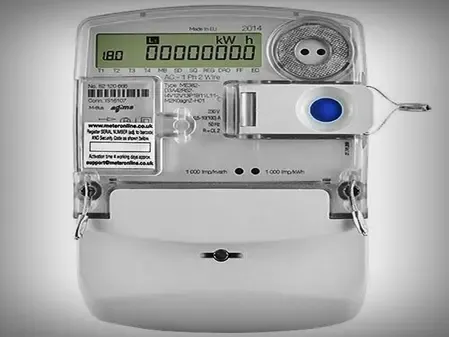
India needs 2.5 lakh smart meters a day to hit 25 crore target by March 2028
Synopsis
India has installed just 6.5 crore of its 25 crore smart meter target — and with March 2028 looming, it needs to install 2.5 lakh meters every single day, more than 2.5 times the current pace. CareEdge Ratings puts the revenue prize at ₹1.84 lakh crore, but warns that hardware alone won't deliver it: only 9 per cent of installed meters are in prepaid mode.
Key Takeaways
India needs to install 2.5 lakh smart meters per day to meet its 25 crore target by March 2028 , per CareEdge Ratings .
Only 6.5 crore meters — roughly one quarter of the target — had been installed as of April 2026 .
Maharashtra , Bihar , and Uttar Pradesh together account for nearly 47 per cent of all installations; Maharashtra leads with 1.1 crore units.
Full deployment could unlock cumulative additional revenue of ₹1.84 lakh crore over the five years ending FY31 .
AT&C losses have already fallen from 20.73 per cent in FY20 to 15.04 per cent in FY25 ; smart metering could push them to 12 per cent .
Just 9 per cent of installed meters operate in prepaid mode, limiting the financial impact of the rollout.
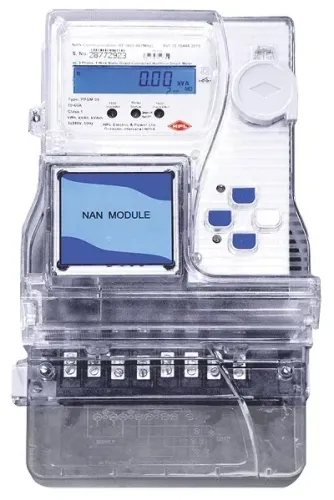
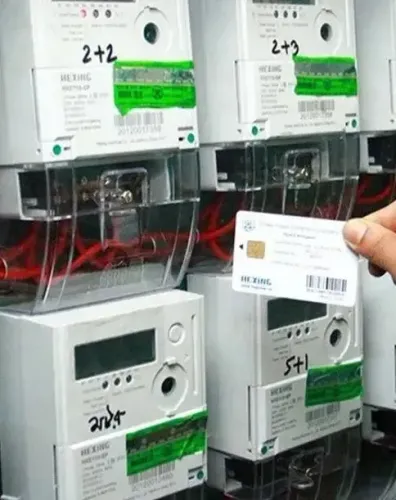
India must more than double its smart meter installation pace to nearly 2.5 lakh units per day if it is to meet the government's target of deploying 25 crore smart meters by March 2028, according to a report released on Friday, 6 November 2026 by CareEdge Ratings. As of April 2026, roughly 6.5 crore smart meters had been installed nationwide — representing approximately one quarter of the total target.
The Pace Problem
The required daily installation rate of 2.5 lakh meters is more than 2.5 times the roughly 99,000 meters installed per day during FY26. The CareEdge Ratings report does acknowledge significant momentum: annual additions rose from 48 lakh meters in FY24 to 1.47 crore in FY25, and further to 3.63 crore in FY26. Yet even at this accelerating trajectory, closing the gap by March 2028 will require a step-change in execution that few states have yet demonstrated.
State-Level Gaps and Leaders
Maharashtra leads all states with around 1.1 crore installations, accounting for 17 per cent of the national cumulative total. Together, Maharashtra, Bihar, and Uttar Pradesh contribute nearly 47 per cent of all smart meter installations to date. However, the deployment picture is uneven. Uttar Pradesh has installed approximately 32 per cent of its sanctioned volumes, while Bihar has achieved roughly 52 per cent — a contrast the report uses to highlight how state-level execution capability, not just allocation, drives actual outcomes.
Revenue and Efficiency Gains at Stake
The financial case for the rollout is substantial. CareEdge Ratings estimates that full-scale smart meter deployment could generate cumulative additional revenue of approximately ₹1.84 lakh crore over the five years ending FY31, driven by improved billing and collection efficiency and lower Aggregate Technical and Commercial (AT&C) losses. Sector indicators have already trended in the right direction: AT&C losses fell from 20.73 per cent in FY20 to 15.04 per cent in FY25, billing efficiency has reached nearly 88 per cent, and collection efficiency stands at around 97 per cent. The gap between Average Cost of Supply and Average Revenue Realised has narrowed from ₹0.72 per kWh in FY19 to ₹0.07 per kWh in FY25. Full smart metering could push billing efficiency to 97–98 per cent, lift collection efficiency beyond 99 per cent under prepaid models, and reduce AT&C losses to around 12 per cent.
Prepaid Adoption: The Critical Bottleneck
Despite the volume of installations, prepaid adoption remains a critical constraint. As of April 2026, only about 9 per cent of installed smart meters were operating in prepaid mode — a figure that limits the full financial and efficiency benefits the technology promises. Nearly 89 per cent of electricity bills are generated using actual meter readings, but only around 49 per cent use automated readings, indicating significant room for deeper integration with billing and payment infrastructure.
What Industry Voices Are Saying
Ravleen Sethi, Director at CareEdge Ratings, said: 'The economics of smart metering will ultimately depend on how effectively utilities translate installation into operational change. Accurate readings must feed into billing and payment systems, while consumers need the confidence and tools to manage their consumption.' The comment underscores a point mainstream coverage often misses — the number of meters installed is a proxy metric; what matters is how many are actively transforming utility operations. With the March 2028 deadline less than 17 months away, the pressure on states, discoms, and implementation agencies to synchronise hardware deployment with operational transformation has never been greater.
Point of View
The trajectory is improving, but the pace still falls well short. Tripling daily installation rates in under 17 months is not a supply-chain problem alone — it is a governance problem, requiring state discoms to simultaneously procure, deploy, integrate, and activate meters at an unprecedented scale. The prepaid adoption figure of just 9 per cent is the most telling number in the report: it signals that installation and operationalisation are running on entirely different timelines. Without closing that gap, the ₹1.84 lakh crore revenue opportunity remains a spreadsheet projection, not a utility reality.
NationPress
6 Nov 2026
Frequently Asked Questions
What is India's smart meter installation target and deadline?
India's target is to deploy 25 crore smart meters by March 2028 , as part of a broader power sector modernisation drive. As of April 2026, approximately 6.5 crore meters had been installed, covering around one quarter of the target.
How fast does India need to install smart meters to meet the 2028 deadline?
According to CareEdge Ratings, India must install nearly 2.5 lakh meters per day — more than 2.5 times the roughly 99,000 meters installed daily in FY26. Annual additions have grown from 48 lakh in FY24 to 3.63 crore in FY26, but the required pace remains far higher.
Which states are leading smart meter deployment in India?
Maharashtra leads with around 1.1 crore installations , accounting for 17 per cent of the national total. Maharashtra, Bihar, and Uttar Pradesh together contribute nearly 47 per cent of all installations, though execution rates vary — Bihar has achieved 52 per cent of its sanctioned volumes versus 32 per cent for Uttar Pradesh.
What are the financial benefits of full smart meter deployment?
CareEdge Ratings estimates full deployment could generate cumulative additional revenue of approximately ₹1.84 lakh crore over the five years ending FY31, through improved billing and collection efficiency and lower AT&C losses. AT&C losses could drop to around 12 per cent, while collection efficiency could exceed 99 per cent under prepaid models.
Why is prepaid adoption a concern in India's smart meter rollout?
Despite 6.5 crore smart meters being installed, only about 9 per cent were operating in prepaid mode as of April 2026. Prepaid operation is key to maximising collection efficiency and revenue gains, meaning the bulk of installed meters are not yet delivering the full financial benefits the technology enables.