India-Norway green partnership: Erik Solheim calls it a scalable climate model
Synopsis
As multilateral climate talks stall under geopolitical pressure, former Norwegian minister Erik Solheim says the India-Norway green alliance is quietly building something more durable — a partnership that matches Norway's sovereign wealth and technical depth with India's scale, targeting 500 GW of clean energy and pioneering green shipping corridors that could redefine sustainable trade.
Key Takeaways
Former Norwegian Minister Erik Solheim called the India-Norway green partnership a practical, scalable model for global climate cooperation on 20 May 2025 .
Norway brings sovereign wealth, offshore wind expertise, and hydropower know-how; India contributes scale and a 500 GW non-fossil energy target by 2030 .
Solheim identified green shipping as a priority sector, proposing a corridor linking Indian ports to global trade routes.
The partnership also targets green hydrogen as a key pillar of India's energy transition.
Solheim argued the model shifts climate diplomacy from 'negotiating burdens' to 'aligning incentives' — a contrast to stalled multilateral frameworks.
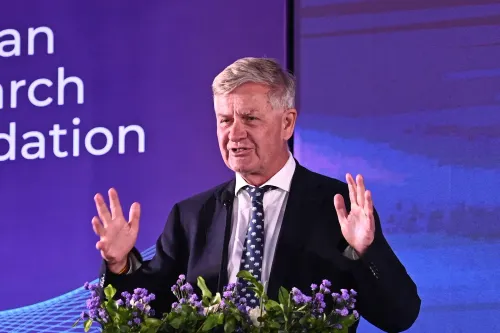
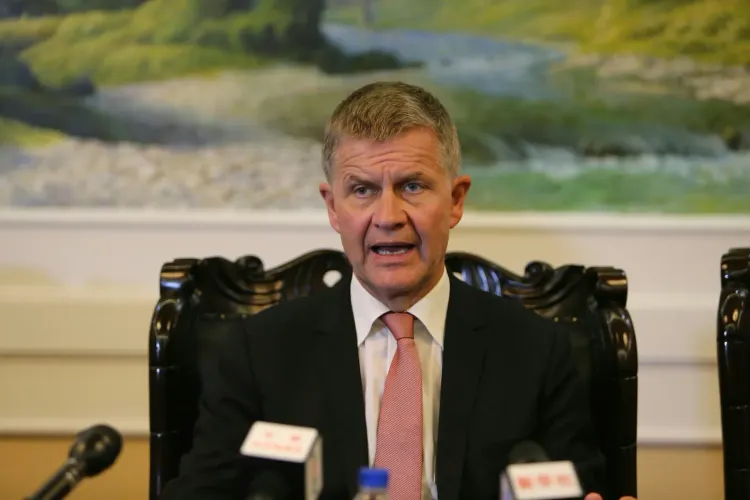
Former Norwegian Minister for Climate and Environment Erik Solheim on Wednesday, 20 May described the expanding green strategic partnership between India and Norway as a practical and replicable blueprint for global climate cooperation. Writing in an opinion piece, Solheim argued that the alliance pairs complementary national strengths at a moment when multilateral climate diplomacy is stalling.
Complementary Strengths at the Core
Solheim highlighted that Norway brings sovereign wealth, industrial expertise, and decades of responsible energy management to the table, while India contributes unmatched scale and ambition. He noted that Norway's financial depth and technical sophistication are directly suited to supporting large-scale energy transitions — precisely what India requires as it races toward 500 gigawatts of non-fossil capacity by 2030 and pursues an aggressive push into green hydrogen.
'Norwegian companies are already deeply involved in offshore wind, hydropower, and maritime decarbonisation, fields that are directly relevant to India's future. This is not aid in the traditional sense; it is strategic alignment,' Solheim wrote.
Green Shipping: A Key Frontier
Solheim identified green shipping as one of the most difficult sectors to decarbonise, and one where Norway has emerged as a global pioneer. India, with its extensive coastline and rapidly expanding trade networks, offers both a testing ground and a scale multiplier for green shipping innovations. According to Solheim, a green shipping corridor linking Indian ports to global trade routes would not merely cut emissions — it would fundamentally reshape the economics of sustainable commerce.
A Pragmatic Alternative to Climate Deadlock
At a time when global climate negotiations are frequently paralysed by disputes over historical responsibility and financial obligations, Solheim argued that the Norway–India partnership offers a quieter, more effective path. The model, he said, is 'less about negotiating burdens and more about aligning incentives' — with a shared focus on sectors most critical to the next phase of globalisation.
This comes amid growing geopolitical fragmentation that has weakened multilateral climate frameworks, making bilateral partnerships with concrete sectoral alignment increasingly valuable.
What This Means for India's Climate Targets
India's 500 GW non-fossil energy target by 2030 is among the most ambitious in the world for a developing economy. Norway's involvement — through both capital and technical know-how — could accelerate progress in offshore wind and hydropower, two areas where India still has significant headroom. The partnership also carries strategic weight: as the global energy transition intensifies competition for green technology leadership, early bilateral alignment positions both nations advantageously.
With sectoral cooperation already underway and Solheim's public endorsement adding diplomatic momentum, the India-Norway green alliance appears set to deepen further in the coming years.
Point of View
But describing it as a 'scalable model' glosses over the asymmetry: Norway is a petro-state funding its green pivot from oil revenues, while India's transition is constrained by development imperatives. The green shipping corridor idea is compelling, but India's port infrastructure and regulatory frameworks are not yet ready for large-scale corridor deployment. The deeper question is whether this bilateral alignment translates into bankable projects and technology transfer on India's terms — or remains a well-intentioned framework that flatters both sides without moving the needle on India's actual energy mix.
NationPress
20 Sept 2026
Frequently Asked Questions
What is the India-Norway green strategic partnership?
It is a bilateral climate and energy cooperation framework that pairs Norway's sovereign wealth, offshore wind expertise, and hydropower experience with India's large-scale clean energy ambitions, including a 500 GW non-fossil capacity target by 2030. Former Norwegian minister Erik Solheim described it as a pragmatic alternative to stalled multilateral climate negotiations.
Who is Erik Solheim and why does his endorsement matter?
Erik Solheim is a former Norwegian Minister for Climate and Environment and ex-head of the UN Environment Programme, giving him significant standing in global climate policy circles. His public endorsement of the India-Norway partnership adds diplomatic weight and signals Norwegian institutional interest in deepening bilateral cooperation.
What role does green shipping play in the India-Norway partnership?
Green shipping is identified as one of the hardest sectors to decarbonise and a priority area for collaboration. Norway is a global pioneer in maritime decarbonisation, and India's long coastline and expanding trade networks make it an ideal partner. A proposed green shipping corridor would link Indian ports to global routes, reducing emissions and reshaping sustainable trade.
How does this partnership address India's 500 GW clean energy target?
Norway's financial resources and technical expertise in offshore wind and hydropower can help India accelerate progress toward its 500 GW non-fossil capacity target by 2030. Norwegian companies are already active in sectors directly relevant to India's energy transition, including offshore wind and maritime decarbonisation.
Why is this bilateral model seen as an alternative to global climate diplomacy?
Global climate negotiations are frequently deadlocked over historical responsibility and financial obligations. The India-Norway model, according to Solheim, sidesteps these disputes by focusing on aligning economic incentives and targeting sectors critical to the next phase of globalisation — making it more action-oriented than traditional multilateral frameworks.