Gig, unorganised workers get National Social Security Boards under Labour Code
Synopsis
For the first time, India's millions of gig and platform workers will have a dedicated statutory board to recommend and monitor their social security — a long-delayed recognition that the country's informal economy cannot remain outside the welfare net. The Centre's notification of the National Social Security Boards marks a structural shift, not just a policy announcement.
Key Takeaways
The Centre notified the National Social Security Boards for Unorganised Workers and Gig and Platform Workers on 30 October 2026 .
The boards are constituted under the Code on Social Security and will recommend, advise, and monitor welfare schemes for informal workers.
Each board will be chaired by the Union Minister for Labour and Employment and must meet at least three times a year .
Board composition includes representatives from Central and state governments, aggregator companies, employers, civil society, workers' unions, and gig worker associations.
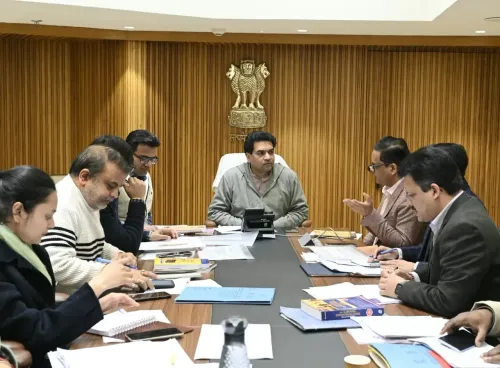
Chandra Bhushan Kumar , Secretary of the Labour Ministry, had earlier noted rationalisation via law consolidation, digitalisation, and uniform wage definitions under the new Labour Codes.
The Centre on Friday, 30 October notified the constitution of the National Social Security Boards for Unorganised Workers and Gig and Platform Workers, a step the Ministry of Labour and Employment says will strengthen the social security framework for millions of workers in India's informal economy. The move is rooted in the Code on Social Security, which provides the statutory basis for welfare measures covering unorganised, gig, and platform workers.
What the Boards Will Do
The two boards are mandated to recommend and monitor welfare schemes for their respective worker categories, advise the Central government on matters arising from the administration of the Code, and review record-keeping functions at the state level. They will also examine expenditure from the dedicated fund and account established under the Code.
Each board will be chaired by the Union Minister for Labour and Employment and will include representatives from the Central and state governments, aggregator companies, employers, civil society organisations, workers' unions, and gig and platform worker associations. The boards are required to convene at least three times a year, following procedures prescribed by the Central government.
Why This Matters for Gig Workers
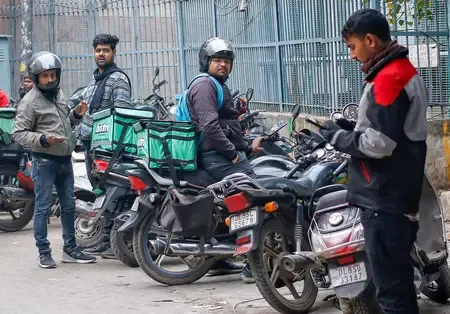
India's gig economy has expanded rapidly, with millions of delivery riders, cab drivers, and freelance platform workers operating without the social security net available to formal employees. According to the government, the boards are intended to bridge this gap by embedding these workers within a statutory welfare architecture for the first time. This is a significant structural shift — previously, gig workers fell outside the purview of both traditional labour law protections and formal social security schemes.
Notably, the notification comes as discussions around the four new Labour Codes gather pace. In September, industry representatives, workers, senior government officials, and domain experts collectively described the new Labour Codes as a shift from a control-centred regulatory approach toward a collaborative model between government and industry.
What Senior Officials Have Said
Chandra Bhushan Kumar, Secretary of the Ministry of Labour and Employment, had earlier highlighted the rationalisation brought about through the consolidation of laws, a reduction in compliance provisions, digitalisation of processes, e-portal integration, uniform return filing, and greater uniformity in the definition of wages.
What Happens Next
With the boards now formally constituted, the next step involves their inaugural meetings and the framing of specific social security scheme recommendations. State-level implementation and monitoring will be a key function, with the boards expected to track expenditure and welfare outcomes. The pace of actual scheme rollout will likely depend on how quickly the boards operationalise and whether state governments align their own frameworks with the Code's provisions.
Point of View
But the harder work begins now. India's gig economy is estimated to employ tens of millions, yet the Code on Social Security has been in statute since 2020 — the six-year gap between legislation and board constitution underscores how slowly welfare architecture catches up with labour market realities. The boards' effectiveness will hinge on whether scheme recommendations are backed by enforcement teeth and whether state governments, who control much of the implementation machinery, align their rules promptly. The inclusion of aggregator companies on the boards is a double-edged signal: it could accelerate practical scheme design, or it could tilt recommendations away from workers' interests if civil society representation is not robust in practice.
NationPress
30 Oct 2026
Frequently Asked Questions
What are the National Social Security Boards for Gig and Platform Workers?
They are statutory bodies notified by the Centre under the Code on Social Security to recommend, monitor, and advise on welfare schemes for gig workers, platform workers, and unorganised workers in India. Each board is chaired by the Union Minister for Labour and Employment and includes representatives from government, industry, civil society, and worker associations.
Why is the notification of these boards significant?
Gig and platform workers — delivery riders, cab drivers, freelancers — have historically operated outside India's formal social security net. These boards provide a statutory mechanism to design and oversee welfare schemes specifically for them, marking a structural shift in how India's informal economy is treated under labour law.
What will the boards actually do?
The boards will recommend suitable social security schemes for different worker categories, advise the Central government on Code administration, monitor welfare scheme implementation, review state-level record-keeping, and examine fund expenditure. They are required to meet at least three times a year.
What is the Code on Social Security?
The Code on Social Security is one of four Labour Codes passed by Parliament that consolidates and rationalises multiple earlier labour laws. It provides a unified statutory framework for social security measures covering unorganised workers, gig workers, and platform workers, and is the legal basis for the newly constituted boards.
Who is represented on these boards?
The boards comprise representatives from the Central and state governments, aggregator companies, employers, civil society organisations, workers' unions, and gig and platform worker associations, with the Union Minister for Labour and Employment serving as chairperson.