Will New Labour Laws Empower Gig Workers and Women?

Synopsis
The new labour laws in India are set to revolutionize the workforce by providing crucial social security and inclusive growth for gig workers and women. These reforms promise enhanced maternity benefits, flexible work options, and a dedicated Social Security Fund, ensuring that all workers are protected and supported in their professional journeys.
Key Takeaways
Inclusive growth and social security for gig workers and women.
Establishment of a Social Security Fund for gig workers.
26 weeks of maternity leave for eligible women employees.
Work-from-home options for women returning from maternity leave.
Crèche facilities mandated for establishments with 50 or more employees.
New Delhi, Nov 22 (NationPress) The recently introduced labour laws aim to foster inclusive growth and enhance social security for gig workers and women, thereby increasing their involvement in the nation’s workforce, as announced by the government on Saturday.
India is experiencing a significant transformation in its labour regulation system with the enforcement of four consolidated labour codes. These include the Code on Wages, 2019, the Industrial Relations Code, 2020, the Code on Social Security, 2020, and the Occupational Safety, Health and Working Conditions Code, 2020.
The Code on Social Security, 2020, is designed to provide comprehensive and inclusive social protection for all workforce segments, particularly for gig and female workers.
It represents the government’s dedication to inclusive development and social security for everyone, aligning with the vision of a Viksit Bharat by 2047, as stated in an official release.
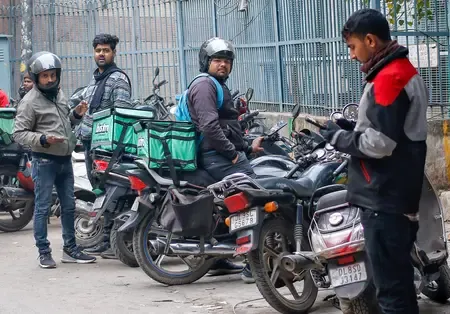
For the first time, the Social Security Code acknowledges gig and platform workers, creating a Social Security Fund for their benefit.
“Social security advantages have been expanded to unorganised, gig, and platform workers under Sections 113 & 114 of the Code on Social Security, 2020,” the statement elaborated.
The Code mandates the formation of a National Social Security Board to advise the government on developing and supervising appropriate schemes for various worker categories in the unorganised, gig, and platform sectors.
This Social Security Fund will offer benefits such as life insurance, disability coverage, health and maternity allowances, and provident fund schemes for these workers.
Additionally, coverage under EPFO and ESIC has been expanded nationally, incorporating more establishments and workers into social security benefits.
The Social Security Code consolidates nine existing Social Security Acts into a unified framework, ensuring universal social protection for organised, unorganised, gig, and platform workers.
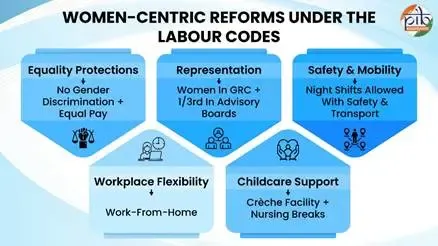
It stipulates 26 weeks of maternity leave, a work-from-home option, and crèche facilities.
Under the new legislation, any woman employee who has worked for at least 80 days in the 12 months preceding her expected delivery is entitled to equal pay during her 26-week maternity leave.
The law also grants maternity benefits of 12 weeks to women adopting a child under 3 months of age or to commissioning mothers (biological mothers utilizing surrogacy) from the date of adoption or upon receiving the child.
“To allow greater flexibility for women returning from maternity leave, the Code permits them to work from home if the work nature allows. Employers may enable work-from-home arrangements based on mutual consent,” the statement mentioned.
Importantly, the legislation includes provisions for nursing breaks for breastfeeding mothers and mandates crèche facilities.
“Upon returning to work after childbirth, a woman employee is entitled to two nursing breaks daily for nursing her child until the child reaches 15 months,” the statement added.
“Every establishment with 50 or more employees is required to offer a crèche facility within a specified distance. This requirement is now gender-neutral and applies to all types of establishments,” it further noted.
The Social Security Code also facilitates business operations through digital records, decriminalisation, compounding of offences, and a clear, technology-driven Inspector cum facilitator system.
Point of View
It's essential to recognize the transformative potential of these new labour laws. By prioritizing social protection for gig and female workers, the government is not only addressing existing disparities but also paving the way for a more inclusive and equitable workforce. This initiative reflects a commendable commitment to ensuring that every worker in India is afforded the dignity and security they deserve.
NationPress
3 Oct 2026
Frequently Asked Questions
What are the key features of the new labour laws?
The new labour laws introduce provisions for maternity leave, work-from-home options, and a Social Security Fund aimed at supporting gig and female workers, ensuring inclusivity and social protection.
How will these laws impact gig workers?
These laws will recognize gig workers for the first time, providing them with social security benefits, including life insurance, health coverage, and access to a dedicated Social Security Fund.
What maternity benefits are included?
The laws grant 26 weeks of maternity leave and equal pay for eligible women employees, along with additional benefits for mothers adopting or using surrogacy.