India plans PLI scheme for polysilicon to cut solar import reliance on China
Synopsis
India has signalled its first-ever PLI scheme targeting polysilicon — the upstream feedstock that makes solar panels possible — moving to close the last major gap in its domestic solar supply chain. With 100% of polysilicon currently imported from China, the proposal could reshape India's clean energy security calculus ahead of its 2030 renewable target.
Key Takeaways
India is preparing a PLI scheme for domestic polysilicon manufacturing, announced at a CII event on 9 August .
The scheme could support more than 10 GW of polysilicon production capacity; financial details are yet to be disclosed.
India currently imports 100% of its polysilicon, with China dominating global supply.
India has already deployed ₹24,000 crore in PLI incentives for solar cells and modules.
The country has built over 200 GW of module capacity and 32 GW of cell capacity, with another 100 GW of cell capacity expected within a year.
The move supports India's target of 500 GW non-fossil fuel power by 2030 .
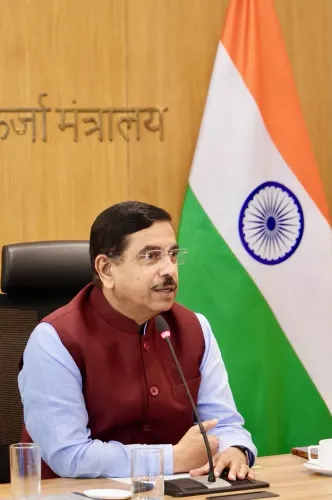
India is preparing a production-linked incentive (PLI) scheme for domestic polysilicon manufacturing — a critical raw material in solar photovoltaic (PV) panels — as New Delhi moves to deepen its clean energy supply chain and reduce near-total dependence on Chinese imports. The announcement was made on 9 August by Santosh Kumar Sarangi, Secretary in the Ministry of New and Renewable Energy (MNRE), at a Confederation of Indian Industry (CII) event in New Delhi.
What the Proposed Scheme Covers
The new incentive programme is designed to extend India's solar manufacturing push further up the value chain — from modules and cells to wafers, ingots, and now polysilicon. According to Sarangi, the scheme 'could support more than 10 GW of polysilicon production capacity,' though the size of the financial outlay has not yet been disclosed. The proposal addresses one of the last remaining gaps in India's domestic solar manufacturing ecosystem.
India currently imports 100% of its polysilicon requirement, with China dominating global production of the input. This dependency has long been flagged as a strategic vulnerability, particularly as solar installations accelerate and equipment demand climbs.
Where India's Solar Manufacturing Stands Today
India has already committed manufacturing-linked incentives worth ₹24,000 crore for solar cell and module production under earlier PLI rounds. The country has since built more than 200 GW of solar module manufacturing capacity and over 32 GW of solar cell manufacturing capacity, Sarangi noted. An additional 100 GW of solar cell capacity is expected to come online within the next year, he added.
Notably, this is the first time the government has signalled a PLI specifically targeting polysilicon — the upstream feedstock that underpins the entire PV supply chain. Without domestic polysilicon, India's module and cell capacity remains exposed to import disruptions.
The Bigger Strategic Picture
The polysilicon PLI sits within India's broader ambition to achieve 500 GW of non-fossil fuel power capacity by 2030, with solar energy expected to carry the largest share of that target. Policymakers have increasingly prioritised local manufacturing as the pace of solar deployment has outrun the country's ability to supply its own equipment.
This comes amid growing global scrutiny of supply chain concentration in critical minerals and clean energy components — a concern that has accelerated policy action across the US, European Union, and several Southeast Asian economies. India's move mirrors a wider trend of nations attempting to onshore strategic clean-tech manufacturing.
What Happens Next
Details of the financial structure — including the incentive rate, eligibility criteria, and disbursement timelines — are yet to be finalised. Industry bodies and solar manufacturers are expected to engage with the MNRE as the scheme takes shape. The announcement signals intent; the implementation framework will determine whether domestic investors commit capital to what is a technically complex and capital-intensive segment of the solar supply chain.
Point of View
But the hard part begins now. Building domestic polysilicon capacity requires energy-intensive processes, long gestation periods, and technology tie-ups that India does not yet have at scale — none of which a subsidy alone can conjure. The ₹24,000 crore committed to cells and modules has built impressive nameplate capacity, but utilisation rates and export competitiveness remain questions. If the polysilicon scheme repeats that pattern — capacity without integration — India will have a supply chain that looks complete on paper but remains fragile in practice. The real test is whether the incentive structure is designed to attract serious long-term investors, not just capacity placeholders chasing disbursements.
NationPress
9 Aug 2026
Frequently Asked Questions
What is India's proposed PLI scheme for polysilicon?
It is a production-linked incentive programme being developed by the Ministry of New and Renewable Energy to encourage domestic manufacturing of polysilicon, the primary raw material used in solar PV panels. The scheme could support over 10 GW of production capacity, though the financial outlay has not yet been announced.
Why is polysilicon important for India's solar sector?
Polysilicon is the foundational feedstock for solar photovoltaic panels — without it, cells, wafers, and modules cannot be produced. India currently imports all of its polysilicon requirement, almost entirely from China, making its solar supply chain vulnerable to price shocks and geopolitical disruptions.
How much has India already invested in solar manufacturing incentives?
India has committed manufacturing-linked incentives worth ₹24,000 crore for solar cell and module production under earlier PLI rounds. The country has built over 200 GW of module manufacturing capacity and more than 32 GW of solar cell capacity as a result.
What is India's renewable energy target and how does this scheme help?
India aims to achieve 500 GW of non-fossil fuel power capacity by 2030, with solar energy expected to be the largest contributor. Domestic polysilicon production would reduce import dependence and help secure the raw material supply needed to meet that target.
When will the polysilicon PLI scheme be finalised?
A timeline has not been officially announced. The Ministry of New and Renewable Energy is expected to work out the financial structure, eligibility criteria, and disbursement framework in consultation with industry stakeholders before the scheme is formally launched.