India smartphone shipments fall 10% in Q2 2026; premium segment surges 54%
Synopsis
India's smartphone market posted a 10% year-on-year fall in Q2 2026 — but the real story is the split: the affordable segment cratered 88% while super-premium devices (₹50,000–₹1 lakh) surged 72%, fuelled not by cutting-edge specs but by zero-cost EMIs and trade-in deals. CyberMedia Research now projects a 10–12% full-year decline, painting a picture of a market that is shrinking at the base and concentrating at the top.
Key Takeaways
India's smartphone market fell 10 per cent year-on-year in Q2 CY2026 , according to CyberMedia Research (CMR) .
The affordable segment contracted 88 per cent YoY ; the value-for-money segment declined 30 per cent YoY .
The premium segment (above ₹25,000 ) grew 54 per cent , with the super-premium band (₹50,000–₹1 lakh) surging 72 per cent .
Growth in super-premium was driven by zero-cost EMI , trade-in schemes , and consumer credit, not hardware alone.
CMR projects a 10–12 per cent full-year decline for India's smartphone market in CY2026 .
The sub-₹15,000 segment is expected to remain under pressure through H2 2026 due to rising component costs and extended replacement cycles.
India's smartphone market contracted 10 per cent year-on-year in the second quarter of 2026 (Q2 CY2026), as consumers deferred device upgrades and supply chains worked through accumulated inventory, according to a report released on Monday, 17 August 2026 by technology research firm CyberMedia Research (CMR). The decline marks one of the sharper single-quarter corrections in the Indian smartphone market in recent years.
Where the Market Fell Hardest
The slowdown was concentrated at the lower end of the price ladder. The affordable segment contracted 88 per cent year-on-year, while the value-for-money segment eased 30 per cent over the same period. According to CMR, the drivers were a combination of cautious consumer spending, rising component and device costs, extended replacement cycles, and deliberate inventory optimisation across retail channels. The 4G feature phone segment also declined sharply, falling 43 per cent year-on-year, even as the 2G feature phone segment edged up 5 per cent.
Premium Segment Bucks the Trend
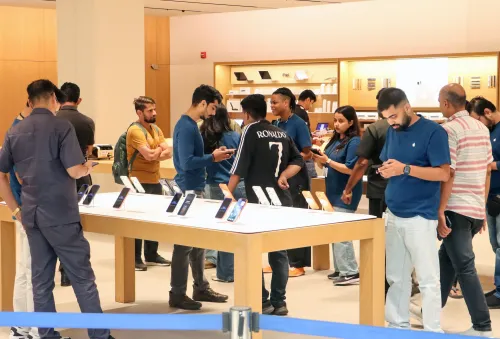
Against the broader market weakness, the premium segment (devices priced above ₹25,000) expanded 54 per cent year-on-year. The standout performer was the super-premium band (₹50,000–₹1 lakh), which surged 72 per cent, driven by aspirational demand and the growing availability of zero-cost EMI schemes, trade-in offers, and consumer credit options.
Menka Kumari, Senior Analyst at CyberMedia Research, attributed the super-premium surge to financing structures rather than hardware alone. 'The Super Premium segment's 72 per cent YoY growth points to financing structures — zero-cost EMI, trade-in offers, and consumer credit — becoming the deciding factor in premium upgrades, not just AI features or camera hardware,' she said. Kumari added that 'affordable and value-for-money segments remained under pressure as price-sensitive consumers delayed upgrades, resulting in a more polarized market.'
Full-Year Outlook and What Lies Ahead
CMR projects a 10–12 per cent full-year decline for India's smartphone market in CY2026, with mass-market segments expected to remain under strain. Amit Sharma, Senior Analyst at CMR, noted that 'rising component costs and higher device prices are expected to keep the sub-₹15,000 segment under pressure through H2 2026, as consumers extend replacement cycles further.'
The premium and super-premium tiers, however, are projected to grow over 50 per cent in H2 2026, supported by AI-enabled experiences, improved camera performance, and premium design. Sharma highlighted an emerging structural shift: 'affordability will continue to anchor the mass market, while differentiation — including emerging form factors such as foldables — will define growth at the premium end.'
A Market Splitting in Two
This comes amid a broader pattern visible across several consumer electronics categories in India, where spending polarisation is becoming more pronounced. High-income households are trading up faster than ever, aided by credit access, while middle and lower-income consumers are stretching device lifecycles. Notably, this is not an isolated quarter — the affordable segment has faced persistent headwinds through 2025–26 as real wage growth in urban India has lagged device price inflation. The Q2 2026 data crystallises a trend that industry watchers had flagged as early as late 2025. How brands respond — whether through aggressive sub-₹15,000 launches or deeper financing partnerships — will shape volume recovery in the second half of the year.
Point of View
Not just price tiers. The 88% collapse in the affordable segment is not a temporary inventory blip — it reflects real affordability stress in a segment where device prices have outpaced income growth. The super-premium surge, meanwhile, is partly a financing mirage: 72% growth driven by zero-cost EMIs and trade-ins flatters demand that may be borrowed from the future. If credit conditions tighten or trade-in residual values fall, that growth story unravels quickly. The projected 10–12% full-year decline is sobering for a market that was once the engine of global smartphone volume growth — and it raises a harder question about whether India's mass-market smartphone story has structurally plateaued.
NationPress
1 Oct 2026
Frequently Asked Questions
How much did India's smartphone market decline in Q2 2026?
India's smartphone shipments fell 10 per cent year-on-year in the second quarter of 2026 (Q2 CY2026), according to CyberMedia Research (CMR). The decline was attributed to cautious consumer spending, rising device costs, and extended replacement cycles.
Which smartphone segment grew the most in Q2 2026?
The super-premium segment (₹50,000–₹1 lakh) was the fastest-growing, surging 72 per cent year-on-year. The broader premium segment (above ₹25,000) grew 54 per cent, driven by financing options such as zero-cost EMIs and trade-in schemes.
Why did the affordable smartphone segment fall so sharply?
The affordable segment declined 88 per cent year-on-year in Q2 2026, as price-sensitive consumers delayed upgrades amid rising component costs and higher device prices. CMR analysts noted that replacement cycles have lengthened significantly in this segment.
What is the full-year outlook for India's smartphone market in 2026?
CyberMedia Research projects a 10–12 per cent full-year decline for India's smartphone market in CY2026. The sub-₹15,000 segment is expected to remain under pressure through H2 2026, while premium and super-premium tiers are forecast to grow over 50 per cent in the second half.
What is driving premium smartphone growth in India despite the overall market decline?
Premium smartphone growth in India is being driven primarily by financing structures — zero-cost EMI plans, trade-in offers, and consumer credit — rather than hardware features alone, according to CMR Senior Analyst Menka Kumari. AI-enabled experiences, camera performance, and premium design are also cited as factors for H2 2026 growth.