India smartphone market value rises 1.7% in Q2 2026 despite 11% shipment drop
Synopsis
India's smartphone market is shrinking in volume but growing in value — a rare split that signals deep structural change. With the sub-$100 segment virtually wiped out and the $400–$600 band surging 60%, the Indian market is repricing itself upward faster than almost any analyst projected, even as millions of first-time buyers are effectively priced out.
Key Takeaways
India's smartphone market value rose 1.7 per cent year-on-year in Q2 2026 even as shipments fell 11 per cent to 33.2 million units , per IDC .
Average selling price hit a record $315 , up 14.4 per cent year-on-year , driven by a global memory chip shortage and consumer premiumisation.
First-half 2026 shipments dropped 7.9 per cent to 64.2 million units — the lowest first-half volume in five years .
The $400–$600 price band was the top performer, with shipments up 60.3 per cent and share nearly doubling to 8.6 per cent .
The sub-$100 segment collapsed, with shipments down 74.3 per cent and share falling to 4.5 per cent from 15.6 per cent .
Samsung (16.4%) and Apple (8.5%) both gained market share; offline channels outperformed online with only a 3.6 per cent shipment decline.
India's smartphone market posted a 1.7 per cent year-on-year rise in market value during Q2 2026, even as total shipments fell 11 per cent to 33.2 million units, according to an IDC report released on Tuesday, 11 August 2026. The divergence reflects a structural shift in consumer behaviour, with buyers moving decisively toward higher-priced devices as a global memory chip shortage pushed entry-level handsets out of reach.
Key Developments
The average selling price (ASP) of smartphones in India climbed 14.4 per cent year-on-year to a record $315 in Q2 2026 — the highest ever recorded for the market. First-half shipments fell 7.9 per cent year-on-year to 64.2 million units, the lowest first-half volume in five years. The ongoing global memory chip shortage inflated component costs, squeezing affordability at the lower end of the market.
Premiumisation Drives the Market
The $400–$600 price band was the standout performer, with shipments surging 60.3 per cent year-on-year and market share nearly doubling to 8.6 per cent from 4.8 per cent a year earlier. The $600–$800 segment remained broadly flat, while the $800-plus category saw only a modest 5 per cent decline in shipments. The mass-budget $100–$200 band continued to anchor the market, accounting for 46.8 per cent of total shipments.
At the other extreme, the sub-$100 segment collapsed — shipments plunged 74.3 per cent year-on-year, with its market share shrinking to 4.5 per cent from 15.6 per cent a year earlier. Rising memory costs made ultra-budget devices economically unviable for many manufacturers, effectively eliminating the lowest price tier for millions of first-time buyers.
Brand Performance: Samsung and Apple Gain Share
Samsung expanded its market share to 16.4 per cent from 14.5 per cent, while Apple grew its share to 8.5 per cent from 7.5 per cent — both benefiting from their stronger positioning in the mid-to-premium segments that held up best during the downturn. The gains suggest that brand loyalty and ecosystem stickiness are providing a buffer in an otherwise contracting volume environment.
Offline Channels Outperform Online
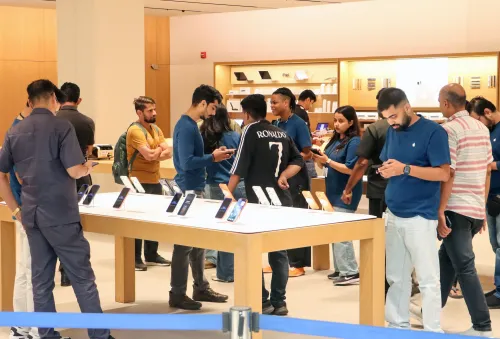
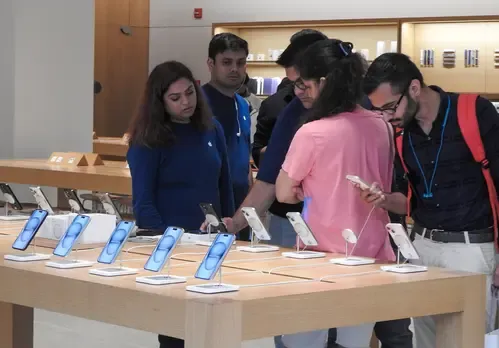
The offline retail channel demonstrated relative resilience, with shipments declining only 3.6 per cent year-on-year and its market share rising to 58.1 per cent from 53.6 per cent. Online channels, by contrast, saw shipments fall 19.8 per cent, with share dropping to 41.9 per cent. The shift likely reflects consumers preferring in-store experience and EMI financing options when purchasing higher-value devices.
Outlook: Festive Season Could Be a Turning Point
IDC Senior Research Analyst Aditya Rampal noted that rising memory costs had pushed smartphone prices higher, and that financing options were likely to play an important role in sustaining affordability during the upcoming festive season. The IDC report pointed to stabilising memory prices, wider availability of EMI and financing schemes, and stronger festive demand in the mid-premium segment as factors that could support a market recovery in the second half of 2026.
Point of View
Raising questions about digital inclusion that no brand or analyst report has squarely addressed. Meanwhile, the 60% surge in the $400–$600 band tells a different story about India's consuming class — one that is trading up faster than GDP growth alone would predict. The real risk is a bifurcated market: a premium tier that performs well on value metrics while headline shipment numbers mask a widening affordability gap at the bottom.
NationPress
25 Sept 2026
Frequently Asked Questions
How did India's smartphone market perform in Q2 2026?
India's smartphone market value rose 1.7 per cent year-on-year in Q2 2026, even as shipments declined 11 per cent to 33.2 million units, according to IDC. The average selling price reached a record $315, reflecting a clear shift toward higher-priced devices.
Why did smartphone shipments fall in India in Q2 2026?
Shipments fell primarily due to a global memory chip shortage that pushed up component costs, making entry-level and budget devices more expensive and less accessible. The sub-$100 segment saw the sharpest decline, with shipments plunging 74.3 per cent year-on-year.
Which price segment performed best in India's smartphone market?
The $400–$600 price band was the strongest performer, with shipments growing 60.3 per cent year-on-year and market share nearly doubling to 8.6 per cent from 4.8 per cent. Demand in the $800-plus category also held up relatively well, declining only 5 per cent.
How did Samsung and Apple fare in India's Q2 2026 smartphone market?
Both brands gained market share. Samsung's share rose to 16.4 per cent from 14.5 per cent, while Apple's climbed to 8.5 per cent from 7.5 per cent. Their stronger premium and mid-range portfolios helped them outperform in a shrinking volume environment.
What is the outlook for India's smartphone market in the second half of 2026?
IDC analysts expect stabilising memory prices, broader EMI and financing options, and festive season demand in the mid-premium segment to support a recovery in H2 2026. Financing is seen as a key lever for sustaining affordability as device prices remain elevated.