Gadkari Launches e-Bus Seva, Sugam Parivahan in Bhopal
Synopsis
Union Minister Nitin Gadkari and MP Chief Minister Mohan Yadav launched the PM e-Bus Seva and Mukhyamantri Sugam Parivahan Seva in Bhopal on 25 September 2026, expanding India's electric public transport footprint under the Centre's 10,000-bus national scheme.
Key Takeaways
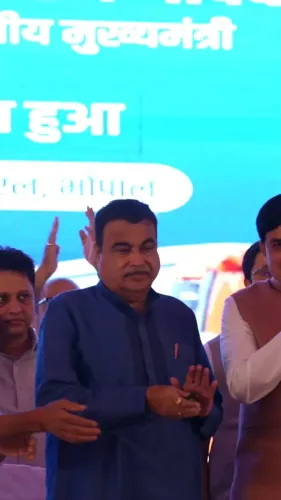
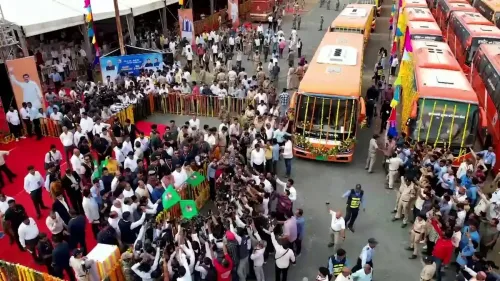
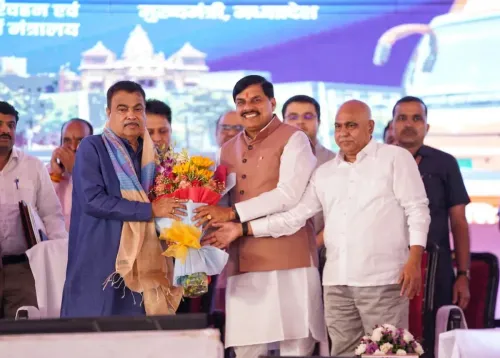
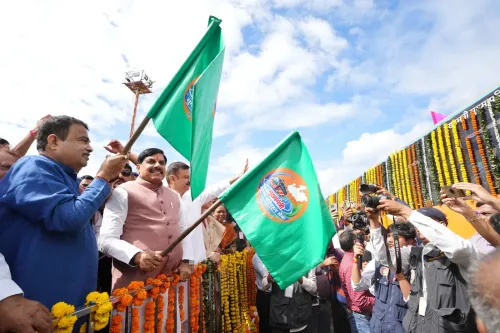
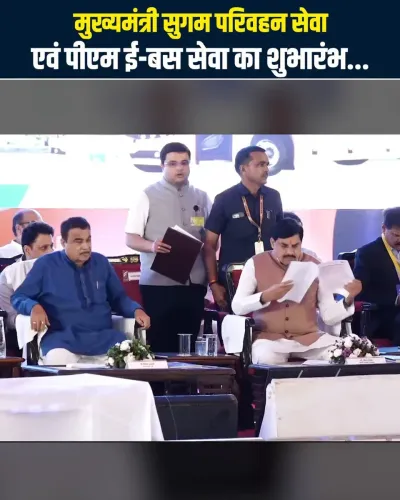
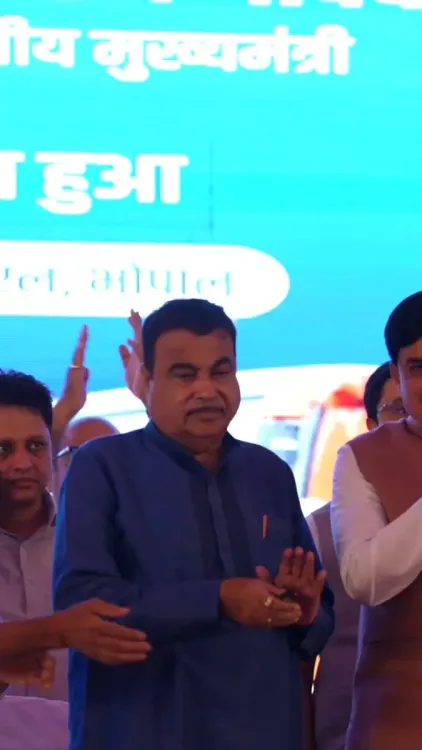
Union Minister Nitin Gadkari and MP CM Dr Mohan Yadav jointly inaugurated two public transport schemes in Bhopal on 25 September 2026 .
The PM e-Bus Sewa scheme, approved in August 2023 , targets deployment of 10,000 electric buses across 169 cities nationwide.
The state-level Mukhyamantri Sugam Parivahan Seva complements the central scheme with affordable, accessible transit coverage across Madhya Pradesh.
The launch continues a policy arc from FAME-I and FAME-II , shifting Central EV strategy from individual subsidies to mass-transit electrification.
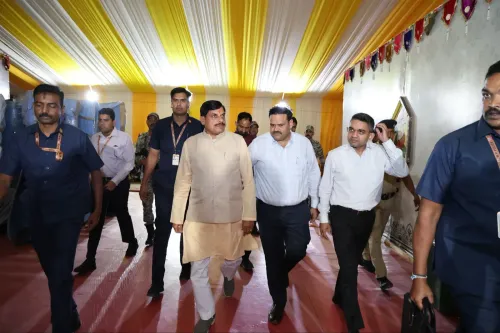
Deputy CM Jagdish Devda , state ministers, and senior officials were present at the Bhopal ceremony.
Phased district-level rollout and additional bus tenders are the key milestones to watch next.
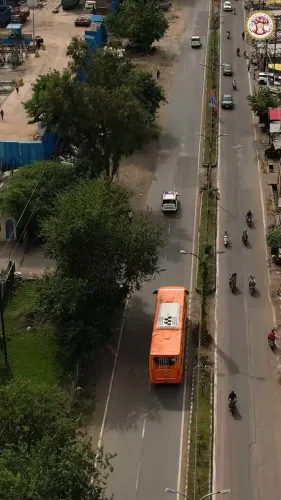
Electric buses rolled onto Bhopal's streets on Friday, 25 September 2026, as Union Road Transport and Highways Minister Nitin Gadkari jointly inaugurated two public transport initiatives with Madhya Pradesh Chief Minister Dr Mohan Yadav — a moment that places the state capital at the front of India's accelerating push toward zero-emission urban mobility.
Two schemes, one shared goal
The twin launch covered the state-run Mukhyamantri Sugam Parivahan Seva — Madhya Pradesh's own affordable public transport programme — alongside the centrally sponsored PM e-Bus Seva. Deputy Chief Minister Shri Jagdish Devda, state ministers, and senior officials joined the ceremony in Bhopal. Gadkari described the twin rollout as 'a significant step towards cleaner, safer and more accessible public transport' and 'strengthening sustainable urban mobility.'
PM e-Bus Seva: the national backbone
The PM e-Bus Sewa scheme, approved by the Union Cabinet in August 2023, earmarks funding for the deployment of 10,000 electric buses across 169 cities nationwide. The scheme operates on a gross-cost contract model — cities pay operators per kilometre run, not per passenger, removing financial risk from bus operators and encouraging private investment in electric fleets. Madhya Pradesh's participation plugs it into that national grid of clean-transit funding, with Bhopal among the first cities in the state to receive the central support.
From FAME to full fleets: the policy arc behind the event
This inauguration is not a standalone act. It is the latest milestone in a decade-long Central push that began with FAME-I and FAME-II — Faster Adoption and Manufacturing of Electric Vehicles — which subsidised private EV purchases and laid the charging-infrastructure groundwork. PM e-Bus Seva extends that logic to mass transit: instead of nudging individuals toward EVs, the state becomes the anchor customer. Urban commuters in Madhya Pradesh — who have long depended on overcrowded, ageing diesel fleets — stand to gain the most directly from the shift.
Central-state coordination as a model
Gadkari's presence alongside CM Yadav signals deliberate optics: the Centre and a BJP-governed state demonstrating joint delivery on an electoral promise of cleaner cities. The event follows a pattern seen in states like Delhi, Maharashtra, and Karnataka, where e-bus deployments have already begun under the same central scheme. For Madhya Pradesh, the dual programme structure — a state scheme providing the local 'last mile' accessibility layer, and a central scheme supplying the electric fleet — is designed to avoid the funding gaps that stalled earlier urban bus projects.
The road now runs through rollout: Madhya Pradesh must phase the service across its districts, issue tenders for additional buses, and ensure the charging infrastructure keeps pace with the expanding fleet. If it does, Bhopal's inauguration ceremony today will look less like a ribbon-cutting and more like the start of a permanent transformation in how millions of Madhya Pradesh residents move through their cities.
Point of View
Presiding over a state-level rollout reinforces his ministry's role as the enabler of clean mobility beyond highways. The event also signals that the BJP is keen to convert its 2023 e-bus policy commitment into visible, pre-election deliverables in large states. The durability of the initiative will ultimately depend on whether Madhya Pradesh moves quickly from ceremony to operational scale — district-level deployment and tender timelines will be the real test.
NationPress
25 Sept 2026
Frequently Asked Questions
What is the PM e-Bus Seva scheme?
PM e-Bus Sewa is a Union Cabinet-approved scheme from August 2023 that funds the deployment of 10,000 electric buses across 169 cities in India to promote cleaner urban public transport.
What is the Mukhyamantri Sugam Parivahan Seva?
It is a Madhya Pradesh state government initiative aimed at providing affordable, accessible, and comfortable public transport services to citizens across the state.
Who inaugurated the e-bus services in Bhopal?
Union Minister Nitin Gadkari and Madhya Pradesh Chief Minister Dr Mohan Yadav jointly inaugurated both schemes in Bhopal on 25 September 2026, accompanied by Deputy CM Jagdish Devda and state officials.
How many electric buses will be deployed under PM e-Bus Seva across India?
The scheme targets 10,000 electric buses deployed across 169 cities nationwide under central government funding.
How does PM e-Bus Seva relate to earlier EV schemes like FAME?
PM e-Bus Sewa extends the policy logic of FAME-I and FAME-II by shifting focus from subsidising individual EV purchases to deploying electric buses for mass urban transit, making the state the anchor customer for clean mobility.