Jaishankar meets Cyprus FM Kombos at UNGA81
Synopsis
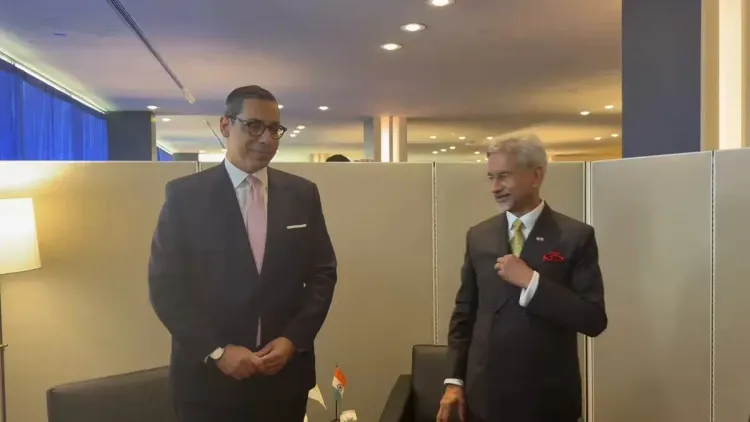
At the 81st UN General Assembly in New York, External Affairs Minister Dr. S. Jaishankar met Cyprus FM Constantinos Kombos, reaffirming bilateral solidarity on territorial integrity, shared opposition to illegal occupation, and commitment to UNCLOS as the foundation of maritime order.
Key Takeaways
Jaishankar met Cyprus FM Constantinos Kombos on the sidelines of UNGA81 on September 25, 2026 .
Both sides jointly reaffirmed 'firm opposition to the illegal occupation of our territories,' a reference to Cyprus's Turkish-occupied north and India's own territorial disputes.
UNCLOS was underlined as 'the Constitution of the seas,' consistent with India's long-standing multilateral messaging on maritime law.
The meeting reviewed 'steady progress' in both bilateral India-Cyprus ties and the broader India-EU Strategic Partnership , launched in 2004 .
India and Cyprus have backed each other on territorial integrity since the 1960s — Cyprus on Kashmir, India on the divided island.
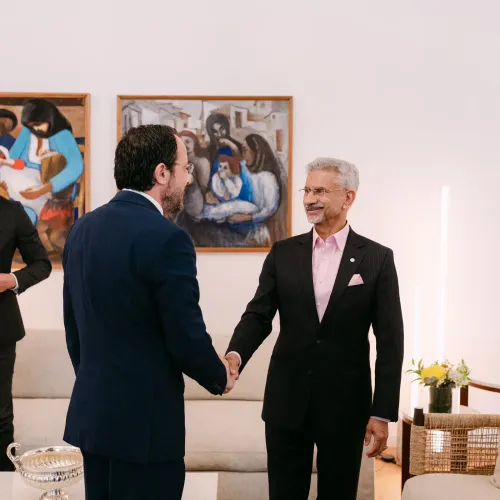
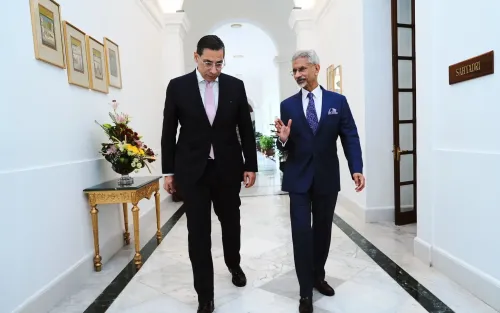
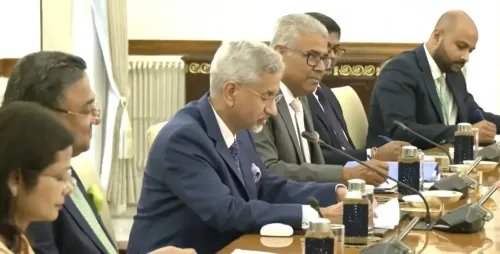
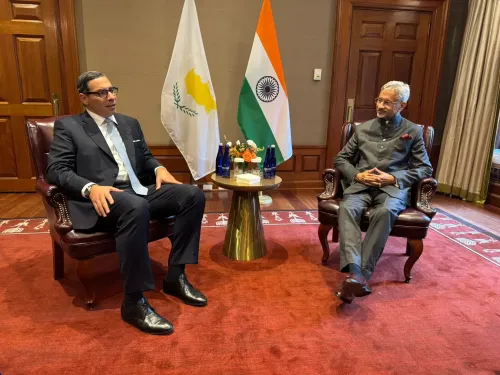
On the sidelines of the 81st United Nations General Assembly in New York, Union External Affairs Minister Dr. S. Jaishankar met Cyprus Foreign Minister Constantinos Kombos on Friday, September 25, 2026 — a bilateral that packed more diplomatic weight than a routine courtesy call. Two nations, two sets of occupied territories, one shared declaration at the world's most-watched multilateral forum.
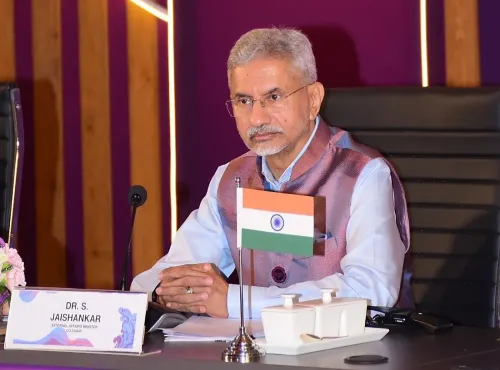
Dr. Jaishankar described the meeting as an opportunity to review 'steady progress in our bilateral cooperation as also in India-EU ties' and to exchange views on 'regional challenges.' But the headline moment came in a shared, pointed reaffirmation: 'our firm opposition to the illegal occupation of our territories.'
Decades of solidarity, renewed at the UN podium
The language was deliberate and its roots are deep. India and Cyprus have traded diplomatic cover on territorial integrity since the 1960s — Cyprus backing India on Kashmir, India standing with Cyprus against Turkish occupation of the island's northern third. That mutual solidarity, forged in the early decades of postcolonial multilateralism, found fresh expression in New York this week.
Cyprus, an EU member state in the Eastern Mediterranean, has lived with a divided island since 1974, when Turkish forces occupied its northern territory following a coup. For India, whose own map disputes with Pakistan and China remain live, the phrase 'illegal occupation of our territories' carries dual resonance — diplomatic solidarity and domestic messaging, simultaneously.
UNCLOS: India's preferred rulebook, invoked again
Equally significant was Dr. Jaishankar's underscoring of 'our commitment to UNCLOS as the Constitution of the seas.' India ratified the United Nations Convention on the Law of the Sea in 1995 and has consistently wielded it in multilateral settings — particularly in pushback against unilateral maritime claims in the Indo-Pacific. Invoking UNCLOS with Cyprus, itself a Mediterranean state wary of Turkish maritime assertiveness, signals that New Delhi views the convention not merely as a bilateral talking point but as a global rules-based anchor.
The Indo-Pacific framing and the Eastern Mediterranean framing are converging. Turkey's contested maritime claims around Cyprus and China's expansive claims in the South China Sea are legally distinct disputes — but India's consistent UNCLOS messaging places New Delhi on the same principled side of both.
India-EU ties and the UNGA bilateral circuit
The meeting also advanced the broader India-EU Strategic Partnership, launched in 2004, which India regularly tends through bilateral touchpoints with EU member states on the sidelines of UNGA. No new agreement was announced — these encounters typically track incremental progress rather than produce headline deliverables. But each such conversation adds a strand to what New Delhi hopes will eventually become a substantive EU relationship on trade, technology, and security.
For Dr. Jaishankar, the UNGA session is a high-efficiency diplomatic sprint: dozens of bilateral meetings compressed into days, each one a tile in a larger mosaic. The Cyprus meeting, with its shared vocabulary on sovereignty and international law, is precisely the kind of tile India keeps placing — quietly, firmly, and in plain sight.
Two flags, one message: the rules matter, and the territories are not forgotten.
Point of View
Bundled with solidarity for like-minded states. By invoking UNCLOS alongside Cyprus, Jaishankar connects the Indo-Pacific rules-based order narrative to the Eastern Mediterranean, widening the coalition of states aligned on international law against unilateral force. The meeting also reflects India's EU strategy: rather than relying solely on Brussels-level summits, New Delhi maintains a web of bilateral warmth with individual member states whose voices shape EU foreign policy. Expect this language to reappear at the next India-EU summit as evidence of grassroots political alignment.
NationPress
25 Sept 2026
Frequently Asked Questions
Why did Jaishankar meet Cyprus FM at UNGA 2026?
Dr. Jaishankar met Cyprus Foreign Minister Constantinos Kombos on the sidelines of the 81st UN General Assembly to review bilateral cooperation, discuss regional challenges, and jointly reaffirm their opposition to illegal territorial occupation and commitment to UNCLOS.
What is India's position on the Cyprus territorial dispute?
India supports Cyprus against the Turkish occupation of northern Cyprus, a position rooted in decades of mutual diplomatic solidarity dating back to the 1960s, when Cyprus similarly backed India on the Kashmir issue.
What is UNCLOS and why does India keep invoking it?
UNCLOS — the United Nations Convention on the Law of the Sea — is the primary international treaty governing ocean rights and maritime boundaries. India ratified it in 1995 and consistently cites it in multilateral forums to oppose unilateral maritime claims, particularly in the Indo-Pacific.
What is the India-EU Strategic Partnership?
The India-EU Strategic Partnership was launched in 2004 to deepen political, economic, and security ties between India and the European Union. India regularly advances this relationship through bilateral meetings with EU member states, including Cyprus, on the sidelines of UNGA.
What did India and Cyprus agree on at UNGA81?
No new formal agreement was announced. The two sides reviewed progress in bilateral and India-EU ties, exchanged views on regional challenges, jointly opposed illegal occupation of their respective territories, and reaffirmed their commitment to UNCLOS as the legal framework for the seas.