India, Switzerland deepen S&T partnership; CHF 45 million earmarked
Synopsis
Switzerland has put CHF 45 million on the table to deepen its science and technology partnership with India — and is now waiting for a matching commitment from New Delhi. With quantum tech, AI, and the bio-economy on the agenda, this is one of the more substantive bilateral S&T moves of 2026.
Key Takeaways
India and Switzerland agreed on 6 October 2026 to deepen their bilateral science, technology, research and innovation partnership.
Switzerland's President H.E.
Guy Parmelin has earmarked CHF 45 million for the joint research framework, pending a corresponding Indian commitment.
The Indo-Swiss Research Framework (ISRF) and the Indo-Swiss Joint Scientific Board will serve as the institutional backbone of the partnership.
Key areas of cooperation include AI, quantum technology, biotechnology, vaccine development, genome sequencing, space, deep ocean research , and the blue economy .
Union Minister of State Dr.
Jitendra Singh stressed the need for a regular working arrangement to ensure sustained engagement and follow-up.
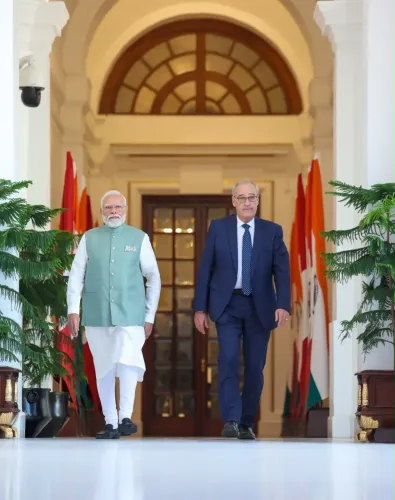
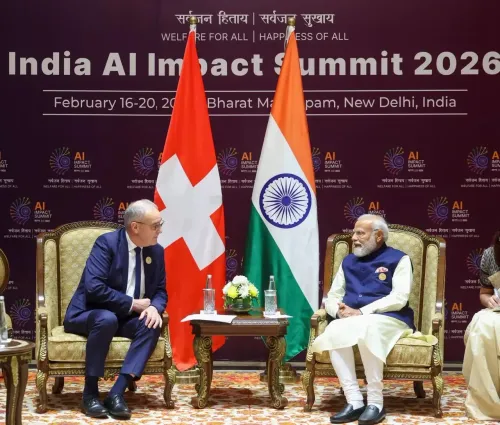
India and Switzerland on Tuesday, 6 October 2026, agreed to take their science, technology, research and innovation partnership into a more structured and long-term phase, with Swiss Confederation President H.E. Guy Parmelin earmarking CHF 45 million for the bilateral framework. The agreement was reached during a high-level meeting in New Delhi between Parmelin and Union Minister of State for Science and Technology Dr. Jitendra Singh.
Key Developments from the Meeting
The two sides focused on deepening institutional engagement and cooperation in emerging areas of mutual interest. Dr. Singh outlined India's shift toward an interdisciplinary, mission-mode approach to science and technology — one that draws expertise across disciplines and ministries rather than treating subjects in silos. He noted that artificial intelligence is being viewed as an enabling tool across diverse fields rather than a standalone discipline.
The minister also highlighted India's active work in biotechnology, vaccine development, genome sequencing, quantum technology, space exploration, and deep ocean research, as well as emerging opportunities in the blue economy and bio-economy.
The Indo-Swiss Research Framework
Dr. Singh welcomed progress toward two key institutional mechanisms: the Indo-Swiss Research Framework (ISRF) and the Indo-Swiss Joint Scientific Board. Together, these bodies are designed to provide a stronger foundation for elevating bilateral science and technology cooperation into a strategic, long-term arrangement. The minister also stressed the need for a regular working arrangement to ensure sustained engagement and effective follow-up on areas of mutual interest.
Switzerland's Stake in the Partnership
President Parmelin described India as a 'rapidly emerging global research and development power' and said Switzerland seeks to position itself as India's preferred long-term partner in education, research and innovation. The CHF 45 million commitment from the Swiss side comes with an expectation of a corresponding financial commitment from India to further strengthen and consolidate the joint research framework.
What This Means for Bilateral Relations
This is not the first time India and Switzerland have signalled intent to deepen S&T ties, but the explicit institutional anchors — the ISRF and the Joint Scientific Board — and Switzerland's fresh funding commitment give the engagement a more concrete character than earlier rounds of dialogue. The emphasis on quantum technology, AI, and the bio-economy aligns with India's own national missions under its Anusandhan National Research Foundation framework. With a corresponding Indian commitment still awaited, the pace of formalisation will be closely watched by scientific communities on both sides.
Point of View
But its real value depends on whether India follows with a credible matching outlay — something the minister's remarks did not confirm. The institutional scaffolding of the ISRF and Joint Scientific Board is welcome, but both have been 'in progress' for some time; the test is whether they now gain operational teeth. India's emphasis on AI as a cross-cutting enabler and the blue economy reflects current national mission priorities, but Switzerland's interest is equally commercial — positioning Zurich and Basel's pharma and deep-tech sectors for early access to India's growing R&D market. The optics of alignment are strong; the substance will emerge only when funding timelines and joint project pipelines are made public.
NationPress
6 Oct 2026
Frequently Asked Questions
What was agreed between India and Switzerland on 6 October 2026?
India and Switzerland agreed to move their science, technology, research and innovation partnership into a more structured, long-term phase. The meeting in New Delhi between Union Minister of State Dr. Jitendra Singh and Swiss President H.E. Guy Parmelin focused on greater institutional engagement and cooperation in emerging areas including AI, quantum technology, and the bio-economy.
How much has Switzerland committed to the Indo-Swiss research partnership?
Switzerland has earmarked CHF 45 million for the partnership. President Guy Parmelin expressed the expectation that India would make a corresponding financial commitment to further strengthen the joint Indo-Swiss research framework.
What is the Indo-Swiss Research Framework (ISRF)?
The Indo-Swiss Research Framework (ISRF) is a bilateral institutional mechanism designed to provide a strategic, long-term foundation for science and technology cooperation between India and Switzerland. It works alongside the Indo-Swiss Joint Scientific Board to structure and guide joint research activities.
Which areas of science and technology are the two countries focusing on?
The cooperation spans artificial intelligence, quantum technology, biotechnology, vaccine development, genome sequencing, space research, deep ocean research, the blue economy, and the bio-economy. India has framed AI as an enabling cross-cutting tool rather than a standalone domain.
Why does Switzerland view India as a key science and technology partner?
Swiss President Guy Parmelin described India as a 'rapidly emerging global research and development power' and said Switzerland seeks to position itself as India's preferred long-term partner in education, research and innovation. Switzerland's interest also reflects its pharma and deep-tech sectors' strategic stake in India's expanding R&D ecosystem.