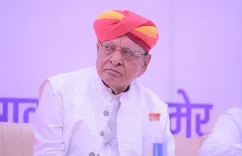
PM Modi: Cabinet clears ITLA to unify India's transport network
Synopsis
The Union Cabinet has approved the Integrated Transport and Logistics Authority (ITLA), a new apex body to bring data-led planning and multimodal coordination across India's roads, railways, ports, and airways — a structural step PM Modi says will reshape India's growth trajectory.
Key Takeaways
The Union Cabinet approved the creation of the Integrated Transport and Logistics Authority (ITLA) on 6 October 2026 .
ITLA will serve as an apex coordinating body covering roads, railways, ports, civil aviation cargo, and inland waterways.
Its mandate centres on data-led planning and multimodal integration to reduce India's historically high logistics costs.
PM Modi said the authority will have 'a wide-ranging impact on India's growth trajectory.' The move builds on the National Logistics Policy of 2022 , which targeted a reduction in logistics expenditure as a share of GDP.
Translating Cabinet approval into operational authority — including statutory powers and inter-ministry cooperation — remains the next critical step.
India's sprawling, fragmented transport system — roads, railways, ports, airways, and inland waterways each running on separate tracks — is about to get a single nerve centre. Prime Minister Narendra Modi announced on Tuesday, 6 October 2026 that the Union Cabinet has approved the creation of the Integrated Transport and Logistics Authority (ITLA), a new apex body designed to coordinate planning and policy across every mode of movement in the country.
What ITLA is built to fix
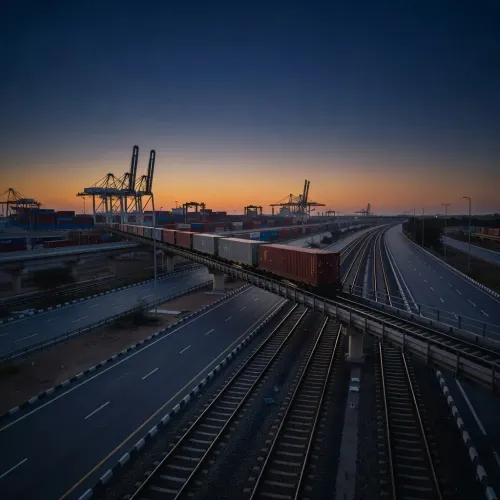
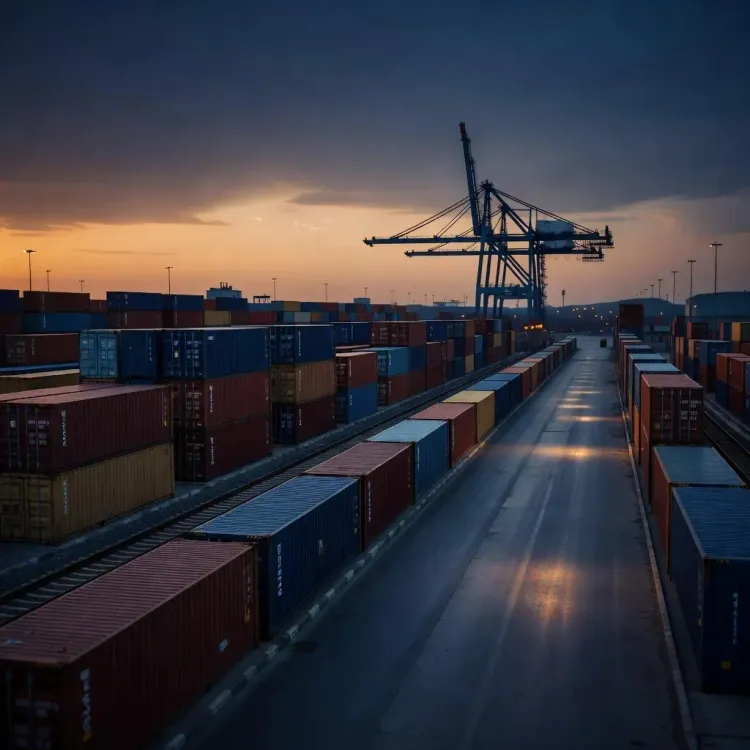
India has long struggled with what economists call the 'modal silo' problem: each transport ministry optimises for its own network, leaving freight and passengers to absorb the cost of switching between them. A truck arrives at a railhead with no real-time slot guarantee; a port container sits idle because inland connectivity is on a different planning cycle. ITLA is conceived precisely to collapse those silos — bringing data-led planning and multimodal integration under one coordinating roof.
PM Modi described the body as one that will 'bring greater coordination, data-led planning and multimodal integration across India's transport ecosystem,' adding it would have 'a wide-ranging impact on our growth trajectory.' The phrase 'data-led' is deliberate — ITLA is expected to build a shared intelligence layer that lets planners see the full network, not just their slice of it.
Why a unified logistics authority matters for growth
India's logistics cost as a share of GDP has historically run higher than that of competing manufacturing economies, a gap that erodes export competitiveness and inflates domestic prices. Reducing that cost has been a stated government priority since the National Logistics Policy of 2022, which set out to drop logistics expenditure toward single-digit percentages of GDP. ITLA is positioned as the institutional muscle behind that target — translating the policy into a live, coordinating mechanism rather than an aspirational document.
The authority's mandate covers the full spectrum: road freight, rail movement, port throughput, civil aviation cargo, and multimodal logistics parks. By sitting above individual sector regulators, ITLA can, in theory, sequence investments, harmonise standards, and eliminate the duplication that has historically driven up dwell times and costs.
The Cabinet signal and what comes next
Cabinet approval is the formal starting gun, but the harder work — staffing the authority, defining its statutory powers, and winning cooperation from entrenched ministry silos — lies ahead. The government's move to route the announcement through the Prime Minister's own handle signals that ITLA is being treated as a flagship institutional reform, not a routine administrative reshuffle.
For investors watching India's infrastructure play, the creation of a single coordination authority removes a long-standing uncertainty: who, exactly, is in charge of making the whole system move together. ITLA answers that question. Whether it delivers depends on the mandate it carries into law — and the speed at which it can translate cross-modal data into actual operational decisions.
India just appointed its transport ecosystem a conductor. Now the orchestra has to learn to play together.
Point of View
Raising the accountability bar for delivery. The authority's real test will be whether it receives statutory teeth or remains a coordination forum that competing ministries can politely ignore. If ITLA works, it could be the structural unlock that finally brings India's logistics cost in line with its manufacturing ambitions.
NationPress
6 Oct 2026
Frequently Asked Questions
What is ITLA and what will it do?
ITLA — the Integrated Transport and Logistics Authority — is a new apex government body approved by the Union Cabinet to coordinate planning and policy across all modes of transport in India, including roads, railways, ports, and airways, using shared data and multimodal integration.
Why did India need a new transport authority?
India's transport ministries have historically operated in silos, leading to poor coordination, high logistics costs, and inefficient freight movement. ITLA is designed to sit above individual sector regulators and enable system-wide planning.
How does ITLA relate to India's National Logistics Policy?
The National Logistics Policy, announced in 2022, set a target to reduce India's logistics costs as a percentage of GDP. ITLA provides the institutional mechanism to pursue that goal through real-time data sharing and coordinated investment planning.
When was ITLA approved?
The Union Cabinet approved the setting up of ITLA on 6 October 2026 , as announced by PM Narendra Modi on X.
Will ITLA reduce logistics costs for businesses in India?
That is the stated intent. By eliminating planning silos and enabling data-led decisions across transport modes, ITLA aims to cut dwell times, reduce duplication, and lower the overall cost of moving goods across India — though operational results will depend on the authority's final statutory powers.