India set to be next global steel demand driver on diversified infra growth
Synopsis
India's per-capita steel use sits at just 90 kg — a fraction of China's 600 kg peak — but unlike China's property-driven boom, India's demand is spread across railways, renewables, and urban transit. That diversification is precisely why BHP and Rio Tinto are betting on India as the next great steel supercycle, and why Australian and Brazilian iron ore exporters are paying close attention.
Key Takeaways
India's per-capita steel consumption stands at approximately 90 kg annually, well below the global average and far short of China's peak of 600 kg .
Demand growth is driven by investment in railways, highways, urban transit , and renewable energy infrastructure — not a single property-led cycle.
India's steel industry is predominantly blast furnace-based , requiring high iron ore inputs and benefiting Australian and Brazilian exporters.
Major miners BHP and Rio Tinto have identified India as the primary driver of global steel's next growth wave.
ASEAN steel demand is projected to roughly double within a decade, adding a diversified secondary demand cluster for iron ore exporters.
India's per-capita steel consumption of around 90 kilograms per person annually — well below the global average — leaves significant headroom for expansion, and the country is increasingly beginning to close that gap, according to a new industry report. The analysis positions India as the most credible candidate to drive the next major wave of global steel demand.
How India Compares to China's Steel Peak
At its construction boom peak, China recorded per-capita steel intensity of approximately 600 kilograms — nearly seven times India's current level. That gap, analysts note, is not a liability but an opportunity. India's trajectory, however, is structurally different: where China's boom was overwhelmingly concentrated in the property sector, India's demand is spread across railways, highways, urban transit systems, and renewable energy infrastructure.
'China's steel boom was overwhelmingly property-concentrated, which created both extraordinary growth and extraordinary [risk],' the report noted. India's more diversified demand base is seen as a buffer against the boom-bust cycles that characterised China's steel arc.
Key Demand Drivers Across Sectors
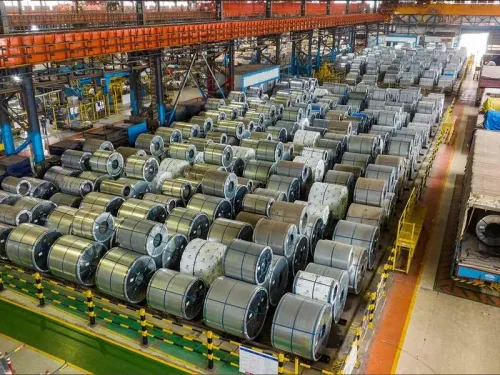
Investment in infrastructure is generating demand across multiple steel categories — from construction-grade long products used in bridges and rail networks to flat steel for industrial and manufacturing applications. The energy transition, including solar and wind installations, is an additional demand vector that did not exist at scale during China's comparable growth phase.
India's steel demand structure is therefore considered more resilient, with growth distributed across infrastructure, manufacturing, and energy transition sectors rather than anchored to a single cyclical driver.
What It Means for Global Iron Ore Exporters
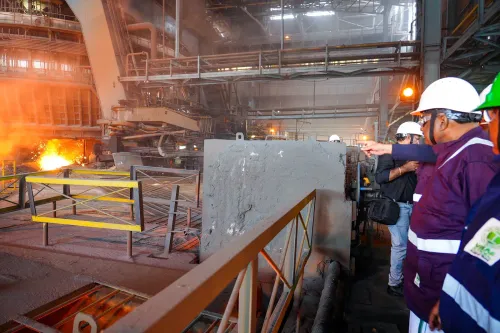
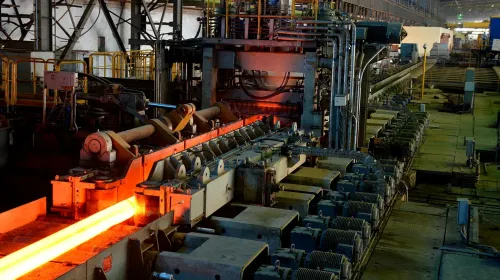
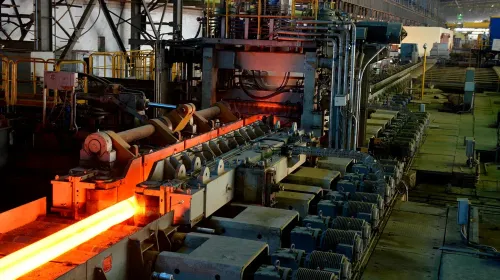
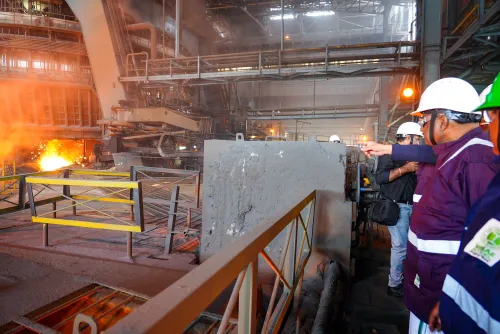
India's steel industry remains predominantly blast furnace-based, consuming iron ore and metallurgical coal as primary feedstocks rather than relying on scrap-fed electric arc furnaces. This production profile is significant for global miners: blast furnace steelmaking requires substantially higher ore inputs per tonne of finished steel.
As a result, India is emerging as a high-quality demand replacement for Australian and Brazilian iron ore producers. Major miners including BHP and Rio Tinto have publicly identified India as the primary engine of steel's next growth wave, precisely because of this diversified and ore-intensive demand base.
ASEAN as a Supporting Demand Cluster
Beyond India, Southeast Asia's collective steel demand is expected to roughly double within a decade, driven by rapid industrialisation across member economies. Unlike China's historically concentrated demand, ASEAN's growth is distributed across multiple jurisdictions with varying demand profiles — reducing concentration risk for iron ore exporters and creating a more diversified customer base.
Iron ore miners have also highlighted sustained foreign direct investment (FDI) into the region as a leading indicator for steel demand, reinforcing the case that the next supercycle in the commodity will be geographically broader and structurally more stable than the one China delivered.
With India's infrastructure pipeline expanding and its manufacturing ambitions scaling up, the country's steel consumption trajectory is increasingly difficult for global producers and exporters to ignore.
Point of View
And that difference matters more than the headline consumption gap. China's property concentration turned a growth story into a systemic risk; India's spread across infrastructure, manufacturing, and energy transition is a more durable foundation. The more pressing question is whether India's domestic steelmakers can scale capacity fast enough to capture that demand, or whether import pressure — particularly from overcapacity in China and ASEAN — erodes the gains before they materialise. BHP and Rio Tinto's enthusiasm is partly self-serving: they need a demand replacement for a slowing China. That does not make the India thesis wrong, but it warrants scrutiny of the timeline and the assumptions baked into those projections.
NationPress
19 Sept 2026
Frequently Asked Questions
Why is India expected to be the next global steel demand driver?
India's per-capita steel consumption of around 90 kg annually is far below the global average and China's historical peak of 600 kg, leaving substantial room for growth. Crucially, that growth is spread across railways, highways, urban transit, and renewable energy — making it more resilient than China's property-concentrated boom.
How does India's steel demand compare to China's historic peak?
China's per-capita steel intensity reached approximately 600 kg at its construction boom peak, nearly seven times India's current level of around 90 kg. However, India's demand is considered structurally more diversified and therefore less prone to the sharp corrections China experienced.
Why does India's blast furnace-based steel industry matter for iron ore exporters?
Blast furnace steelmaking requires significantly more iron ore input per tonne of finished steel compared to scrap-fed electric arc furnaces. Since India's industry is predominantly blast furnace-based, it represents a high-quality, high-volume demand source for iron ore exporters in Australia and Brazil.
Which global miners are betting on India's steel growth?
Major miners BHP and Rio Tinto have publicly identified India as the primary driver of steel's next growth wave, citing the country's diversified infrastructure investment pipeline and ore-intensive production base.
What is the outlook for ASEAN steel demand?
Southeast Asia's collective steel demand is expected to roughly double within a decade, driven by rapid industrialisation across the region. Unlike China, ASEAN's demand is distributed across multiple countries, reducing concentration risk for iron ore exporters.