Indian-branded smartphones by 2028: IT Minister Ashwini Vaishnaw
Synopsis
IT Minister Ashwini Vaishnaw named a date — 23 October 2028 — as the moment India will have its first globally competitive, Indian-designed-and-branded smartphones. It is a rare, time-stamped government commitment in a sector where India has long assembled phones for global brands without owning one. Whether the ecosystem can deliver a brand, not just a factory, in two years is the real test.
Key Takeaways
IT Minister Ashwini Vaishnaw declared on 23 October 2026 that India will have Indian-designed, Indian-manufactured, Indian-branded smartphones by 2028 .
The minister described it as India's own ' Apple and Samsung moment ' in the smartphone industry.
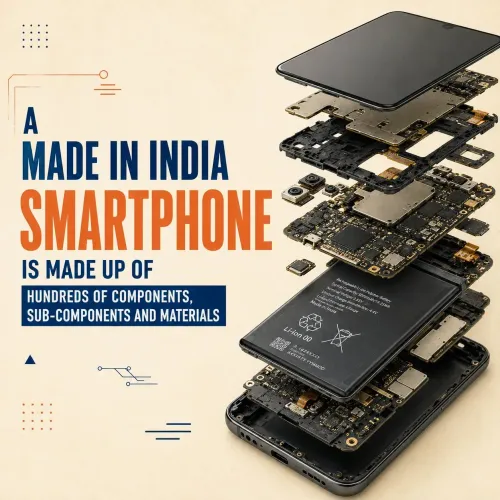
Vaishnaw cited the engineering complexity of smartphones — integrating RF systems, processors, camera modules, displays, and power management in a compact form factor.
The government challenged Indian designers to develop PCB (printed circuit board) designs roughly three years ago , seeding the current design push.
No specific companies or supporting policy details have yet been named for the 2028 target.
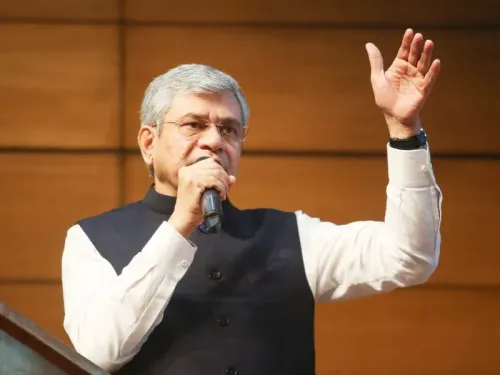
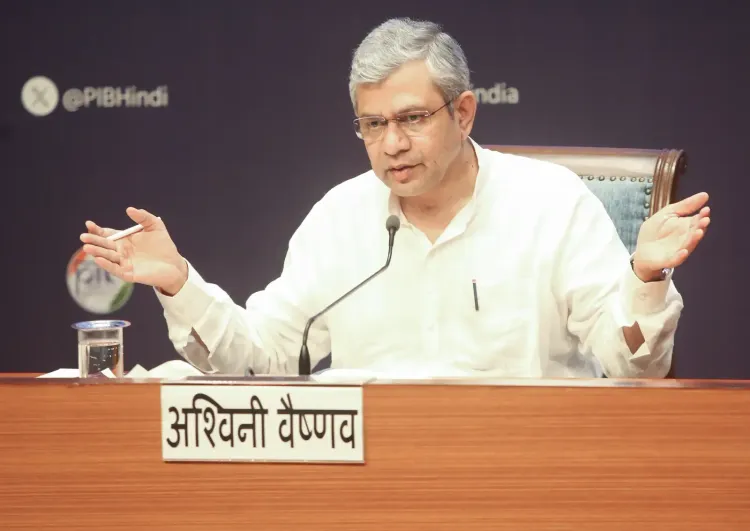
Union IT Minister Ashwini Vaishnaw on 23 October 2026 declared that India will have its own Indian-designed, Indian-manufactured, and Indian-branded smartphones on the market by 2028, projecting a homegrown 'Apple and Samsung moment' for the country's electronics sector. The minister made the announcement at the NDTV World Summit in New Delhi, framing it as the culmination of a multi-year push to build domestic design capability.
The 2028 Commitment
Vaishnaw was unambiguous about the timeline, invoking the date itself as a marker. 'This is 23 October 2026. Please note it: 23 October 2028. You will have Indian-designed, Indian-manufactured, Indian-branded mobile phones,' he said. The declaration positions 2028 as a concrete accountability checkpoint — unusual for technology-sector forecasts from government officials.
Why Smartphones Are an Engineering Frontier
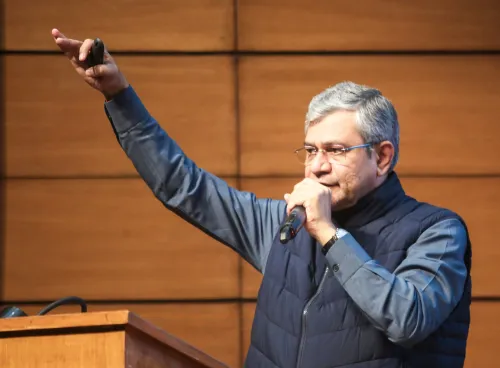
The minister used a handset as a prop to explain the engineering density involved. According to Vaishnaw, a competitive smartphone must integrate radio frequency communication systems, antennas, processors, memory chips, camera modules, displays, and power management circuits — all within a compact, weight-optimised form factor. 'In this small little real estate you have to have radio frequency communication. You have the antenna, compute, memory, all the passive components, a camera module, a display, and power management. Everything has to be built into this small little device,' he said, calling smartphone design 'extremely complex' and among the most demanding tasks in consumer electronics.
The PCB Challenge That Started It
Vaishnaw traced the current push to an initiative launched roughly three years ago, when the government challenged Indian engineers and technology firms to design printed circuit boards (PCBs) — the motherboard equivalent inside a mobile phone. 'Three years back we gave this challenge to Indian designers: why can't you design the PCB, which is the motherboard of a mobile phone?' he said. That effort has since evolved into a broader domestic design ecosystem, according to the minister.
Where India Stands — and What It Needs
India has emerged as a major smartphone assembler, with Apple and several Android vendors now manufacturing in the country under the Production-Linked Incentive (PLI) scheme. However, assembly and branded design are distinct rungs on the value ladder. Moving from contract manufacturing to owning a globally recognised brand requires proprietary chip design, software ecosystems, and sustained R&D investment — areas where Indian firms are still scaling. This comes amid intensifying global competition from China's Xiaomi and Huawei, South Korea's Samsung, and Apple's tightly controlled supply chain.
What Comes Next
The government has not yet named specific companies expected to launch Indian-branded devices by 2028, nor detailed the policy incentives or R&D support that will back the initiative. Industry observers will watch whether the PLI scheme framework is expanded or restructured to reward design and branding milestones — not just production volumes. The 2028 deadline gives the sector roughly two years to demonstrate a prototype-to-market pipeline.
Point of View
Not a five-year plan horizon. India has mastered assembly under PLI, but owning a brand means proprietary silicon, a software ecosystem, and a global distribution network, none of which scale in two years without a named champion and ring-fenced R&D support. The minister has set a measurable benchmark; what is missing is the policy architecture — expanded PLI tiers, design-linked incentives, or a sovereign chip fund — that would make it credible. Without those, the 2028 date risks becoming a talking point rather than a turning point.
NationPress
23 Oct 2026
Frequently Asked Questions
What did IT Minister Ashwini Vaishnaw announce about Indian smartphones?
Vaishnaw announced on 23 October 2026 that India will produce Indian-designed, Indian-manufactured, and Indian-branded smartphones by 2028, describing it as India's own 'Apple and Samsung moment.' He made the statement at the NDTV World Summit in New Delhi.
Why is designing a smartphone considered so complex?
According to Vaishnaw, a smartphone must pack radio frequency communication systems, antennas, processors, memory, camera modules, displays, and power management circuits into a compact, weight-optimised device — making it one of the most demanding engineering tasks in consumer electronics.
What steps has India already taken toward domestic smartphone design?
About three years ago, the government challenged Indian engineers to design printed circuit boards (PCBs) — the core motherboard of a mobile phone. That initiative has since grown into a broader domestic design ecosystem, according to the minister.
How does this differ from India's current smartphone manufacturing?
India currently assembles smartphones for global brands like Apple and several Android makers under the PLI scheme. Building an Indian brand requires proprietary design, chip development, and a software ecosystem — a higher-value rung that assembly alone does not provide.
Which companies are expected to launch Indian-branded phones by 2028?
No specific companies have been named by the government so far. Vaishnaw set the 2028 timeline as a national goal, but detailed policy support or named industry partners have not yet been announced publicly.