India toll collections to grow 10-12% in FY28 on rate hikes, steady traffic
Synopsis
India's highway toll revenues, after a near-term dip to 7–9% growth in FY27, are set to rebound sharply to 10–12% in FY28. The catalyst: a WPI-linked toll rate surge tied partly to the West Asian crisis, combined with recovering CMM sector momentum. ICRA's report also flags a quiet but significant policy pivot — from EPC dominance toward BOT Toll projects aimed at pulling private capital back into road infrastructure.
Key Takeaways
ICRA projects 10–12% growth in national highway toll collections in 2027-28 , up from an estimated 7–9% in 2026-27.
National highway traffic is forecast to grow 4.5–5.5% in 2026-27, compared with 6% in 2025-26.
Toll rate growth is estimated at 3.4–4% in 2026-27, partly affected by export-related traffic challenges.
Road execution is expected at 9,000–9,500 km in 2026-27; road awards projected to rise to 8,000–8,500 km from ~ 7,000 km in 2025-26.
The government is gradually shifting focus to BOT Toll projects to revive private sector participation in highway development.
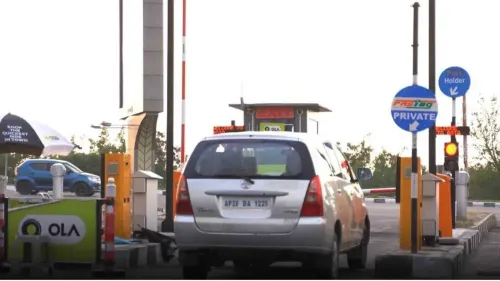
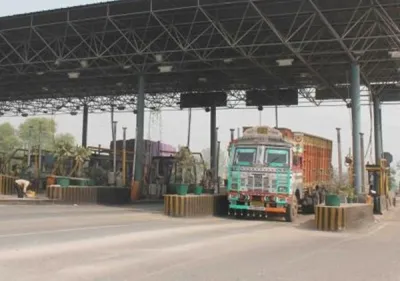
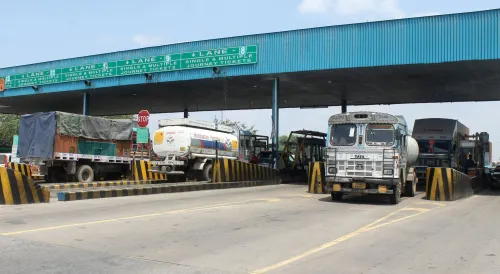
Toll collections on India's national highways are projected to grow 10–12 per cent in 2027-28, driven by higher toll rate revisions and stable traffic growth of 4–5 per cent, according to a report released on Monday, 31 August. The forecast comes from credit rating agency ICRA, which also flagged a near-term moderation before the expected rebound.
Near-Term Moderation Before FY28 Rebound
ICRA estimates toll collection growth will moderate to 7–9 per cent in 2026-27, down from 10 per cent in the previous year. The agency attributes this slowdown to softer traffic growth and lower toll rate revisions. National highway traffic is projected to expand 4.5–5.5 per cent in 2026-27, compared with 6 per cent in 2025-26, while toll rate growth is estimated at a modest 3.4–4 per cent, partly weighed down by export-related traffic challenges.
What Drives the FY28 Upturn
Suprio Banerjee, Co-Group Head, Corporate Ratings at ICRA, noted that national highway traffic broadly tracks the gross value added (GVA) of the construction, mining, and manufacturing (CMM) sectors. CMM GVA grew 8.1 per cent in 2025-26, underpinning the 6 per cent traffic growth and 10 per cent rise in toll collections recorded that year.
For 2027-28, the report projects higher toll revisions supported by a favourable movement in Wholesale Price Index (WPI) inflation, partly linked to the West Asian crisis. ICRA estimates WPI growth at 8–8.5 per cent in December 2026 and 4.5–5.5 per cent in March 2027.
Road Execution and Project Awards
On the construction side, road execution by the Ministry of Road Transport and Highways is expected to remain range-bound at 9,000–9,500 km in 2026-27, broadly in line with the 9,380 km completed in 2025-26, reflecting a sustained slowdown in project awards. However, road awards are projected to improve to 8,000–8,500 km in 2026-27, up from approximately 7,000 km in 2025-26.
Shift Toward BOT Projects and Private Participation
According to the ICRA report, the Engineering, Procurement and Construction (EPC) model is likely to remain the preferred awarding route in the near term. Simultaneously, the government is gradually increasing its focus on Build-Operate-Transfer (BOT) Toll projects to revive private sector participation.
The revised BOT model concession agreement is expected to reduce downside risks for concessionaires and lenders by incorporating revenue support during traffic shortfalls and clearer provisions for project termination. This structural shift, if implemented effectively, could unlock fresh private capital for highway development over the medium term.
Point of View
But only because WPI inflation — partly driven by an external shock in West Asia — is pushing up rate revisions, not because of a surge in underlying traffic demand. Traffic growth, at 4.5–5.5%, remains well below the CMM GVA peaks that drove earlier cycles. Meanwhile, the sustained slowdown in project awards raises questions about whether the pipeline can support the next phase of toll growth. The pivot to BOT Toll projects is the right directional call, but private sector appetite will depend on whether the revised concession agreement's revenue-support provisions are credible and bankable — something past BOT revivals have struggled to demonstrate.
NationPress
15 Oct 2026
Frequently Asked Questions
By how much are India's toll collections expected to grow in FY28?
India's national highway toll collections are projected to grow 10–12 per cent in 2027-28, according to an ICRA report. This follows an estimated moderation to 7–9 per cent growth in 2026-27.
What is driving the expected rebound in toll collection growth in FY28?
The rebound is expected to be driven by higher toll rate revisions linked to favourable WPI inflation movement — partly influenced by the West Asian crisis — alongside stable traffic growth of 4–5 per cent on national highways.
Why will toll collection growth slow in FY27 before recovering?
Growth is expected to moderate to 7–9 per cent in 2026-27 due to softer traffic growth of 4.5–5.5 per cent and lower toll rate revisions of 3.4–4 per cent, partly affected by export-related traffic challenges.
What is India's road construction target for 2026-27?
Road execution by the Ministry of Road Transport and Highways is expected to remain range-bound at 9,000–9,500 km in 2026-27, broadly in line with the 9,380 km completed in 2025-26. Road awards are projected to improve to 8,000–8,500 km from around 7,000 km the previous year.
What is the significance of the shift to BOT Toll projects?
The government is gradually moving from EPC-dominated awards toward BOT Toll projects to attract private sector investment in highway infrastructure. The revised model concession agreement is designed to reduce risks for private concessionaires and lenders through revenue support mechanisms and clearer termination provisions.