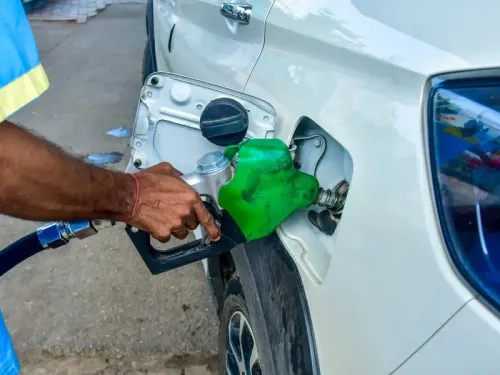
India revises petrol export duty to ₹3/litre, cuts diesel and ATF taxes
Synopsis
India has reimposed a petrol export duty for the first time since the West Asia conflict began, even as it cuts diesel and ATF levies — a balancing act that reveals just how tightly the government is managing domestic fuel supply against volatile global crude prices shaped by a stalled US-Iran diplomatic standoff.
Key Takeaways
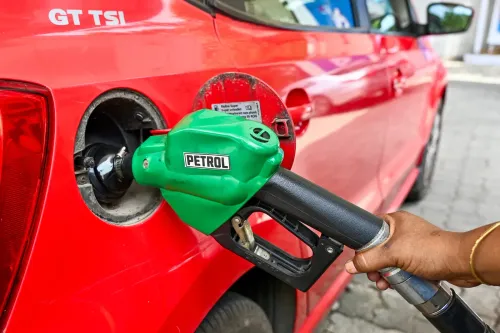
The Ministry of Finance imposed a ₹3 per litre SAED on petrol exports, effective Saturday, 17 May — the first such levy since the West Asia conflict began.
Diesel export duty was cut to ₹16.5 per litre , down from ₹23 per litre set on 30 April .
ATF export duty was reduced to ₹16 per litre from ₹33 per litre .
The road and infrastructure cess on petrol and diesel exports has been brought to zero .
Domestic fuel prices remain unchanged.
US-Iran talks remain deadlocked after President Trump rejected Iran's proposal, keeping global oil supply risk elevated.
The Ministry of Finance on 16 May revised export taxes on key petroleum products, imposing a Special Additional Excise Duty (SAED) of ₹3 per litre on petrol exports while cutting the levy on diesel to ₹16.5 per litre — changes effective from Saturday. The revision also brings the road and infrastructure cess on both petrol and diesel exports down to zero.
Key Changes in Export Duties
The fresh SAED of ₹3 per litre on petrol marks the first such levy since the outbreak of the West Asia conflict, signalling a renewed effort to manage domestic fuel availability. Meanwhile, the export duty on aviation turbine fuel (ATF) has been reduced to ₹16 per litre. Domestic fuel tax rates remain unchanged, according to the government notification.
A Series of Rapid Revisions
The current diesel duty of ₹16.5 per litre is the outcome of multiple revisions in a compressed timeframe. It was first set at ₹21.50 per litre on 26 March, then sharply raised to ₹55.5 per litre on 11 April, before being cut to ₹23 per litre on 30 April and further reduced now.
ATF followed a comparable trajectory — starting at ₹29.5 per litre, rising to ₹42 per litre, then easing to ₹33 per litre before settling at the current ₹16 per litre. The frequency of adjustments reflects the volatility in global crude markets.
The Windfall Tax Framework
India's windfall tax mechanism — under which SAED is applied — was introduced to prevent domestic refiners from diverting fuel to more profitable export markets at the expense of local supply. The framework has been recalibrated repeatedly since its introduction, tracking swings in international crude prices driven by the West Asia crisis.
Geopolitical Context
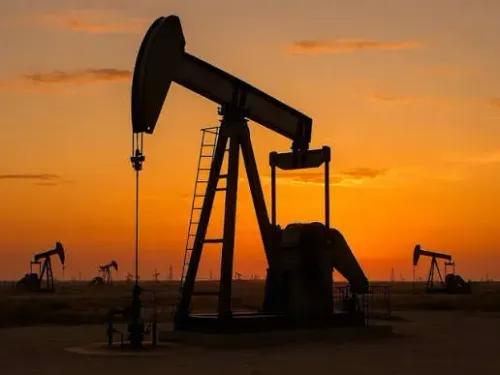
Geopolitical tensions continue to underpin global oil market uncertainty. Diplomatic efforts between the United States and Iran have stalled after US President Donald Trump rejected Iran's latest proposal, saying: 'I don't like it — TOTALLY UNACCEPTABLE.' The failure to reach an agreement keeps supply-side risk elevated, which in turn influences India's calculus on export duty levels.
What This Means for Refiners and Consumers
The duty reductions on diesel and ATF offer some relief to Indian refiners, who had faced compressed export margins under the higher levies. The reintroduction of a petrol export duty, however, signals that the government remains cautious about unchecked outflows. Domestic consumers are unaffected for now, as retail fuel prices have not been altered.
Point of View
When diesel duty hit ₹55.5 per litre. The rapid-fire revision cycle — four diesel duty changes in under two months — points to a framework that is reactive rather than rule-based. Until India formalises a transparent trigger mechanism tied to crack spreads or domestic inventory levels, the windfall tax will continue to be perceived as an ad hoc instrument, creating planning uncertainty for refiners and complicating investment decisions in the downstream sector.
NationPress
13 Oct 2026
Frequently Asked Questions
What is the new petrol export duty in India?
The government has imposed a Special Additional Excise Duty (SAED) of ₹3 per litre on petrol exports, effective from Saturday, 17 May. This is the first petrol export levy since the outbreak of the West Asia conflict.
What is the revised diesel export duty?
The diesel export duty has been reduced to ₹16.5 per litre, effective from the same date. This follows a series of rapid revisions — from ₹21.50 per litre in March to a high of ₹55.5 per litre in April, before being progressively cut.
How has the ATF export duty changed?
Aviation turbine fuel (ATF) export duty has been brought down to ₹16 per litre. It had previously been as high as ₹42 per litre before a series of reductions.
Will domestic petrol and diesel prices change?
No. The government has clarified that domestic fuel tax rates remain unchanged. The revisions apply only to export duties and do not affect retail prices at the pump.
Why does India use a windfall tax on petroleum exports?
India introduced the windfall tax framework — applied through the SAED mechanism — to prevent domestic refiners from diverting fuel to export markets when global prices are high, ensuring adequate domestic availability. It is periodically revised based on global crude price movements and geopolitical developments.