TPCI and UKIBC sign MoU to drive India-UK trade post-CETA

Synopsis
With the India-UK CETA now in force, TPCI and UKIBC have signed an MoU in London to turn policy wins into real trade flows. The biggest prize: India holds just 0.6% of the UK's $50.68 billion processed food import market — and with 70% tariffs now gone, that number has room to multiply fast.
Key Takeaways
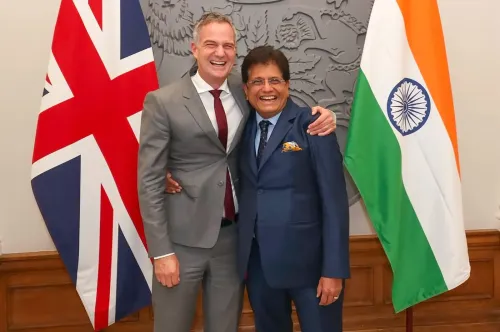
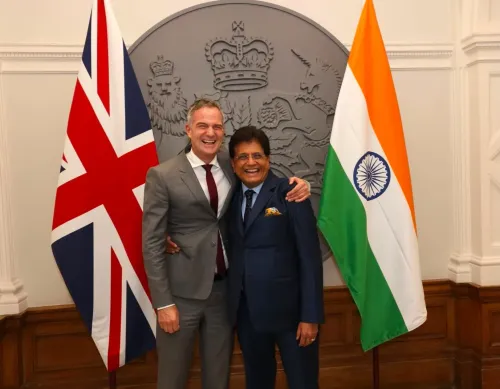
TPCI and UKIBC signed an MoU on 22 October 2026 in London to formalise bilateral trade collaboration post- CETA .
A B2B matchmaking showcase in London connected 48 Indian exporters with 150 UK importers .
India's share of the UK's $50.68 billion annual processed food import market is just 0.6% ($309.5 million), indicating major untapped potential.
Under CETA , UK tariffs of up to 70% on processed foods, 4.2–8.5% on shrimp, and duties on instant coffee have been eliminated.
99% of Indian tariff lines now enter the UK duty-free under the new agreement.
India-UK bilateral trade reached 48 billion pounds (~ $65 billion ) in FY2025-26 .
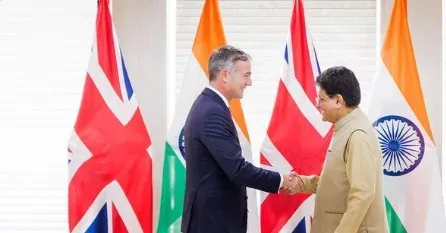
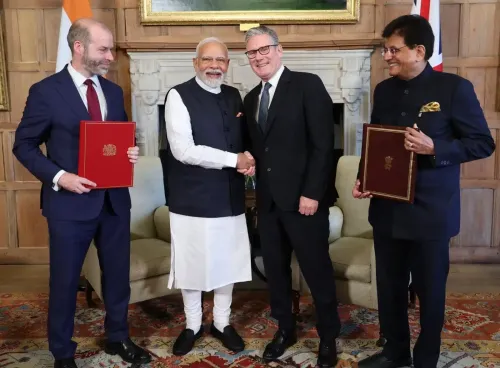
The Trade Promotion Council of India (TPCI) and the UK-India Business Council (UKIBC) signed a Memorandum of Understanding (MoU) on 22 October 2026 in London, establishing a formal institutional framework to accelerate bilateral commercial engagement in the wake of the India-UK Comprehensive Economic and Trade Agreement (CETA) coming into force. The agreement is designed to convert the policy gains of the free trade deal into measurable trade outcomes for businesses on both sides.
What the MoU Covers
The partnership between TPCI and UKIBC is structured around four pillars: connecting businesses, facilitating trade missions, sharing market intelligence, and creating expansion pathways for Small and Medium Enterprises (SMEs) in both countries. The two organisations will work jointly to ensure that post-CETA momentum translates into tangible commercial results rather than remaining at the level of policy intent.
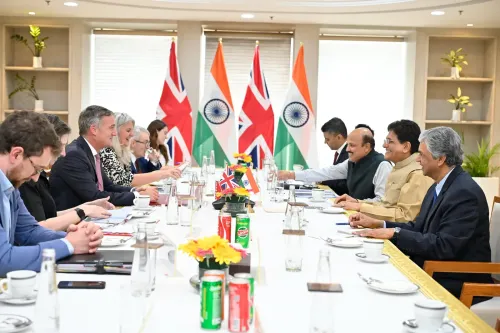
Alongside the MoU signing, TPCI also organised a B2B matchmaking showcase in London bringing together 48 Indian exporting companies and 150 UK-based importers — a direct effort to convert institutional goodwill into buyer-seller relationships.
The Food and Beverage Opportunity
The food and beverage sector has emerged as a primary growth corridor under the new trade framework. The UK currently imports $50.68 billion worth of processed food annually, yet India's share stands at a mere 0.6 per cent — approximately $309.5 million — leaving significant headroom for expansion.
Under CETA, UK tariffs of up to 70 per cent on processed foods, duties of 4.2–8.5 per cent on shrimp, and charges on instant coffee have been fully eliminated. With 99 per cent of Indian tariff lines now entering the UK duty-free, Indian food exporters are positioned to scale shipments, move beyond the 1.86 million-strong Indian diaspora market, and embed themselves within mainstream UK retail and food service supply chains.
What TPCI Said
Mohit Singla, Chairman of TPCI, described the MoU as 'a major milestone in taking India-UK trade engagement from policy to partnership.' He added that 'both TPCI and UKIBC will be deeply engaged in bilateral trade development, ensuring that the post-FTA momentum translates into tangible outcomes.' Singla also noted that the tariff elimination under CETA had 'transformed the landscape for Indian food exporters dramatically.'
Wider Engagement and Trade Context
During the London visit, the TPCI team also held meetings with the Department for Business, Innovation, Science and Trade (BIST), the London Chamber of Commerce and Industry (LCCI), and the Scotch Whisky Association. Both sides discussed mechanisms for business support and strategies to deepen international trade ties to drive economic growth.
The broader backdrop is significant: bilateral trade between India and the UK reached 48 billion pounds (approximately $65 billion) in FY2025-26. This MoU signals that the two countries are now focused on deepening that figure sector by sector, with food, beverages, and SME-led commerce among the first priorities. How quickly Indian exporters can build supply chain relationships with UK retailers will determine whether the post-CETA dividend is realised in the near term.
Point of View
But the real story is the staggering gap between India's 0.6% share of the UK's processed food import market and what CETA now makes structurally possible. Tariff elimination is the easy part — Indian exporters now face the harder challenge of building cold chains, meeting UK food safety standards, and competing with established suppliers. The TPCI-led B2B showcase in London is a step, but scaling from $309 million to a meaningful slice of a $50 billion market requires sustained supply-chain investment, not just matchmaking events. Policymakers should watch whether SME exporters — the stated focus of this MoU — actually access these gains, or whether the benefits accrue mainly to large agri-processing conglomerates.
NationPress
22 Oct 2026
Frequently Asked Questions
What is the TPCI-UKIBC MoU and what does it do?
The MoU is a formal agreement signed on 22 October 2026 between the Trade Promotion Council of India (TPCI) and the UK-India Business Council (UKIBC) to institutionalise bilateral trade cooperation following the India-UK CETA coming into force. It covers trade missions, market intelligence sharing, business connections, and SME growth support in both countries.
What is the India-UK CETA and why does it matter?
The India-UK Comprehensive Economic and Trade Agreement (CETA) is a free trade deal under which 99% of Indian tariff lines now enter the UK duty-free. Key eliminations include UK tariffs of up to 70% on processed foods, 4.2–8.5% on shrimp, and duties on instant coffee — significantly improving the competitiveness of Indian exports.
How big is India's opportunity in the UK food market?
The UK imports $50.68 billion worth of processed food annually, but India currently accounts for just 0.6% of that — roughly $309.5 million. With tariffs now eliminated under CETA, Indian food and beverage exporters have a structural opening to substantially grow their market share.
What was the B2B matchmaking event held in London?
TPCI organised a B2B matchmaking showcase in London alongside the MoU signing, bringing together 48 Indian exporting companies and 150 UK-based importers. The event was aimed at directly connecting potential buyers and sellers to kickstart post-CETA trade flows.
How large is overall India-UK bilateral trade?
India-UK bilateral trade reached 48 billion pounds (approximately $65 billion) in FY2025-26. The TPCI-UKIBC partnership is intended to deepen that figure further, with food, beverages, and SME-led sectors among the immediate priorities.