Wheat Output 2025–26: Govt Cites Zero Pest Cases, Strong Procurement
Synopsis
India's wheat crop for 2025–26 recorded zero major pest or disease incidents, with acreage expanding by 0.6 million hectares. Haryana's procurement already exceeds its 75 LMT target by 9 LMT over last year, while Madhya Pradesh raised its target by 28% — signalling one of the season's strongest harvests despite February heat stress.
Key Takeaways
Zero major pest or disease incidents were recorded during India's 2025–26 wheat season , supporting overall crop health.
Wheat was sown across 33.4 million hectares , with an additional 0.6 million hectares brought under cultivation to offset localised losses.
Haryana procured 56.13 LMT of wheat — roughly 9 LMT more than the corresponding period last year — already crossing its 75 LMT target.
Madhya Pradesh raised its procurement target by 28% , from 78 LMT to 100 LMT , reflecting strong state-level output.
Abnormally high temperatures in February 2025 caused heat stress during grain-filling, with localised hailstorm damage also reported near crop maturity.
Maharashtra's wheat output is estimated at 22.90 lakh tonnes for 2025–26 , showing steady year-on-year growth.
India's wheat production for the 2025–26 crop season is on a stable trajectory, with the Ministry of Agriculture and Farmers Welfare confirming on Sunday, April 27 that no major insect pest or disease outbreaks have been recorded this season. Despite weather-related disruptions, the government projects a cautiously optimistic harvest outlook, backed by robust procurement data from key producing states including Haryana, Madhya Pradesh, and Maharashtra.
Acreage Expansion and Crop Health
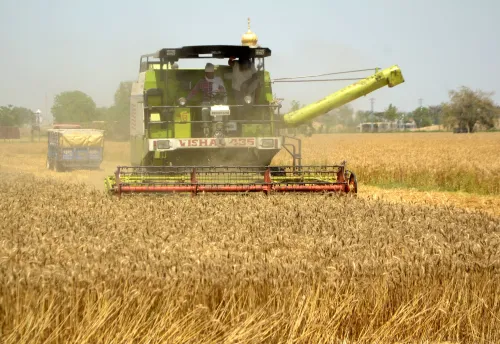
The wheat crop was sown across an estimated 33.4 million hectares this season — a notable increase over the previous year, driven largely by the early and timely adoption of sowing practices. This expansion in cultivated area is widely credited with providing a buffer against localised yield losses.
Critically, the season recorded zero incidences of major insect pest attacks or crop diseases, and weed infestation remained minimal during the critical growth stages. These factors collectively contributed to stronger-than-expected crop health across most wheat-growing belts.
The government also highlighted an improved varietal replacement rate, which has accelerated the uptake of high-yielding, climate-resilient, and disease-resistant wheat varieties. This shift is increasingly seen as a structural upgrade to India's wheat farming ecosystem, reducing vulnerability to both biotic and abiotic stresses.
Weather Challenges and Compensatory Measures
The season was not without adversity. Abnormally high temperatures in February 2025 subjected the crop to heat stress during the grain-filling stage, a critical window that directly affects final yield. Untimely rainfall and hailstorms closer to maturity caused localised damage in certain pockets, impacting grain quality and output.
However, the government pointed to compensatory factors that are expected to offset these setbacks. An additional 0.6 million hectares brought under cultivation this season is projected to make up for region-specific losses. Early sowing practices also helped crops escape the worst of terminal heat stress — a lesson learned from previous seasons when late sowing left crops more exposed.
This adaptive approach reflects a broader policy push under the National Food Security Mission and allied schemes that have been incentivising climate-smart agricultural practices over the past several years.
Procurement Data Signals Strong Output
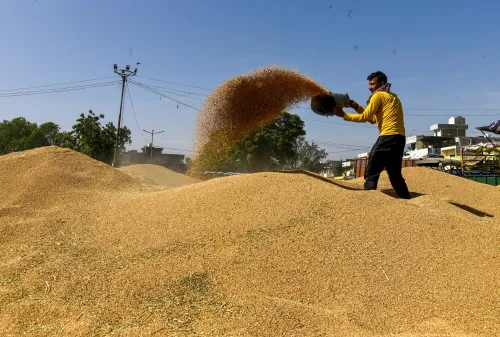
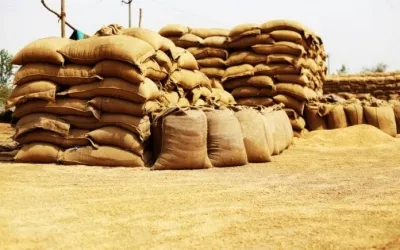
On-ground procurement figures offer the clearest evidence of a healthy harvest. In Haryana, wheat arrivals at mandis have already surpassed the government's procurement target of 75 lakh metric tonnes (LMT), with 56.13 LMT procured as of the latest data — approximately 9 LMT higher than the corresponding period in the previous year.
In Madhya Pradesh, the strong output prompted authorities to revise the state's procurement target upward from 78 LMT to 100 LMT — a significant 28% increase — following a formal request from the state government. This revision signals confidence in the crop yield from one of India's largest wheat-producing states.
Maharashtra is also witnessing steady growth, with wheat production estimated at approximately 22.90 lakh tonnes for 2025–26, according to government data.
Broader Significance for Food Security
India's wheat output carries enormous strategic weight. As the world's second-largest wheat producer and a country that manages one of the largest food procurement and distribution systems globally — the Public Distribution System (PDS) — a stable harvest directly impacts food inflation, buffer stock management, and potential export decisions.
Notably, India had imposed a wheat export ban in May 2022 following a heat-wave-induced production shortfall, a move that drew international attention and highlighted the vulnerability of the crop to climate extremes. The current season's resilience, if sustained through final harvest assessments, could strengthen India's position on global grain markets and ease pressure on domestic food prices.
Critics and agricultural economists, however, caution that government procurement targets and mandi arrivals do not always capture the full picture of farm-level distress, particularly in rain-fed or hailstorm-affected pockets where smallholder farmers may have absorbed losses without formal relief.
What to Watch Next
The final production estimates for the 2025–26 wheat season are expected to be released by the Ministry of Agriculture in the coming weeks as harvesting reaches completion across major states. Analysts will closely track whether the expanded acreage and improved varietal adoption are sufficient to push total output above last year's record of approximately 113.29 million tonnes. Any upward revision in the advance estimate could have downstream effects on MSP policy, export decisions, and FCI buffer stock levels heading into the next procurement cycle.
Point of View
But it demands scrutiny beyond headline procurement numbers. While Haryana and Madhya Pradesh figures look strong, the real test lies in what smallholder farmers in hailstorm-hit pockets actually received — mandi arrivals don't capture unreported farm-level losses. India's 2022 wheat export ban, triggered by a heat-wave shock, is a recent reminder of how quickly optimism can unravel. The push toward climate-resilient varieties and early sowing is the right structural move — but the government must pair procurement targets with transparent, district-level damage assessments to ensure food security policy is built on ground truth, not just aggregate data.
NationPress
19 Sept 2026
Frequently Asked Questions
What is India's wheat production outlook for 2025–26?
India's wheat production for 2025–26 is cautiously optimistic, with the Ministry of Agriculture reporting no major pest incidents and expanded sowing acreage of 33.4 million hectares. Strong procurement data from Haryana and Madhya Pradesh further supports a stable output projection.
How much wheat has Haryana procured in 2025?
Haryana has procured 56.13 lakh metric tonnes (LMT) of wheat so far in the 2025 season, already surpassing its government procurement target of 75 LMT. This figure is approximately 9 LMT higher than the same period in the previous year.
Did heat stress affect India's wheat crop in 2025?
Yes, unusually high temperatures in February 2025 exposed wheat crops to heat stress during the grain-filling stage, potentially reducing yields in some regions. However, early sowing practices and climate-resilient varieties helped mitigate the overall impact.
Why did Madhya Pradesh raise its wheat procurement target in 2025?
Madhya Pradesh raised its wheat procurement target from 78 LMT to 100 LMT following a formal request from the state government, citing stronger-than-expected crop output. This represents a 28% increase and reflects confidence in the state's harvest this season.
What is Maharashtra's wheat production estimate for 2025–26?
Maharashtra's wheat production for 2025–26 is estimated at approximately 22.90 lakh tonnes, according to government data. The state is witnessing steady growth in wheat output compared to previous seasons.