Indian airlines post stronger international traffic in June amid fuel cost surge

Synopsis
India's airlines are flying a tricky route: international traffic is recovering, domestic load factors are holding above 85%, but jet fuel has surged 71% annually and the rupee is near ₹95.4 to the dollar. The Equirus report paints a sector that is demand-resilient but margin-squeezed — and the next few quarters will test whether airlines can hold fares without losing passengers.
Key Takeaways
Indian carriers carried approximately 13.5 million domestic passengers in June 2026 , down 1% year-on-year and 12% month-on-month due to seasonal factors.
Passenger load factor (PLF) rose to 85.7% , improving 118 basis points year-on-year .
International passenger traffic reached approximately 2.4 million in June, up 4% over May 2026.
Brent crude averaged $87.3 per barrel in July 2026 — up 20% year-on-year; Singapore jet fuel surged 71% annually to near $155 per barrel .
The rupee weakened to around ₹95.4 per dollar , raising dollar-denominated operating costs.
Financial services firm Equirus flagged fuel prices and currency depreciation as key near-term profitability risks.
Indian carriers recorded a sequential uptick in international passenger traffic in June 2026 even as the sector grappled with sharply elevated aviation fuel costs and a weakening rupee, according to a report released on Monday, 3 August by financial services firm Equirus. Domestic passenger load factors held firm, reflecting resilient demand and disciplined capacity management across the industry.
Domestic Traffic: Seasonal Slowdown, Healthy Load Factors
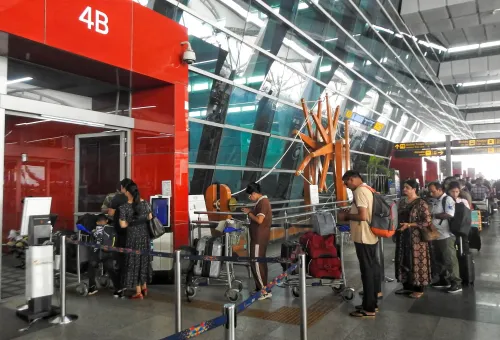
Domestic passenger volumes stood at approximately 13.5 million in June 2026, easing 1 per cent year-on-year and 12 per cent month-on-month — a pattern consistent with the seasonal moderation that typically follows the peak summer travel window. Revenue Passenger Kilometres (RPKs) held broadly steady year-on-year at 13.3 billion, while Available Seat Kilometres (ASKs) dipped 2 per cent year-on-year as airlines trimmed capacity in line with softer volumes.
The passenger load factor (PLF) came in at 85.7 per cent, improving 118 basis points year-on-year, signalling that carriers maintained efficient aircraft utilisation even as overall passenger numbers eased. The Equirus report noted that load factors remain 'robust despite seasonal moderation,' underlining the underlying strength of domestic demand.
International Traffic Picks Up
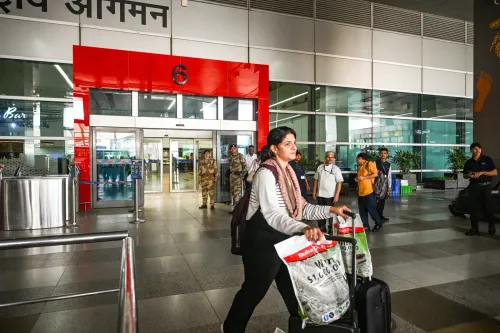
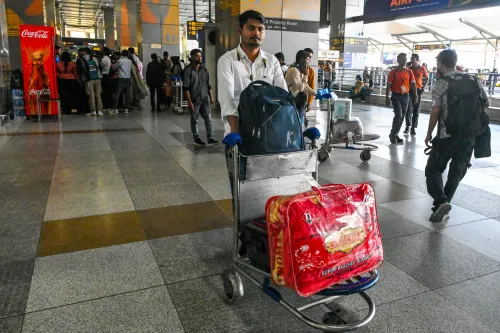
Foreign-bound passenger traffic carried by Indian airlines climbed to approximately 2.4 million in June, up 4 per cent over May 2026, though it remained below the comparable period last year. Flight departures on international routes rose 6 per cent month-on-month, while capacity stayed broadly stable — signalling a gradual restoration of overseas operations following disruptions in prior months.
Fuel Costs and Currency Headwinds Bite
The sector's cost environment remained challenging. Brent crude averaged approximately $87.3 per barrel in July 2026, up 20 per cent both year-on-year and month-on-month, according to the Equirus report. Singapore jet fuel prices hovered near $155 per barrel, a 71 per cent annual surge that directly pressures airline operating margins.
Compounding the fuel stress, the Indian rupee weakened to around ₹95.4 against the US dollar, raising the cost of aircraft leasing, maintenance contracts, and other dollar-denominated expenses. Together, these twin headwinds — fuel and forex — are 'likely to influence profitability in the near term,' the report cautioned.
Sector Outlook: Mixed but Demand Holds
Equirus characterised the current operating environment as 'mixed,' with passenger demand — particularly in the domestic market — remaining a relative bright spot even as cost pressures mount. Airlines have responded with measured capacity discipline rather than aggressive expansion, a strategy that has so far kept load factors elevated.
With fuel prices and currency volatility still unresolved, the sector's ability to pass on costs through fare adjustments without dampening demand will be the critical variable to watch in the coming quarters.
Point of View
And at ₹95.4 to the dollar, every lease payment and maintenance invoice lands harder. Indian carriers have managed this cycle before, but the combination of a weaker rupee and elevated crude simultaneously is unusual. The real question is pricing power: domestic load factors at 85.7% suggest airlines have room to push fares, but consumer tolerance for higher ticket prices in a slowing post-summer cycle is untested. If fuel stays elevated through Q3, expect profitability guidance to come under pressure even as traffic numbers look respectable on paper.
NationPress
17 Sept 2026
Frequently Asked Questions
How did Indian airlines perform in June 2026?
Indian carriers saw sequential improvement in international traffic in June 2026, with foreign-bound passengers rising 4% over May to approximately 2.4 million. Domestic traffic eased seasonally to 13.5 million passengers but load factors remained healthy at 85.7%, according to a report by Equirus.
Why are aviation fuel costs a concern for Indian airlines?
Brent crude averaged $87.3 per barrel in July 2026, up 20% year-on-year, while Singapore jet fuel surged 71% annually to near $155 per barrel. These elevated costs directly compress airline operating margins and are expected to weigh on profitability in the near term.
What was the domestic passenger load factor in June 2026?
The domestic passenger load factor (PLF) stood at 85.7% in June 2026, improving 118 basis points year-on-year. This indicates that airlines maintained efficient aircraft utilisation despite a seasonal slowdown in passenger volumes.
How is the weak rupee affecting Indian airlines?
The rupee weakened to around ₹95.4 against the US dollar, increasing the cost of aircraft leasing, maintenance, and other dollar-denominated expenses. This currency headwind compounds the pressure from elevated fuel prices on airline balance sheets.
What is the outlook for the Indian aviation sector?
Equirus described the sector's operating environment as mixed — demand remains resilient, especially domestically, but elevated fuel costs and currency depreciation are likely to influence profitability in the near term. Airlines' ability to adjust fares without dampening demand will be the key variable to watch.