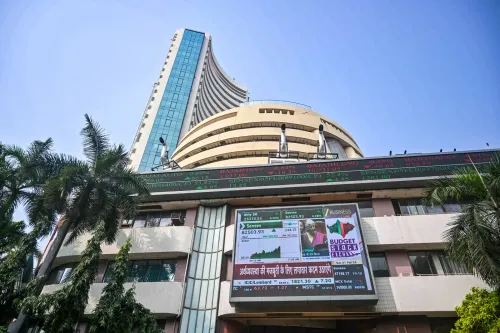
Sensex, Nifty extend 4-session losing streak as Brent crude hits 6-month high
Synopsis
Indian equities just logged their worst week in months — and crude oil is the culprit. With Brent surging 6.2% to a six-month high of $116.72 a barrel and mid- and small-caps bearing a disproportionate correction, markets face a compounding threat: rising energy costs, squeezed margins, and a technical structure that has broken down after four straight losing sessions.
Key Takeaways
Nifty 50 fell approximately 2.4% and BSE Sensex declined around 2.2% over the holiday-shortened week ending 24 October 2026 .
Both benchmarks extended losing streaks to four consecutive sessions .
Brent crude surged 6.2% for the week to close at $116.72 a barrel on Friday — its highest since 29 April .
Mid-cap and small-cap indices suffered sharper falls than large-caps as leveraged positions were unwound.
IT stocks were the lone resilient sector; consumer durables , metals , and real estate saw the steepest losses.
Immediate resistance for Nifty 50 is at 22,800–23,000 ; Sensex support sits at 72,600–72,500 .
Indian equities capped a bruising, holiday-shortened week on Saturday, 24 October 2026, with benchmark indices extending their losing streaks to four consecutive sessions amid a sharp rally in global crude prices. Brent crude oil surged to a six-month high of $116.72 a barrel on Friday, amplifying macroeconomic anxiety around inflation, input costs, and India's import bill.
Weekly Damage on the Indices
The Nifty 50 registered a weekly decline of approximately 2.4 per cent, while the BSE Sensex shed around 2.2 per cent over the same period. Both benchmarks remained under persistent selling pressure throughout the week, struggling to sustain any meaningful recovery. Analysts note that the short-term technical structure has weakened considerably, with the Nifty 50 facing immediate resistance around 22,800, followed by a stronger ceiling near 23,000. On the downside, the Sensex has an immediate support zone in the 72,600–72,500 range.
Mid- and Small-Caps Bear the Brunt
The sell-off was not confined to large-cap counters. Mid-cap and small-cap indices suffered sharper declines than their large-cap peers, according to market participants, as valuation concerns and the unwinding of leveraged positions triggered a disproportionate correction. Investors reduced exposure across the board as uncertainty mounted, though large-caps held up comparatively better during the de-risking wave.
Sector Breakdown: IT Resilient, Rate-Sensitives Hammered
Across sectors, information technology was the lone bright spot, recovering from early-week selling pressure to end largely unchanged. Analysts attributed this resilience to improving earnings visibility and renewed investor appetite following a mixed but broadly reassuring quarterly results season. In contrast, rate-sensitive sectors — including consumer durables, metals, and real estate — faced the heaviest selling, as input-cost pressures and margin worries resurfaced sharply.
Crude Oil: The Central Macro Threat
Brent futures gained 3.1 per cent on Friday to settle at $116.72 a barrel, the highest level since 29 April. US West Texas Intermediate (WTI) rose 3.8 per cent to close at $103.27 a barrel. For the week, Brent advanced 6.2 per cent while WTI added 2 per cent. This comes amid a broader global energy market tightening that has caught several emerging market economies off guard. Analysts warn that sustained crude price increases could raise energy and transportation costs, weigh on consumption, and intensify pressure on oil-sensitive sectors — a particularly acute concern for India, which imports over 85 per cent of its crude requirements.
What to Watch Next Week
Market participants will be tracking global crude price movement, any central bank commentary on inflation trajectories, and domestic macroeconomic data for further direction. With the Nifty 50 unable to reclaim key resistance levels, analysts suggest caution until the technical picture stabilises. A sustained crude rally above the current levels could further erode corporate margins and consumer sentiment heading into the second half of the financial year.
Point of View
The current account deficit widens, inflation re-accelerates, and the RBI's rate-cut headroom evaporates. The mid- and small-cap unwinding is the more telling signal: it suggests leveraged retail money is exiting positions built on optimistic valuations, not just foreign institutional outflows. If crude holds above $110 through November, the earnings-upgrade cycle that powered this year's rally could go sharply into reverse.
NationPress
24 Oct 2026
Frequently Asked Questions
Why did Indian stock markets fall this week?
Indian equities fell for four consecutive sessions during the week ending 24 October 2026, dragged by a sharp rally in global crude oil prices. Brent crude surged 6.2% to a six-month high of $116.72 a barrel, raising fears of higher inflation, wider trade deficits, and compressed corporate margins.
How much did Nifty 50 and Sensex fall this week?
The Nifty 50 declined approximately 2.4% over the week, while the BSE Sensex shed around 2.2%. Both indices extended their losing streaks to four consecutive sessions and struggled to sustain any technical recovery.
What is the current price of Brent crude oil?
Brent crude futures settled at $116.72 a barrel on Friday, 24 October 2026, up 3.1% on the day and 6.2% for the week — the highest level since 29 April. US WTI crude also rose 3.8% on the day to $103.27 a barrel.
Which sectors were worst hit and which held up?
Consumer durables, metals, and real estate faced the heaviest selling due to input-cost and margin concerns. IT was the lone resilient sector, ending the week largely unchanged on improving earnings visibility. Mid-cap and small-cap indices fell more sharply than large-caps.
What are the key technical levels to watch for Nifty 50 and Sensex?
For the Nifty 50, immediate resistance is placed around 22,800 followed by 23,000. For the Sensex, the immediate support zone is 72,600–72,500. Analysts caution that the short-term technical structure has weakened after four straight losing sessions.