UN Day 2026: Guterres says United Nations needed more than ever at 81
Synopsis
On the UN's 81st anniversary, Secretary-General António Guterres declared the world body 'needed more than ever' — a pointed message as multilateralism faces scepticism, Security Council deadlocks, and calls for institutional reform from the Global South. The statement doubles as a defence of the UN's founding vision at a moment when its credibility is under stress.
Key Takeaways
António Guterres marked United Nations Day on 24 October 2026 , the organisation's 81st anniversary .
He declared the UN is 'needed more than ever', citing its roles in diplomacy, poverty eradication, human rights, and humanitarian aid.
Guterres delivered his message via a post on X and a dedicated video address.
He highlighted the UN's commitment to gender equality and giving all countries an equal voice in global governance.
UN Day marks the entry into force of the UN Charter on 24 October 1945 , after ratification by the five permanent Security Council members and other signatories.
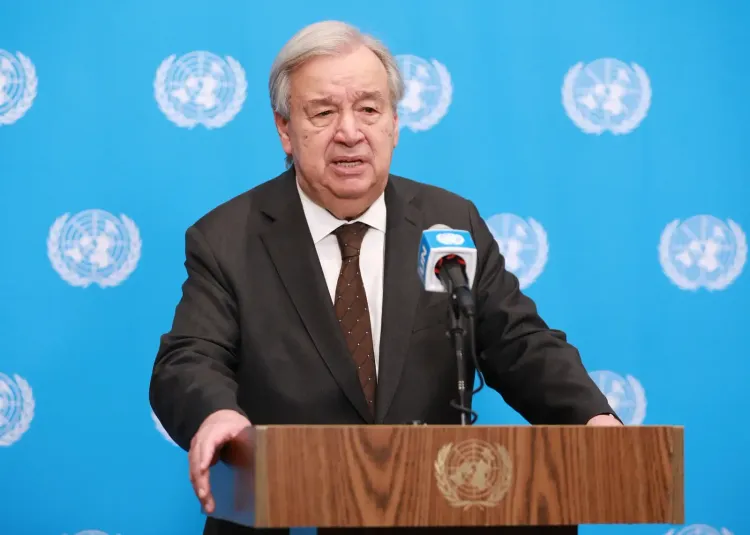
United Nations Secretary-General António Guterres on Saturday, 24 October 2026 reaffirmed the enduring relevance of the United Nations as the organisation marked its 81st anniversary, declaring that the world body is 'needed more than ever' amid an era of compounding global crises. His message, delivered through both a written post on X and a dedicated video address, underscored the UN's foundational mandate across peace, development, and human rights.
What Guterres Said
In his post on X, the Secretary-General listed the UN's core functions over eight decades: settling disputes through diplomacy and international law, working to eradicate poverty and hunger, promoting human rights, and delivering life-saving aid to people facing war, disaster, and displacement. 'Today, the United Nations is needed more than ever. We will continue working to strengthen the UN to best serve people and meet the challenges of our time,' he wrote.
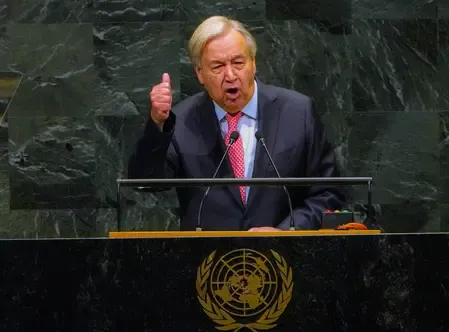
In his video message, Guterres extended the argument beyond crisis response, framing the UN as foundational to the global order itself. 'From transportation trade and technology, to safeguarding the health of people and planet, to championing gender equality and expanding opportunity for women and girls, to giving all countries an equal voice on the global stage, the United Nations is an essential part of the fabric of our world,' he said.
The Significance of UN Day
United Nations Day is observed annually on 24 October to commemorate the entry into force of the UN Charter in 1945 — the founding document that formally established the organisation after ratification by the required majority of signatories, including all five permanent members of the Security Council. This year's observance marks 81 years since that milestone.
Guterres framed the day as a celebration not merely of an institution but of an idea — that humanity's collective future depends on nations working in concert to advance peace, development, and human rights. Notably, the emphasis on multilateralism comes at a moment when geopolitical fractures, from the ongoing conflicts in Europe and the Middle East to rising great-power competition, are testing the UN system's cohesion and credibility.
Gender Equality and Inclusive Multilateralism
The Secretary-General specifically highlighted the UN's role in championing gender equality and broadening opportunities for women and girls — a priority that has gained increasing institutional prominence under his tenure. He also stressed the UN's function in giving all countries, regardless of size or economic weight, an equal voice in global governance. This dimension is particularly resonant for the Global South, which has repeatedly called for reforms to make multilateral institutions more representative.
Why It Matters Now
The 81st UN Day arrives against a backdrop of unprecedented strain on international institutions. Multilateralism faces scepticism from multiple directions — rising nationalist movements in several member states, prolonged Security Council deadlocks on active conflicts, and debates over UN reform have all raised questions about the organisation's effectiveness. Guterres' message can be read as both a reaffirmation of the UN's founding vision and an implicit acknowledgement that the institution must evolve to remain credible. The coming months are expected to bring renewed debate on Security Council reform and UN financing, with several member states pushing for structural changes.
Point of View
Stalled reform talks, and funding disputes have emboldened critics who argue the organisation has become structurally incapable of its founding mandate. The emphasis on gender equality and the Global South's voice is strategically placed: these are the constituencies whose continued faith the UN most needs to retain. Whether annual reaffirmations translate into the structural reform that would give the UN real teeth on 21st-century challenges remains the unanswered question his speech carefully sidesteps.
NationPress
24 Oct 2026
Frequently Asked Questions
What is United Nations Day and why is it observed on 24 October?
United Nations Day is observed annually on 24 October to mark the entry into force of the UN Charter in 1945, which formally established the organisation after ratification by the required majority of signatories, including all five permanent Security Council members. This year marks the UN's 81st anniversary.
What did António Guterres say on UN Day 2026?
Guterres declared the United Nations 'needed more than ever', reaffirming its roles in settling disputes through diplomacy, eradicating poverty and hunger, promoting human rights, and delivering humanitarian aid. He also highlighted the UN's work on gender equality and giving all nations an equal voice in global governance.
Where did Guterres deliver his UN Day 2026 message?
Guterres posted his message on X (formerly Twitter) and also released a dedicated video address to mark United Nations Day on 24 October 2026.
Why is the UN's relevance being questioned in 2026?
The UN faces scepticism due to prolonged Security Council deadlocks on active conflicts, rising nationalist sentiment in several member states, and ongoing debates about structural reform and financing. Guterres' anniversary statement is widely seen as a reaffirmation of multilateralism amid these institutional pressures.
What does the UN Charter establish?
The UN Charter is the founding document of the United Nations, establishing its principles, purposes, and governing structures. It entered into force on 24 October 1945 after ratification by the five permanent Security Council members — the United States, the United Kingdom, France, Russia, and China — and a majority of other signatories.