UN chief Antonio Guterres invokes Gandhi on International Day of Non-Violence 2026
Synopsis
On Gandhi Jayanti 2026, UN Secretary-General Antonio Guterres issued one of his sharpest indictments yet of the current world order — describing a planet where the UN Charter, human rights and international law are being 'flouted with impunity' — and called for Gandhi's tools of dialogue and non-violence as the only credible response. The message is as much a diagnosis of multilateralism's crisis as it is a birthday tribute.
Key Takeaways
UN Secretary-General Antonio Guterres issued a message on 2 October 2026 for the International Day of Non-Violence , coinciding with Gandhi Jayanti .
Guterres warned that the UN Charter, human rights and international law are being 'ignored and flouted with impunity' amid rising global conflict.
He called for invoking Gandhi's tools of dialogue and non-violence to counter injustice and division.
Guterres amplified his appeal in a post on social media platform X , reaching a global audience directly.
The International Day of Non-Violence was established by the UN General Assembly in 2007 through a resolution co-sponsored by 141 countries .
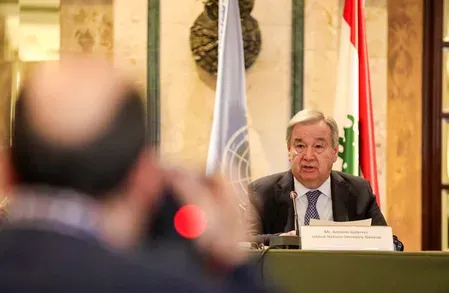
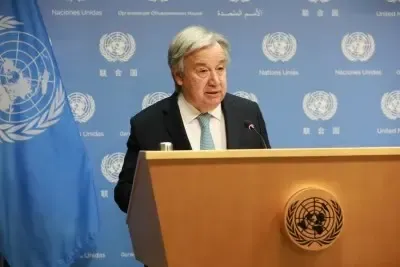
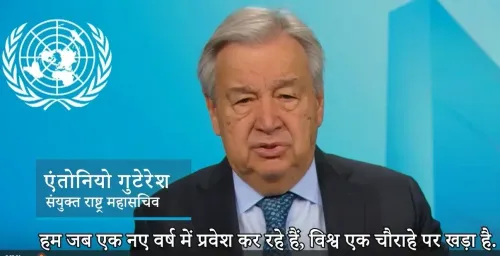
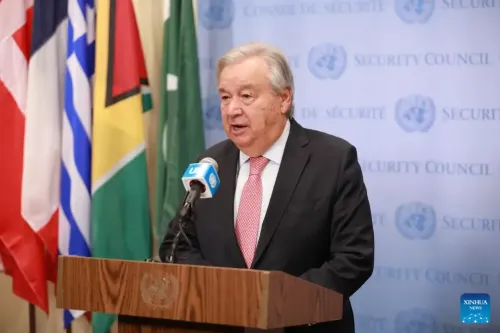
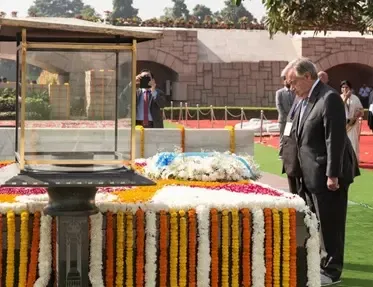
United Nations Secretary-General Antonio Guterres on Friday, 2 October 2026 — Gandhi Jayanti and the UN International Day of Non-Violence — called on the world to draw on the values of Mahatma Gandhi as global conflicts and divisions deepen. Guterres issued the appeal through an official message and a post on social media platform X, urging nations to return to dialogue and non-violence as instruments of change.
The Core Appeal
In his message, Guterres painted a stark picture of a world under strain. 'People are suffering,' he said. 'Poverty and inequality are driving a wedge between the haves and have-nots. And the very foundations of peace and development — the UN Charter, human rights, international law and diplomacy and dialogue — are being ignored and flouted with impunity.'
Against that backdrop, the UN chief invoked Gandhi's model of principled resistance. 'He showed that the best way to counter injustice is not to mirror the cruelty and violence of systemic discrimination and oppression — but to employ instead the tools of dialogue and non-violence to build bridges of understanding, deliver dignity and create lasting change,' Guterres said.
Why Gandhi's Lessons Are Being Cited Now
Guterres framed Gandhi's philosophy not as historical commemoration but as an active prescription. 'In this time of rising division, tension and conflict, Gandhi's lessons speak to us with renewed urgency,' he said. The appeal comes as the United Nations grapples with multiple active conflict zones, stalled diplomatic processes, and declining adherence to multilateral frameworks — a context that lends the message particular weight beyond ceremonial observance.
Notably, Guterres argued that Gandhi's 'weapons of peace' offer a practical — not merely moral — counter to contemporary cruelty and oppression, positioning non-violence as a strategic tool rather than an idealistic abstraction.
What the UN Chief Posted on X
On social media platform X, Guterres wrote: 'Mahatma Gandhi set an inspiring example of how to create deep, lasting change while holding fast to the principles of peace. Amid rising tension and conflict, his lessons speak to us with renewed urgency. Let's heal divisions through genuine dialogue and diplomacy, end suffering and build a peaceful world through non-violence.'
The post amplified his formal message and was directed at a global audience at a moment when multilateralism is under acute pressure.
Background: The International Day of Non-Violence
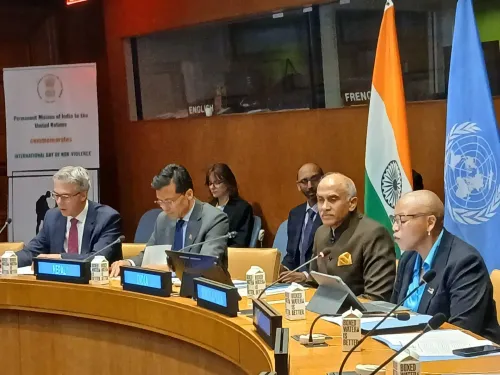
The UN General Assembly established 2 October as the International Day of Non-Violence in 2007, through a resolution co-sponsored by 141 countries. The date was chosen to coincide with Gandhi's birthday, making it one of the most broadly endorsed commemorative dates in UN history. The day serves as an annual platform for reaffirming the universal relevance of non-violence and its role in conflict prevention and peacebuilding.
As the world marks the occasion in 2026, Guterres's call carries fresh urgency — and the coming weeks at the United Nations General Assembly will test how far member states are willing to translate those principles into concrete diplomatic action.
Point of View
Not merely offering tribute. Invoking Gandhi at such a moment is strategic framing: non-violence is being positioned as the alternative architecture when hard power and institutional rules both fail. The question mainstream coverage tends to skip is whether a Secretary-General's rhetorical appeal carries any coercive weight in a system where veto-holding permanent members are among the primary violators of the norms he is defending.
NationPress
2 Oct 2026
Frequently Asked Questions
Why did the UN Secretary-General invoke Mahatma Gandhi on 2 October 2026?
UN Secretary-General Antonio Guterres used Gandhi Jayanti — which the UN observes as the International Day of Non-Violence — to call on the world to adopt Gandhi's values of dialogue and non-violence in response to rising global conflicts and divisions. Guterres described the current moment as one where the UN Charter and international law are being 'flouted with impunity,' making Gandhi's lessons especially urgent.
What is the UN International Day of Non-Violence?
The International Day of Non-Violence is observed every year on 2 October, coinciding with Mahatma Gandhi's birthday. It was established by the UN General Assembly in 2007 through a resolution co-sponsored by 141 countries, making it one of the most widely endorsed commemorative dates in UN history.
What did Antonio Guterres say about the current global situation?
Guterres said 'people are suffering' due to poverty and inequality, and that the foundational pillars of peace — the UN Charter, human rights, and international law — are being 'ignored and flouted with impunity.' He described a world of rising tension and division in which Gandhi's model of non-violent change offers a renewed and practical alternative.
Did Guterres post his appeal on social media?
Yes. On social media platform X, Guterres wrote that Gandhi 'set an inspiring example of how to create deep, lasting change while holding fast to the principles of peace,' and called for healing divisions through 'genuine dialogue and diplomacy.' The post mirrored his formal message and was aimed at a broad global audience.
How many countries co-sponsored the resolution creating the International Day of Non-Violence?
The UN General Assembly resolution establishing 2 October as the International Day of Non-Violence was co-sponsored by 141 countries when it was passed in 2007, reflecting near-universal recognition of Gandhi's global significance.