UN chief warns: next pandemic is 'when', not 'if', urges global equity
Synopsis
UN Secretary-General António Guterres told world leaders on Friday that the next pandemic is a certainty, not a possibility — and that the world is still not ready. Invoking the failures of COVID-19, he pushed for community-funded health systems, a One Health framework linking human and ecosystem health, and an equitable WHO Pandemic Agreement, warning there is 'no time to waste.'
Key Takeaways
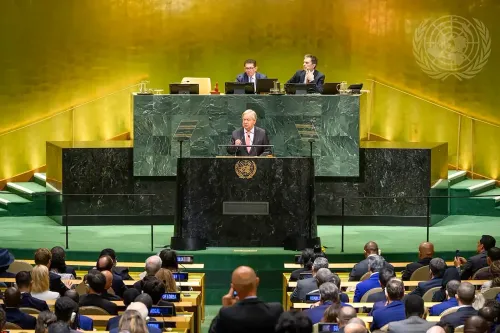
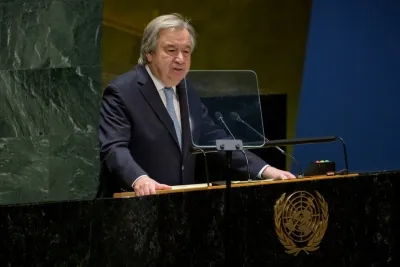
UN Secretary-General António Guterres addressed a high-level pandemic meeting on 26 September , with his speech delivered by Deputy Secretary-General Amina Mohammed .
Guterres declared the next pandemic is a question of 'when, not if' , citing COVID-19 as proof no country can act alone.
He called for closing massive financing gaps and building community-based systems for disease detection, surveillance, and containment.
The Secretary-General backed a 'One Health' approach , linking human health to the health of ecosystems, animals, and plants.
He urged swift completion of the WHO Pandemic Agreement , calling the pathogen access and benefit-sharing system 'critical' to its success.
Equitable access to life-saving tools was framed as both a justice issue and a practical strategy for containing future outbreaks.
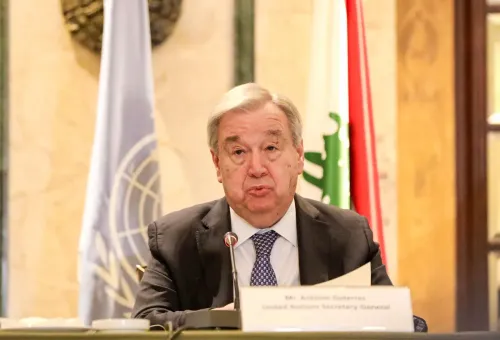
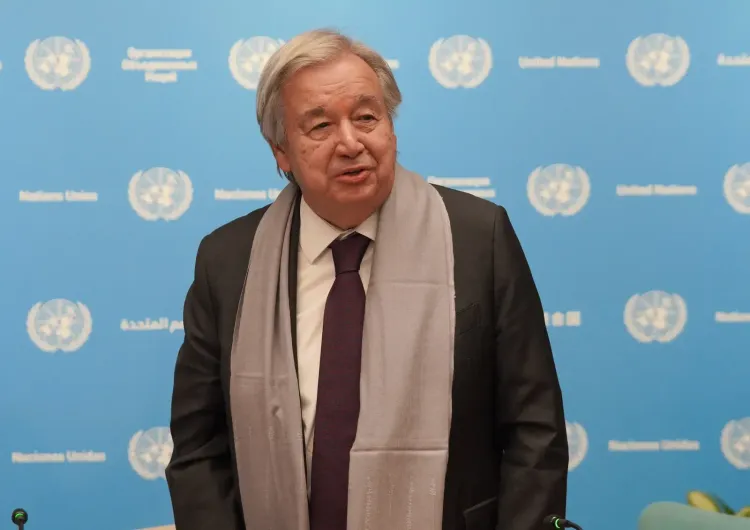
UN Secretary-General António Guterres on Friday, 26 September issued a stark warning at a high-level meeting on combating pandemics, declaring that the world must treat the next pandemic as an inevitability and build a truly global system of prevention, preparedness, and response. His address, delivered at United Nations headquarters in New York and read on his behalf by UN Deputy Secretary-General Amina Mohammed, called out financing gaps, equity failures, and the absence of genuine multilateral cooperation as critical vulnerabilities.
The Core Warning
'The next pandemic is not a question of 'if.' It is a question of 'when,'' Guterres said in his prepared remarks. He invoked the COVID-19 pandemic as a costly lesson in the limits of national self-reliance, noting that the crisis inflicted 'immense human and economic cost' before the world accepted that no single country could protect itself in isolation. This framing — pandemic as certainty, not possibility — underscores the urgency that informed every element of his address.
Financing Gaps and Community Health Systems
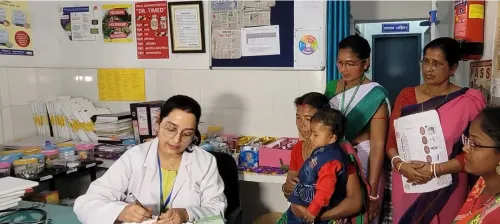
Guterres pressed governments to close what he described as 'massive financing gaps' and invest in community-based infrastructure for disease detection, surveillance, communication, and containment. He drew a direct line between local-level preparedness and global security. 'When communities are protected, we are all protected,' he said, calling on governments to ensure 'predictable and sustainable resources to back up our promises and save lives.' Notably, the call for community-level systems reflects a broader shift in global health thinking away from centralised, reactive response and toward distributed, proactive prevention.
One Health and the Human-Nature Link
The Secretary-General also championed a 'genuine One Health approach,' stressing that human health is inextricably linked to the health of ecosystems, plants, and animals. 'We must deepen our understanding of human interaction with the natural world and find ways to stop outbreaks before they spread to humans,' he said. This comes amid growing scientific consensus that zoonotic spillover events — the transmission of pathogens from animals to humans — are the most likely origin point for future pandemics, including COVID-19 itself.
The WHO Pandemic Agreement and Equity
On the diplomatic front, Guterres backed the World Health Organization (WHO) Pandemic Agreement currently under negotiation, specifically highlighting the pathogen access and benefit-sharing system as 'critical to unlocking the full potential' of the accord. He argued that equitable access to life-saving tools is both a matter of justice and a practical containment strategy, warning that gaps between wealthier and lower-income nations undermine any coordinated global response. 'There is no time to waste,' he said, signalling urgency around completing the negotiations.
What Comes Next
The high-level meeting is expected to generate political commitments toward strengthening multilateral pandemic architecture. The WHO Pandemic Agreement negotiations remain ongoing, with member states under pressure to resolve outstanding differences on financing mechanisms and intellectual property access before a final accord is reached. Whether Friday's political momentum translates into binding commitments and funded action will be the real test — one Guterres himself acknowledged, urging leaders to ensure the next pandemic is 'a test that we all pass.'
Point of View
Through H1N1 in 2009, Ebola in 2014, and COVID-19 in 2020. The real question is whether this high-level meeting produces enforceable commitments or another aspirational communiqué. The WHO Pandemic Agreement negotiations have stalled repeatedly over exactly the equity and financing questions Guterres raised on Friday. Until wealthier nations agree to binding contributions and lower-income countries secure genuine technology access, the architecture he is calling for will remain unbuilt — and the next 'when' will find the world as unprepared as the last one did.
NationPress
26 Sept 2026
Frequently Asked Questions
What did UN Secretary-General Guterres say about the next pandemic?
Guterres declared that the next pandemic is a question of 'when, not if,' warning at a UN high-level meeting on 26 September that the world must treat another outbreak as a certainty. He called for global equity, sustained financing, and genuine multilateral cooperation to be ready when it arrives.
What is the One Health approach Guterres referred to?
The One Health approach recognises that human health is directly linked to the health of animals, plants, and the broader natural environment. Guterres called for deeper understanding of human-nature interaction to identify and stop outbreaks before they cross into human populations — a key lesson from zoonotic diseases like COVID-19.
What is the WHO Pandemic Agreement and why does Guterres say it matters?
The WHO Pandemic Agreement is an international accord under negotiation aimed at strengthening global pandemic prevention and response. Guterres specifically highlighted its pathogen access and benefit-sharing system as critical to ensuring all countries — including lower-income nations — can access life-saving tools during a health emergency.
Why did Guterres stress equity in pandemic preparedness?
Guterres argued that equitable access to diagnostics, vaccines, and treatments is both a moral imperative and a practical necessity — because an outbreak uncontrolled in one country poses a risk to all others. He pointed to COVID-19 as evidence that vaccine and resource disparities allowed the virus to persist and mutate globally.
Who delivered Guterres's speech at the pandemic meeting?
UN Deputy Secretary-General Amina Mohammed delivered the speech on behalf of Guterres at the high-level meeting on combating pandemics held at the United Nations on 26 September.