Why Are Indian Stock Markets Opening Lower Today?

Synopsis
On December 9, Indian stock markets opened lower as investors engaged in profit booking after a recent rally. Concerns over potential new tariffs from the U.S. added to market pressures. Discover how these factors could influence market dynamics moving forward.
Key Takeaways
Indian stock markets opened lower due to profit booking.
Concerns over U.S. tariffs on Indian rice have impacted sentiment.
The Sensex lost 380 points while the Nifty fell by 124 points.
Major stocks like Reliance and TCS led the decline.
Analysts advise caution amid ongoing trade uncertainties.
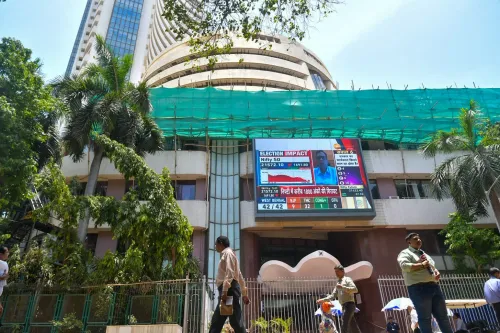
Mumbai, December 9 (NationPress) – The Indian stock markets commenced the trading session on a notably lower note this Tuesday as investors opted to realize profits following a recent surge.
Market sentiment took a further hit after reports emerged indicating that US President Donald Trump might contemplate imposing new tariffs on Indian rice, rekindling concerns regarding the ongoing trade disputes between Washington and New Delhi.
The Sensex fell by 380 points, which is equivalent to 0.45 percent, landing at 84,723 in the early hours of trading. Similarly, the Nifty index mirrored this downward trend, decreasing by 124 points, or 0.48 percent, to reach 25,837.
“From a technical perspective, the Nifty presently finds immediate support in the 25,800–25,850 range, while resistance is anticipated around 26,100–26,150. The frequent intra-day rejections highlight significant overhead supply,” experts noted.
“Achieving a decisive breakout above this range will be crucial for the index to regain its upward momentum, whereas a sustained decline below support could prolong the current consolidation phase,” they added.
The market's atmosphere remained cautious as several heavyweight stocks faced pressure.
Numerous blue-chip companies contributed to the decline in the Sensex. Stocks like Asian Paints, Tech Mahindra, Trent, Eternal, Reliance Industries, TCS, Ultratech Cement, Tata Steel, M&M, Tata Motors PV, HCL Tech, and BEL were among the major laggards, experiencing losses of up to 2.5 percent.
Only Hindustan Unilever and Bharti Airtel succeeded in maintaining positive momentum on the 30-share index.
This downward trend was evident across the broader market as well. The Nifty MidCap index fell by 0.64 percent, while the Nifty SmallCap index dipped by 0.61 percent.
Sector-wise, the Nifty IT and Metal indices were amongst the poorest performers, declining by 0.9 percent and 0.8 percent, respectively.
Additionally, the Nifty Auto index fell 0.8 percent, while the Realty index decreased by 0.6 percent.
Analysts indicated that the market's cautious mood was a result of renewed global trade apprehensions, prompting investors to adjust their holdings and await clearer signals.
Point of View
It is crucial to understand that while market fluctuations can create anxiety among investors, they are often a natural part of economic cycles. The current situation reflects both profit-taking behavior and external pressures from trade relations, indicating a period of cautious optimism as we navigate these challenges.
NationPress
20 Sept 2026
Frequently Asked Questions
What caused the drop in Indian stock markets?
The decline is primarily attributed to investors booking profits after a recent rally, alongside concerns over potential new tariffs from the U.S. on Indian rice.
How did major indices perform today?
The Sensex fell by 380 points (0.45%) to 84,723, while the Nifty decreased by 124 points (0.48%) to 25,837.
What should investors look for in the current market?
Investors should monitor support levels around 25,800–25,850 on the Nifty and watch for any signs of breakout above 26,100–26,150 for potential upward momentum.