Nifty's 25-year losing streak: Indian markets may stay flat in October

Synopsis
The Nifty's eight-week losing run — the longest in 25 years — did not end with September. Analysts now say October offers little prospect of a clean recovery, with FII outflows topping ₹2.5 lakh crore and US yields above 5% keeping global headwinds firmly in place. The earliest realistic rebound window, they say, is December.
Key Takeaways
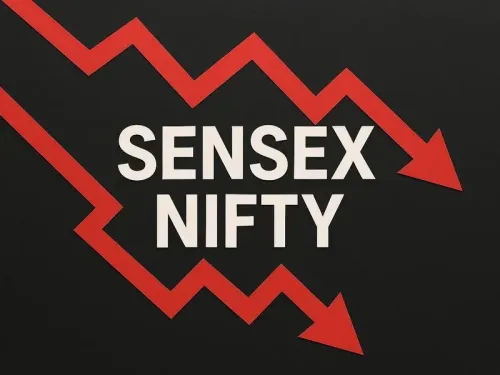
Nifty50 fell nearly 6 per cent in September , logging eight consecutive weekly losses — the longest losing streak in 25 years .
The index closed at 22,422 on Thursday, down 3.1 per cent for the week.
FIIs sold shares worth ₹34,970 crore last week, taking year-to-date outflows past ₹2.5 lakh crore .
Global headwinds — US bond yields above 5% , a firm dollar, elevated crude and a weak rupee — are expected to persist through October.
Analysts see a potential recovery by December , led by large caps, but warn mid and small caps may lag.
Weak monsoon in several states and upcoming Q2 earnings could be key near-term sentiment drivers.
Indian equity markets are likely to remain range-bound or decline further in October 2026, following one of the steepest monthly sell-offs in recent memory, with the Nifty50 shedding nearly 6 per cent in September and logging its eighth consecutive weekly loss — the longest losing run for the benchmark index in 25 years, according to analysts.
What Dragged Markets Down
The Nifty50 fell across all four trading sessions in the final week of September, ending 3.1 per cent lower at 22,422 on Thursday. Both the Nifty and Sensex remained under sustained pressure through the month as foreign institutional investors (FIIs) ramped up selling, crude oil prices stayed elevated, and the rupee came under fresh pressure. US bond yields climbing above 5 per cent added to the stress, squeezing risk appetite globally.
FII Outflows Hit a Painful Scale
FIIs were net sellers in domestic markets through the past week, offloading shares worth ₹34,970 crore. Their heavy selling in September ended a two-month buying streak, pushing year-to-date outflows beyond ₹2.5 lakh crore. Analysts warned that while domestic institutional liquidity can cushion some of the downside, a sustained recovery will remain elusive if foreign selling continues at this pace.
October Outlook: Stability Possible, Recovery Unlikely
Analysts forecast global headwinds — higher US yields, a firm dollar, elevated crude prices and a weak rupee — to persist as the primary drag. October may bring some degree of stability, they said, but a clean rebound is not expected. Festival demand, higher government spending ahead of the year-end, and the onset of the corporate earnings season could offer selective support to large banks, domestic consumption-linked stocks, and certain manufacturers. However, foreign inflows are expected to remain muted.
What Could Trigger a Recovery
Many analysts pointed to a potential recovery by December, led by large-cap stocks, contingent on two key external variables: oil prices and US yields. They urged investors to prioritise companies with strong balance sheets, sensible valuations and clear earnings visibility. Mid-cap and small-cap stocks may take longer to deliver meaningful returns. Notably, weak monsoon conditions in several states have added another layer of uncertainty, potentially dampening rural consumption and agricultural earnings. Second-quarter corporate results — with investor focus on top-line growth, operating margins and management commentary — will be a critical near-term catalyst.
Point of View
FII-driven rally of 2023-24 has decisively unwound. The year-to-date outflow figure of ₹2.5 lakh crore is extraordinary; domestic institutions have absorbed the selling so far, but their capacity is not unlimited. What mainstream coverage underplays is the compounding effect: a weak rupee raises import bills, which pressures corporate margins, which in turn disappoints earnings — creating a self-reinforcing drag that festival demand alone cannot offset. The December recovery thesis hinges almost entirely on the US Federal Reserve pivoting, which remains far from certain.
NationPress
3 Oct 2026
Frequently Asked Questions
Why did the Nifty fall for eight straight weeks?
The Nifty50 logged eight consecutive weekly losses — its longest losing run in 25 years — driven by a combination of aggressive FII selling, elevated crude oil prices, a weakening rupee, and US bond yields climbing above 5 per cent. The benchmark fell nearly 6 per cent in September alone.
How much have FIIs sold in Indian markets so far in 2026?
Foreign institutional investors have been net sellers to the tune of more than ₹2.5 lakh crore on a year-to-date basis, after their heavy selling in September ended a two-month buying streak. Last week alone, FIIs offloaded shares worth ₹34,970 crore.
Will Indian stock markets recover in October 2026?
Analysts do not expect a clean recovery in October, though some stability is possible. Festival demand, government spending, and the start of the Q2 earnings season could support select sectors, but foreign inflows are expected to remain muted and global headwinds persistent.
When could a broader market recovery happen?
Many analysts forecast a potential recovery by December 2026, led by large-cap stocks. However, they caution that the timeline depends heavily on external factors — particularly a moderation in US bond yields and crude oil prices — rather than domestic demand alone.
Which stocks or sectors could outperform in this environment?
Analysts suggest focusing on large banks, select manufacturers, and domestic consumption-linked stocks with strong balance sheets and reasonable valuations. Mid-cap and small-cap segments are expected to take longer to deliver meaningful returns, given the fragile foreign investor sentiment.