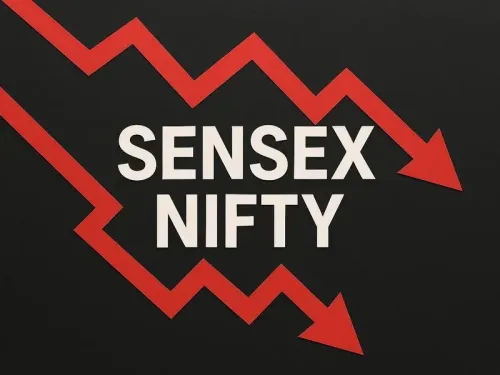
Nifty, Sensex log 8-week losing streak — longest in 25 years

Synopsis
Indian equity benchmarks have now fallen for eight straight weeks — the longest losing run in nearly a quarter-century. With crude above $100, US yields elevated, a 13% monsoon deficit, and the RBI policy decision days away, the conditions that drove the selloff show no sign of easing. The Q2 earnings season starting next week is the one variable that could shift the narrative.
Key Takeaways
Nifty 50 closed at 22,421.95 on 2 October , down 3.1 per cent week-on-week — marking an eighth consecutive weekly loss .
BSE Sensex fell 2.7 per cent to 71,909.7 , from 73,895.7 the previous Friday.
The eight-week losing streak is the longest for benchmark indices in nearly 25 years .
Auto sector was the worst performer, down 5.5 per cent ; BSE IT was the only gainer, up 0.2 per cent .
Crude oil stayed above $100 a barrel and the southwest monsoon ended with a 13 per cent deficit , adding to inflationary concerns.
RBI MPC policy decision is due on 7 October ; the Q2 earnings season begins next week.
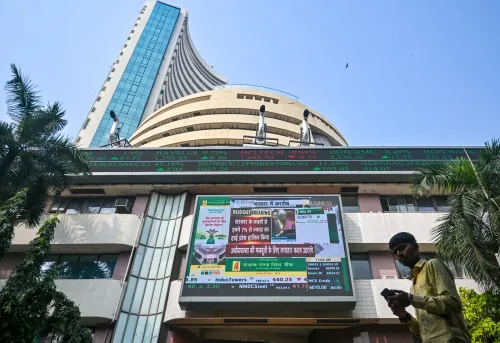
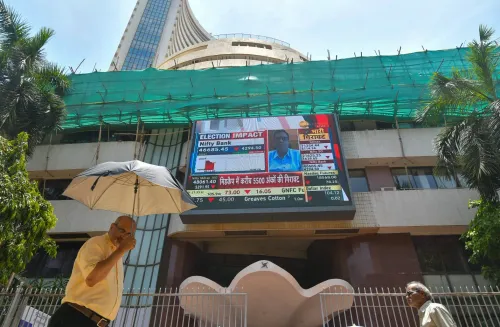
Indian equity markets extended their weekly losing streak to an eighth consecutive week on Thursday, 2 October, with benchmark indices shedding roughly 3 per cent each amid relentless foreign fund outflows, elevated US Treasury yields, and escalating geopolitical tensions. Market analysts describe the run as the longest weekly losing streak for benchmark indices in nearly 25 years.
Benchmark Declines
The Nifty 50 closed at 22,421.95, a fall of 3.1 per cent from the previous Friday's close of 23,140.5. The BSE Sensex slid 2.7 per cent to 71,909.7, down from 73,895.7 a week earlier. Broader markets fared even worse, with midcap and smallcap indices declining 3.5 per cent and 3.3 per cent, respectively.
Sectoral Scorecard
The BSE IT index was the sole sectoral gainer, inching up 0.2 per cent over the week. At the other end, the auto sector was the worst performer, tumbling 5.5 per cent, followed by consumer durables, which dropped 5.3 per cent. FMCG and metal indices both shed 4.2 per cent each. Energy, healthcare, and realty indices fell between 3.3 per cent and 3.6 per cent, while banking, capital goods, and power indices declined 2.4 per cent, 2.4 per cent, and 2.6 per cent, respectively.
Key Macro Pressures
Foreign institutional investors (FIIs) continued to offload Indian equities through the week, though domestic institutional investors (DIIs) stepped in to provide partial support, cushioning some of the decline. Crude oil prices remained above $100 a barrel amid ongoing geopolitical tensions, compounding pressure on an import-dependent economy. Meanwhile, the US 10-year Treasury yield stayed elevated, a combination that has historically prompted capital flight from emerging markets including India.
Adding a domestic dimension, the southwest monsoon ended with a 13 per cent rainfall deficit, raising concerns over agricultural output and food inflation. A recent hike in minimum support prices (MSPs) for key rabi crops has further fed expectations of a cautious monetary policy stance, according to market experts.
What Comes Next
The Reserve Bank of India's (RBI) Monetary Policy Committee (MPC) is scheduled to meet next week, with its policy decision due on 7 October. The coming week will also mark the start of the second-quarter earnings season, which analysts expect to provide fresh direction to equities. The near-term market outlook, experts caution, will remain sensitive to global yields, crude oil prices, foreign fund flows, and geopolitical developments.
Point of View
$100-plus crude, a 13 per cent monsoon deficit, and elevated US yields has stripped the market of its usual domestic demand cushion. What makes this moment unusually high-stakes is that the RBI MPC meets next week against a backdrop of rising food inflation risk and a growth-dampening global rate environment — leaving policymakers with little comfortable room. The Q2 earnings season will quickly test whether corporate India has absorbed these headwinds or is about to report them. If earnings disappoint, the case for a technical bounce weakens considerably.
NationPress
2 Oct 2026
Frequently Asked Questions
How long is the current Indian equity market losing streak?
Indian equity benchmarks have fallen for eight consecutive weeks as of 2 October, the longest weekly losing streak in nearly 25 years. The Nifty 50 is down 3.1 per cent and the Sensex is down 2.7 per cent in the latest week alone.
What are the main reasons behind the market decline?
The selloff has been driven by persistent FII outflows, crude oil prices above $100 a barrel, elevated US 10-year Treasury yields, and geopolitical tensions. Domestically, a 13 per cent southwest monsoon deficit and MSP hikes for rabi crops have added to inflationary and monetary policy concerns.
Which sectors fell the most this week?
The auto sector led losses with a 5.5 per cent decline, followed by consumer durables at 5.3 per cent and FMCG and metals at 4.2 per cent each. The BSE IT index was the only gainer, rising a marginal 0.2 per cent.
What is the RBI MPC expected to decide on 7 October?
The Reserve Bank of India's Monetary Policy Committee meets next week with its decision due on 7 October. Given elevated inflation concerns from a monsoon deficit and rising MSPs, market experts expect the committee to maintain a cautious stance, though the exact outcome remains to be seen.
What should investors watch in the coming week?
Key triggers include the RBI MPC policy decision on 7 October, the start of the Q2 earnings season, global crude oil prices, US Treasury yield movements, and FII flow data. Analysts say these factors will collectively determine whether the losing streak continues or finds a floor.