Ayushman Bharat, e-Sanjeevani driving India's universal health push: Health Secretary at UNGA
Synopsis
At the 81st UNGA in New York, India's Health Secretary laid out a sweeping health architecture — 1.8 lakh community health centres, 497 million teleconsultations, 900 million digital health IDs, and 225 million hepatitis screenings — positioning Ayushman Bharat not just as domestic policy, but as a South-South cooperation model.
Key Takeaways
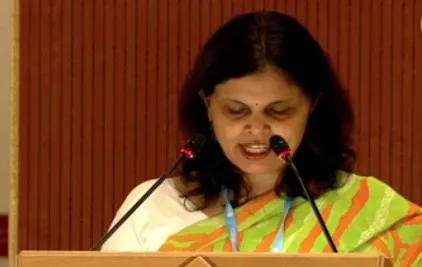
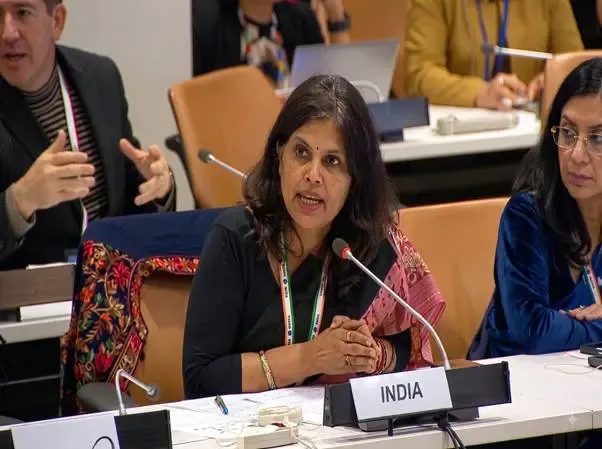
Union Health Secretary Punya Salila Srivastava presented India's health progress at the 81st UNGA sidelines in New York on 24 September 2026 .
India has over 1.8 lakh Ayushman Arogya Mandirs delivering primary, preventive, and palliative care nationwide. e-Sanjeevani has facilitated over 497 million teleconsultations ; more than 900 million citizens hold unique digital health IDs.
The National Viral Hepatitis Control Programme has screened nearly 225 million beneficiaries under the NHM framework.
India reaffirmed its commitment to eliminating Hepatitis B and C as public health threats by 2030 .
Union Health Secretary Punya Salila Srivastava on 24 September 2026 showcased India's strides in universal health coverage, hepatitis elimination, and sickle cell care at two high-level global health events held on the sidelines of the 81st United Nations General Assembly (UNGA) in New York. The presentations, delivered before the Group of Friends of Universal Health Coverage (UHC) and Global Health, positioned India's flagship schemes — Ayushman Bharat, AB-PMJAY, and e-Sanjeevani — as scalable models for other developing nations grappling with health access gaps.
Key Schemes India Showcased
At the Seventh Annual Ministerial Meeting of the Group of Friends of UHC and Global Health, Srivastava highlighted a network of over 1.8 lakh Ayushman Arogya Mandirs — community-level health facilities delivering reproductive and child health services, non-communicable disease screening, mental health support, and palliative care under one roof. She described these centres as the backbone of India's primary healthcare delivery.
She also stressed the role of the Ayushman Bharat Pradhan Mantri Jan Arogya Yojana (AB-PMJAY), the publicly funded health assurance scheme, in shielding vulnerable and underserved populations from catastrophic healthcare expenditure. Complementing this, the Free Drugs and Diagnostics Service Initiative and the Prime Minister's National Dialysis Programme were cited as critical instruments for reducing out-of-pocket costs for patients.
Digital Health: 497 Million Teleconsultations and Counting
India's digital health architecture drew particular attention at the meeting. According to the official statement from the Ministry of Health and Family Welfare, over 497 million teleconsultations have been facilitated through e-Sanjeevani to date. The platform is supported by innovations including teleradiology, AI-enabled X-ray interpretation, and Mobile Medical Units — collectively extending specialist care to geographies that previously had limited access.
Srivastava noted that over 900 million citizens now hold unique health IDs under India's expanding digital health ecosystem — a figure that underlines the programme's penetration into the broader population. Notably, this digital layer sits atop the physical infrastructure of Ayushman Arogya Mandirs, creating a hybrid delivery model that health officials argue is both resilient and scalable.
Hepatitis Elimination and Sickle Cell Commitments
In a related event at the UNGA sidelines, Srivastava reaffirmed India's commitment to eliminating Hepatitis B and C as public health threats by 2030, underscoring the importance of early diagnosis and affordable treatment access. Viral hepatitis screening services have been embedded within the National Health Mission (NHM) framework, with coverage spanning nearly 1.80 lakh primary healthcare facilities — from Health and Wellness Centres to tertiary care hospitals.
The National Viral Hepatitis Control Programme has screened nearly 225 million beneficiaries to date, according to the ministry statement. The programme's integration into primary care is intended to ensure that screening is not limited to tertiary facilities, which have historically been out of reach for rural and semi-urban populations.
India's Broader Message at UNGA
This comes amid growing global pressure on low- and middle-income countries to demonstrate UHC progress ahead of multilateral review cycles. India's participation at these forums is also a diplomatic signal — presenting its domestic health architecture as a model for South-South cooperation, particularly for nations in Africa and Southeast Asia dealing with similar disease burdens and resource constraints.
'India reiterated its commitment to making quality healthcare accessible and affordable for all, while sharing its experience in strengthening public health systems and addressing priority health challenges,' the ministry statement quoted Srivastava as saying. With sectoral milestones like the 225-million hepatitis screenings and near-universal digital health ID coverage now on the global record, India's next challenge will be converting these headline numbers into verifiable health outcomes at the district level.
Point of View
And that distinction is precisely what multilateral health forums are beginning to demand. A health ID is not the same as a health outcome; a teleconsultation is not equivalent to a follow-up diagnosis. India's diplomatic positioning of Ayushman Bharat as a model for other developing nations carries weight only if the district-level data on reduced catastrophic health expenditure and disease burden is made independently verifiable. The 2030 hepatitis elimination target, in particular, will require a significant acceleration of treatment initiation rates — screening alone will not move the needle.
NationPress
24 Sept 2026
Frequently Asked Questions
What did India present at the 81st UNGA on health?
India showcased the Ayushman Bharat programme, e-Sanjeevani teleconsultation platform, and its National Viral Hepatitis Control Programme at two global health events on the sidelines of the 81st United Nations General Assembly in New York on 24 September 2026. Union Health Secretary Punya Salila Srivastava led the presentations.
How many teleconsultations has e-Sanjeevani delivered?
e-Sanjeevani has facilitated over 497 million teleconsultations to date, supported by AI-enabled X-rays, teleradiology, and Mobile Medical Units. The platform is a central pillar of India's digital health ecosystem.
What is Ayushman Bharat AB-PMJAY?
Ayushman Bharat Pradhan Mantri Jan Arogya Yojana (AB-PMJAY) is India's publicly funded health assurance scheme designed to provide financial protection to vulnerable and underserved citizens. It operates alongside a network of over 1.8 lakh Ayushman Arogya Mandirs that deliver community-level healthcare.
What is India's hepatitis elimination target?
India has committed to eliminating Hepatitis B and C as public health threats by 2030. The National Viral Hepatitis Control Programme has screened nearly 225 million beneficiaries through approximately 1.80 lakh primary healthcare facilities embedded in the National Health Mission framework.
How many citizens have digital health IDs in India?
Over 900 million Indian citizens hold unique health IDs under India's digital health ecosystem, according to the Ministry of Health and Family Welfare statement presented at the UNGA sidelines meeting.