India's chemicals sector created 3.7 lakh jobs via PCPIRs in 12 years: Govt

Synopsis
India's chemicals and petrochemicals sector has quietly become a significant jobs engine — 3.7 lakh positions across three investment regions, FDI more than doubling decade-on-decade, and a fresh ₹3,030 crore scheme for three new Chemical Parks. The numbers reveal a sector that has expanded well beyond its traditional base, with CIPET alone skilling over 6.72 lakh professionals since inception.
Key Takeaways
Three PCPIRs at Dahej , Visakhapatnam–Kakinada , and Paradeep have generated over 3.7 lakh jobs and attracted ₹3.4 lakh crore in investments over 12 years .
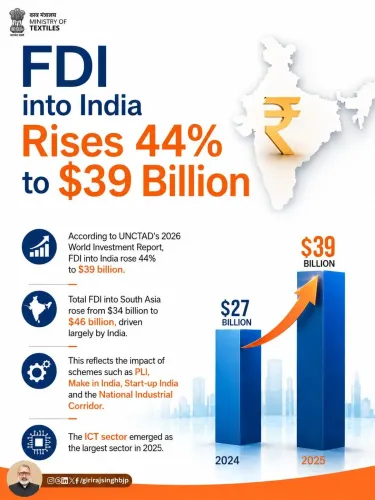
FDI inflows into chemicals rose to ₹1,04,895 crore during 2014–2026 , more than double the ₹45,240 crore received in 2004–2014 .
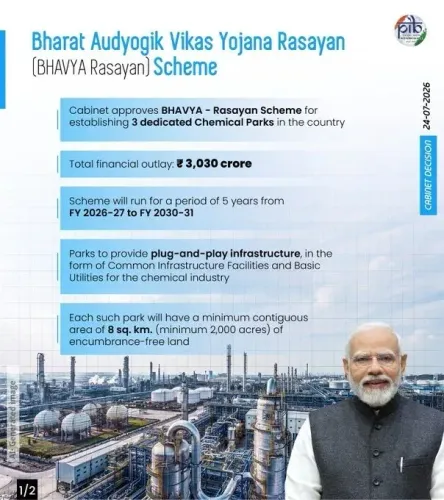
The BHAVYA Rasayan Scheme has been approved with an outlay of over ₹3,030 crore to set up three new Chemical Parks .
CIPET has trained nearly 6.72 lakh skilled professionals across 51 centres , with 19 centres established since 2014 .
18 Centres of Excellence have filed 85 patents , published over 600 research papers , and developed 105 new technologies .
Over 1 lakh farmers have benefited from pesticide safety training through more than 250 programmes by HIL (India) Limited and IPFT .
India's three Petroleum, Chemicals and Petrochemicals Investment Regions (PCPIRs) have collectively generated over 3.7 lakh jobs, attracted investments worth ₹3.4 lakh crore, and enabled the establishment of more than 2,200 chemical manufacturing units over the past 12 years, according to a government factsheet released on Wednesday, 5 August. The three PCPIRs are located at Dahej in Gujarat, Visakhapatnam–Kakinada in Andhra Pradesh, and Paradeep in Odisha.
FDI Surge and Investment Momentum
India's policy of permitting 100 per cent FDI under the automatic route for most chemical sectors has been a key driver of capital inflows. According to the factsheet, FDI inflow between 2014 and 2026 stood at ₹1,04,895 crore — more than double the ₹45,240 crore recorded during the preceding decade from 2004 to 2014. This acceleration reflects the sector's growing appeal to global investors amid India's broader manufacturing push.
BHAVYA Rasayan Scheme and Chemical Parks
The Union Budget 2026–27 included a proposal to establish three Chemical Parks on a cluster-based plug-and-play model, aimed at strengthening domestic manufacturing, reducing import dependence, and sharpening global competitiveness. The Union Cabinet has since approved the BHAVYA Rasayan Scheme — formally, the Bharat Audyogik Vikas Yojana Rasayan — with an outlay of over ₹3,030 crore. The proposed parks are designed to support the chemical sector and advance integrated circular economy principles.
Plastic Parks and Research Ecosystem
The Department of Chemicals & Petrochemicals has approved 10 Plastic Parks across the country to support downstream plastic processing industries. Of these, four have achieved 100 per cent infrastructure completion, including three completed during 2025–26. On the research front, 18 Centres of Excellence have filed 85 patents, published over 600 research papers, and developed 105 new technologies and products.
CIPET Expansion and Skilling Milestones
The Central Institute of Petrochemicals Engineering & Technology (CIPET) has grown its network to 51 centres, with 19 established since 2014. It has trained nearly 6.72 lakh skilled professionals — of whom over 5.21 lakh were trained between 2014 and 2024 — and completed 8.53 lakh technology support service assignments during the same period. New facilities added include the Centre for Skilling and Technical Support, the Plastic Waste Management Centre, and the Advanced Polymer Design and Development Research Laboratory.
Pesticide Technology and Farmer Outreach
The Institute of Pesticide Formulation Technology (IPFT) in Gurugram has developed and transferred 64 pesticide formulation technologies to industry over the past 12 years. The institute is NABL-accredited and an OECD-GLP-compliant test facility. Through awareness programmes conducted by HIL (India) Limited and the IPFT, more than 250 training programmes have been organised, benefiting over 1 lakh farmers nationwide on the safe and judicious use of pesticides and integrated pest management practices. As the government looks to deepen the sector's global footprint, the pace of Chemical Park development and CIPET skilling will be closely watched as indicators of whether the policy momentum translates into sustained industrial growth.
Point of View
Doubled FDI, 51 CIPET centres — but the numbers span 12 years and three administrations, making attribution selective at best. The more telling signal is the BHAVYA Rasayan Scheme: a ₹3,030 crore plug-and-play Chemical Park model that acknowledges what the PCPIR model did not fully solve — ease of entry for smaller manufacturers. Whether these parks avoid the infrastructure delays that plagued earlier investment regions will determine if the sector's next decade matches the headline optimism of this one.
NationPress
20 Sept 2026
Frequently Asked Questions
What are PCPIRs and where are India's three located?
Petroleum, Chemicals and Petrochemicals Investment Regions (PCPIRs) are designated zones that integrate petroleum refining, chemicals, and petrochemicals manufacturing. India's three PCPIRs are at Dahej in Gujarat, Visakhapatnam–Kakinada in Andhra Pradesh, and Paradeep in Odisha.
How many jobs has India's chemicals sector created in the last 12 years?
According to a government factsheet released on 5 August, the three PCPIRs have generated over 3.7 lakh jobs and facilitated the establishment of more than 2,200 chemical manufacturing units over the past 12 years.
What is the BHAVYA Rasayan Scheme?
The BHAVYA Rasayan Scheme — Bharat Audyogik Vikas Yojana Rasayan — is a Union Cabinet-approved initiative to set up three Chemical Parks on a cluster-based plug-and-play model. It carries an outlay of over ₹3,030 crore and aims to boost domestic manufacturing and reduce import dependence.
How has FDI in India's chemicals sector changed since 2014?
FDI inflows into the chemicals sector reached ₹1,04,895 crore between 2014 and 2026, more than double the ₹45,240 crore received during 2004–2014. India's policy of allowing 100 per cent FDI under the automatic route for most chemical sectors has supported this growth.
What has CIPET achieved in skilling and research?
The Central Institute of Petrochemicals Engineering & Technology (CIPET) has trained nearly 6.72 lakh skilled professionals across 51 centres, with 19 centres added since 2014. It has also completed 8.53 lakh technology support service assignments during 2014–2024.