India deep-water ports push to end reliance on Colombo, Singapore hubs
Synopsis
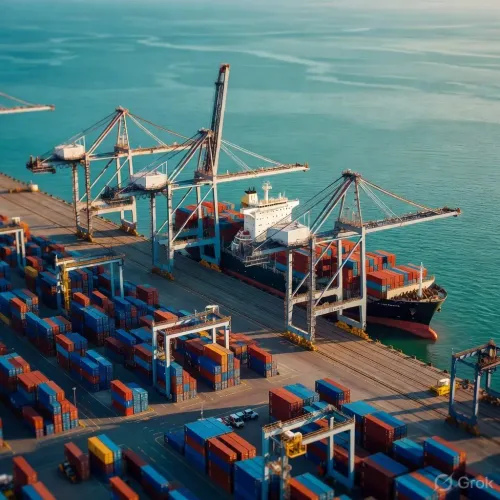
The world's largest container ship docking at Vizhinjam on 7 July was not just a photo op — it was a stress test. India is spending at scale to deepen drafts at Ennore, Paradeep, and Kutch, and is building Vadhavan to crack the global top ten. The goal: stop paying Colombo and Singapore to handle Indian cargo.
Key Takeaways
India is deepening berth drafts at Kamarajar (Ennore) , Paradeep , and Deendayal (Kutch) ports from 14 metres to 18 metres .
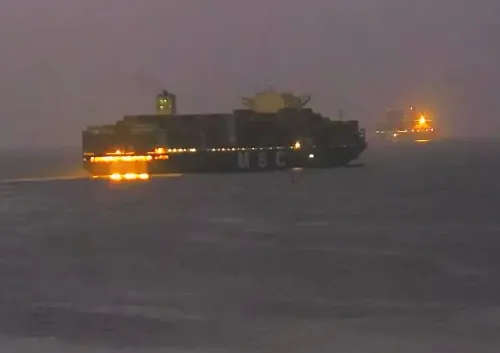
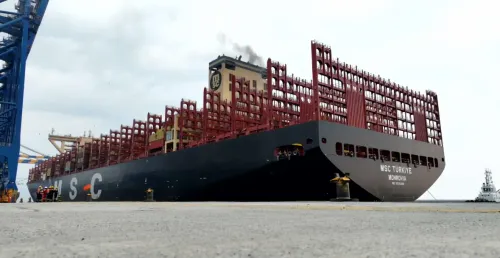
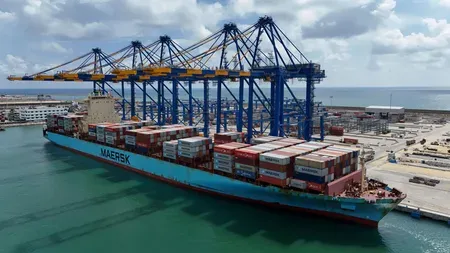
The MSC Irina , the world's largest container ship, docked at Vizhinjam Port on 7 July .
Vadhavan Port in Maharashtra is planned with a 20-metre natural draft, targeting a place among the world's top ten container hubs .
Mundra Port already ships over 14,000 TEUs directly to the United States , bypassing Colombo and Singapore.
India has over 7,500 km of coastline but has historically lacked ports capable of handling mother vessels of 14,000–24,000 TEUs .
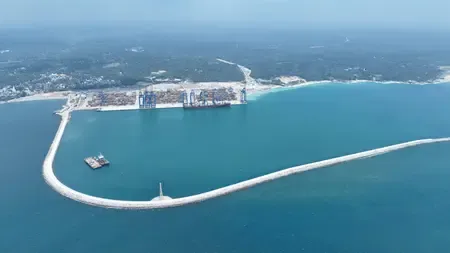
India is fast-tracking a sweeping upgrade of its major ports and constructing new deep-water terminals to reclaim transhipment cargo currently routed through Colombo and Singapore, according to a report by India Narrative. The push gained a symbolic milestone on 7 July when the MSC Irina — the world's largest container ship — docked at Vizhinjam Port in Kerala, marking a turning point in India's maritime ambitions.
The Draft-Deepening Drive
The government has initiated draft-deepening works at several key ports, raising berth depths from 14 metres to 18 metres to accommodate larger 'mother vessels' capable of carrying between 14,000 and 24,000 twenty-foot equivalent units (TEUs). Ports earmarked for the upgrade include Kamarajar Port at Ennore near Chennai, Paradeep Port in Odisha, and Deendayal Port in Kutch. The expanded drafts will also allow these facilities to handle Cape-size dry bulk vessels carrying roughly 2 lakh tonnes of deadweight cargo.
Decades of Neglect, Now Being Addressed
The India Narrative report was pointed in its assessment of earlier policy failures. 'For decades, India's maritime trade carried a quiet but costly irony,' it noted. 'A nation with over 7,500 kilometres of coastline and some of the busiest shipping lanes passing along its southern tip did not have ports that could accommodate mother vessels.' The report credited the current government with moving on this gap with 'a scale and urgency that matches the scale of the problem,' though critics have long argued that successive administrations — across party lines — deferred investment in port infrastructure in favour of land-side projects.
Vadhavan and the Top-Ten Ambition
Among the most consequential projects in the pipeline is Vadhavan Port in Maharashtra, planned with a natural draft of approximately 20 metres. According to the report, capacity targets for Vadhavan are set to place it among the world's top ten container hubs once operational. The project represents India's most direct attempt to build a greenfield transhipment hub capable of competing with established Asian peers.
Mundra's Proof of Concept
The private sector has already demonstrated what is possible. Mundra Port in Gujarat, operated by Adani Ports, has achieved a draft of 17.5 metres and has become the only Indian port shipping more than 14,000 TEUs directly to the United States — bypassing intermediary hubs entirely, according to the report. Mundra's trajectory is being cited as a template for what state-owned ports can replicate with the right capital and policy support.
What This Means for India's Trade Position
India currently loses significant freight revenue and logistical control by routing a large share of its container traffic through foreign transhipment hubs. Recapturing that traffic would reduce shipping costs for Indian exporters, shorten transit times, and generate port-side employment and revenue. The arrival of the MSC Irina at Vizhinjam — a port still in its commissioning phase — signals that global shipping lines are already testing India's readiness. Whether the broader infrastructure can scale fast enough to convert that signal into sustained traffic will determine the programme's success.
Point of View
Not yet a habit. The structural question is whether India can convert episodic big-ship calls into regular transhipment volume — something that requires not just deeper drafts but reliable turnaround times, competitive tariffs, and hinterland rail connectivity. Mundra's success is instructive but also cautionary: it took Adani two decades of private-sector discipline to get there. Replicating that at state-run ports, where labour agreements and bureaucratic procurement cycles are constants, is a different challenge entirely. The Vadhavan ambition is real, but the gap between a 20-metre draft on paper and a top-ten hub in practice is where Indian port projects have historically stalled.
NationPress
19 Oct 2026
Frequently Asked Questions
Why is India upgrading its deep-water ports?
India is upgrading its ports to capture transhipment cargo currently routed through foreign hubs like Colombo and Singapore. A lack of deep-draft berths has historically forced Indian trade to rely on these intermediary ports, adding cost and transit time for exporters.
What is the significance of the MSC Irina docking at Vizhinjam?
The MSC Irina is the world's largest container ship, and its arrival at Vizhinjam Port on 7 July signals that global shipping lines are beginning to test India's readiness as a direct port-of-call. Vizhinjam is still in its commissioning phase, making the call a milestone in India's transhipment ambitions.
Which Indian ports are being deepened and by how much?
Kamarajar Port at Ennore near Chennai, Paradeep Port in Odisha, and Deendayal Port in Kutch are all being deepened from 14 metres to 18 metres. The deeper drafts will allow these ports to handle large mother vessels carrying 14,000–24,000 TEUs and Cape-size bulk carriers.
What is Vadhavan Port and why does it matter?
Vadhavan Port in Maharashtra is a planned greenfield facility with a natural draft of approximately 20 metres. It is being developed with capacity targets that would place it among the world's top ten container hubs, making it India's most ambitious direct challenge to established Asian transhipment centres.
How has Mundra Port already demonstrated this model?
Mundra Port in Gujarat, with a 17.5-metre draft, is currently the only Indian port shipping more than 14,000 TEUs directly to the United States without routing through an intermediary hub. According to the report, it serves as a proof of concept for what deeper-draft Indian ports can achieve.