India's Financial Technology Revolution Sets Standard for Developing Nations

Synopsis
India has revolutionized its financial technology landscape, becoming a leading digital payment system and offering a model for developing nations. This transformation is driven by government policies, mobile connectivity, and innovative platforms, paving the way for significant financial inclusion.
Key Takeaways
Transformative Journey : India's financial technology transformation sets a global benchmark.
Government Initiatives : Extensive policies have fostered financial inclusion.
Digital Identity Integration : Linking digital identities with banking enhances transaction efficiency.
UPI's Impact : UPI reduces cash dependency, promoting transparency.
PM-WANI Initiative : Expands affordable internet access across rural areas.
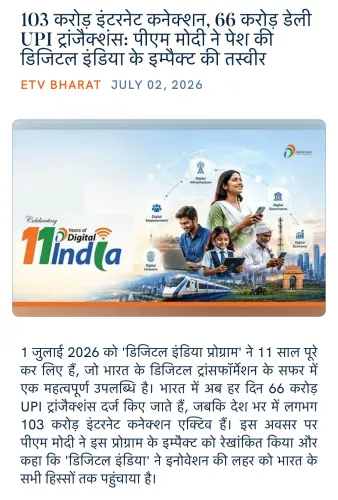
New Delhi, March 11 (NationPress) India has embarked on a transformative journey in financial technology, evolving into one of the globe's leading digital payment systems, establishing a blueprint for developing nations, according to a recent report. This model illustrates how government initiatives, technological advancements, and extensive mobile access can synergize to create an efficient payment framework, as highlighted by the Azerbaijan-based News.az.
The global spotlight is on India's digital payment revolution, with economists and tech specialists examining it as a benchmark for other emerging markets.
The combination of digital identity frameworks, growing mobile connectivity, cutting-edge payment solutions, and favorable government policies has resulted in one of the most expansive and efficient digital ecosystems worldwide, the report emphasizes.
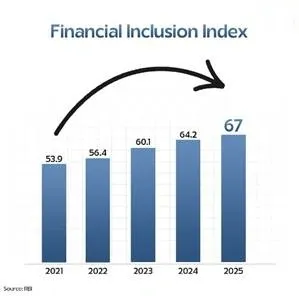
It acknowledges the government's thorough planning, stating that state-led initiatives aimed at enhancing financial inclusion and providing digital identities to millions set the groundwork for this system.
The swift enhancement of mobile internet availability and the affordability of smartphones have propelled widespread adoption. Public internet accessibility has also broadened through the Prime Minister Wi-Fi Access Network Interface (PM-WANI) initiative. By February 2026, this program had facilitated 409,111 Wi-Fi hotspots, supported by 207 PDO Aggregators and 113 app developers, with the objective of delivering cost-effective, high-speed internet, particularly in rural and remote areas.
These advancements have cultivated the necessary environment for large-scale digital financial services.
“By associating digital identities with banking and mobile services, financial institutions can securely authenticate users and process transactions effectively,” the report describes.
The Unified Payments Interface (UPI) has minimized reliance on cash, consequently enhancing transparency in the financial system and boosting efficiency in economic exchanges.
As of January 2026, UPI processes approximately Rs 28.33 lakh crore in monthly transactions, amounting to 21.7 billion transactions, offering affordable, real-time digital payments across the nation. This has significantly driven financial inclusion, bridging urban-rural and income disparities through zero-cost transfers via mobile devices, as stated by the government in a recent announcement.
aar/na
Point of View
This report highlights India's remarkable achievement in financial technology, showcasing its potential as a leading model for developing economies. The government's role in fostering this transformation through innovative policies and initiatives is commendable and warrants attention and further exploration.
NationPress
30 Sept 2026
Frequently Asked Questions
What is India's digital payment model?
India's digital payment model integrates government policy, technological innovation, and mobile connectivity to create an efficient payment infrastructure, serving as a benchmark for developing economies.
How has UPI impacted cash usage in India?
UPI has significantly reduced reliance on physical cash, enhancing transparency and efficiency in financial transactions across the country.
What role does PM-WANI play in internet access?
The PM-WANI initiative expands public internet access by establishing numerous Wi-Fi hotspots, especially in rural and remote areas, providing affordable high-speed connectivity.
Why is India’s model significant for other developing nations?
India's model demonstrates how integrating digital identities with financial services can promote economic inclusion and boost efficient financial transactions, inspiring similar approaches in other developing markets.
How many transactions does UPI handle monthly?
As of January 2026, UPI processes nearly Rs 28.33 lakh crore in monthly transactions, equating to 21.7 billion transactions.