India EV retail sales surge 74% to record 3.33 lakh units in September: FADA
Synopsis
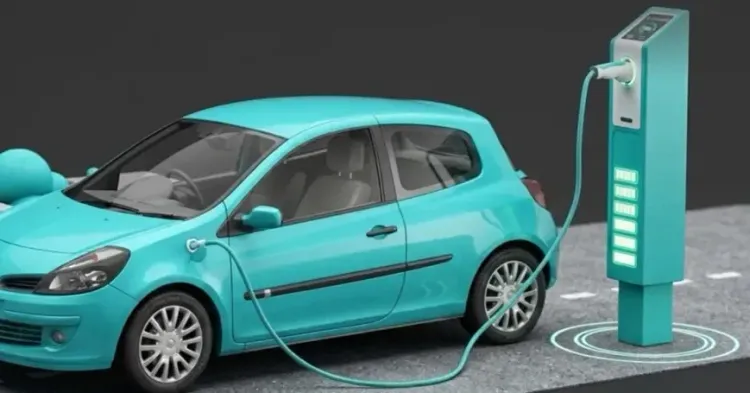
India's EV market didn't just grow in September — it broke every record on the books. With 3,33,634 units sold, a 74% YoY surge, and both electric two-wheelers and passenger vehicles hitting all-time highs, FADA says this is no longer a subsidy story. It's a demand story — and September shows it accelerating.
Key Takeaways
India's EV retail sales hit an all-time high of 3,33,634 units in September 2026 , up 74 per cent YoY, per FADA data.
Electric two-wheelers surged to a record 2,07,314 units , up 88.67 per cent YoY; penetration rose to 11.6 per cent .
Electric passenger vehicles hit a segment record of 36,108 units , up 94.56 per cent YoY; penetration climbed to 8.5 per cent .
Electric three-wheelers reached 86,024 units with category EV penetration at a dominant 64.9 per cent .
Electric commercial vehicles more than doubled YoY at 158 per cent growth, reaching 4,188 units .
Overall EV penetration across categories rose to approximately 13 per cent , up from 10 per cent a year ago.
India's electric vehicle market posted its highest-ever monthly retail tally in September 2026, with total sales reaching 3,33,634 units — a 74 per cent year-on-year (YoY) jump, according to data released by the Federation of Automobile Dealers Associations (FADA) on 7 October. EV penetration across vehicle categories climbed to approximately 13 per cent, up from around 10 per cent in September last year.
Why This Record Is Different
FADA President Sai Giridhar was emphatic in contextualising the achievement: unlike the broader auto market, where September's headline numbers are often inflated by a weak year-ago base, the EV figure is, in his words, a clean, absolute record. 'Electric vehicles did not merely grow against last year — they set a new all-time high,' Giridhar said.
He attributed the surge to a confluence of factors — festive-season demand, maturing running-cost economics, a widening model portfolio, and sustained policy support through the PM E-DRIVE scheme and progressive state-level incentives. 'Festive demand, maturing running-cost economics, a widening choice of models and sustained policy support through PM E-DRIVE and progressive state schemes are together turning the EV from an alternative into a default consideration for a growing set of buyers,' he said.
Segment-Wise Breakdown
Electric two-wheelers (E2Ws) led the charge, surging to an all-time high of 2,07,314 units, up 88.67 per cent YoY and 13.16 per cent month-on-month (MoM). Penetration in the two-wheeler category improved to 11.6 per cent from 8.2 per cent a year ago.
Electric passenger vehicles (EPVs) recorded their own segment record at 36,108 units, registering 94.56 per cent YoY growth and 17.63 per cent MoM growth, with category penetration rising to 8.5 per cent from 5.7 per cent last year.
Electric three-wheelers (E3Ws) continued to dominate their segment, with retail sales rising to 86,024 units, up 40 per cent YoY and 7.74 per cent MoM. EV penetration in the three-wheeler category remained exceptionally high at 64.9 per cent.
Electric commercial vehicles (ECVs) logged 4,188 units in September. While volumes slipped 10.9 per cent MoM, the category more than doubled on an annual basis with 158 per cent YoY growth, and penetration improved to around 4 per cent from 2.16 per cent last year.
A Demand-Led Story, Not a Subsidy Story
Giridhar was careful to distinguish the current growth cycle from earlier, incentive-driven phases. 'This is no longer a subsidy-led story — it is a demand-led one,' he said, adding that electric mobility is now a durable thread of the India Growth Story, with September signalling acceleration rather than a plateau.
This comes amid a broader government push to accelerate EV adoption, including the PM E-DRIVE scheme launched in late 2024, which provides demand-side incentives for two-wheelers and buses. The record September numbers suggest that policy tailwinds and consumer readiness are now reinforcing each other in a way earlier adoption curves did not.
What to Watch Next
With the festive season — typically the strongest retail window of the year — now in full swing through October, industry observers will be watching whether September's record holds or is surpassed. Charging infrastructure expansion, battery cost trajectories, and any revision to state subsidies will be critical variables heading into the final quarter of 2026.
Point of View
It is a new ceiling. The 94.56 per cent YoY jump in electric passenger vehicles is the most telling data point: that segment has historically been the hardest to move because the upfront cost gap with ICE alternatives is widest there. If that gap is now being bridged by running-cost economics rather than subsidy alone, the EV adoption curve becomes far stickier. The risk to watch is charging infrastructure — a demand surge that outruns grid access could create a satisfaction problem that stalls the next adoption wave before it begins.
NationPress
7 Oct 2026
Frequently Asked Questions
What is India's EV retail sales figure for September 2026?
India's total EV retail sales in September 2026 reached a record 3,33,634 units , up 74 per cent year-on-year, according to FADA data released on 7 October. This is the highest monthly EV sales figure ever recorded in the country.
Which EV segment grew the fastest in September 2026?
Electric commercial vehicles posted the highest YoY growth rate at 158 per cent , though volumes remained relatively small at 4,188 units . Among the larger segments, electric passenger vehicles grew 94.56 per cent YoY to a record 36,108 units .
What is India's overall EV penetration as of September 2026?
EV penetration across all vehicle categories rose to approximately 13 per cent in September 2026, up from around 10 per cent in September last year. Electric three-wheelers had the highest penetration at 64.9 per cent .
What is driving the surge in India's EV sales?
FADA President Sai Giridhar cited festive-season demand, improving running-cost economics, a wider range of available models, and sustained policy support through the PM E-DRIVE scheme and state incentives as key drivers. He described the current growth as demand-led rather than subsidy-driven.
What is the PM E-DRIVE scheme and how does it support EV adoption?
The PM E-DRIVE scheme is a central government initiative that provides demand-side incentives for electric two-wheelers and buses in India, launched in late 2024. It is one of the policy pillars FADA credits with supporting the sustained growth in EV retail sales across segments.