DRDO's GTRE delivers India's first 350 kg thrust expendable turbojet engine
Synopsis
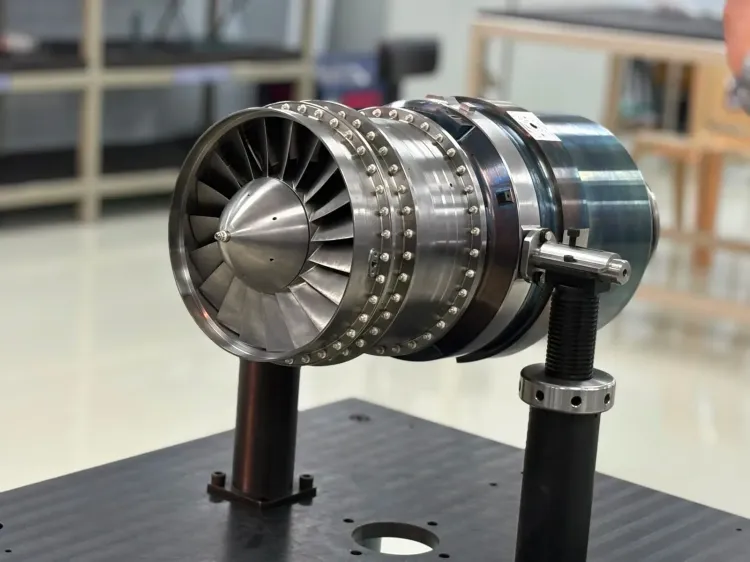
India has indigenously designed and delivered its first expendable turbojet engine in the 350 kg thrust class — a category mastered by only a handful of nations. Built by Hyderabad's Azad Engineering to DRDO's GTRE design, this milestone signals that India's long-troubled aero-engine sector may finally be turning a corner, with implications for cruise missiles, drones, and beyond.
Key Takeaways
DRDO's GTRE received India's first indigenous 350 kg thrust expendable turbojet engine on 22 July 2025 .
The engine was manufactured and assembled by Hyderabad -based Azad Engineering , GTRE's designated industry partner.
Jet engine technology is mastered by only a handful of countries globally, making this a significant capability milestone.
The handover was received by Dr K.
Rajalakshmi Menon (Director General, Aeronautical Systems) and Dr S.V.
Ramanamurty (Director, GTRE).
DRDO Chairman Rajesh Kumar Singh called the achievement a 'historic milestone' for India's aerospace and defence ecosystem.
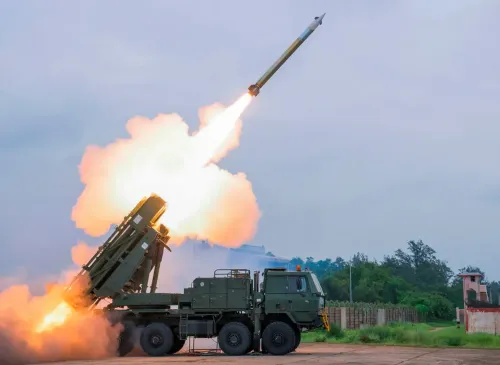
The engine is expected to support platforms such as cruise missiles, loitering munitions, and aerial target drones.
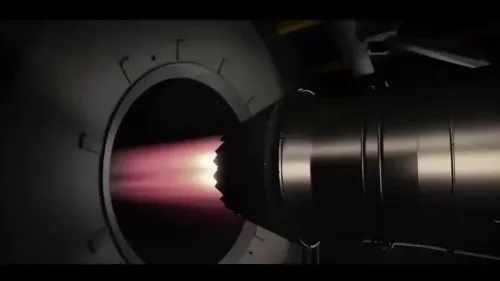
India's Defence Research and Development Organisation (DRDO) on 22 July 2025 achieved a landmark in indigenous aerospace propulsion, with Hyderabad-based Azad Engineering successfully delivering the country's first expendable turbojet engine in the 350 kg thrust class to the Gas Turbine Research Establishment (GTRE). The engine, designed entirely by GTRE, marks a significant advance in India's drive toward self-reliance in critical military technologies.
What Was Delivered and Who Was Involved
The engine was formally handed over by Azad Engineering Chief Executive Officer Rakesh Chopdar to Distinguished Scientist and Director General (Aeronautical Systems) Dr K. Rajalakshmi Menon and Outstanding Scientist and Director, GTRE, Dr S.V. Ramanamurty. GTRE had selected Azad Engineering as its industry partner for the manufacturing and assembly of the engine, reflecting a deliberate push to integrate private sector precision engineering into defence production.
Defence Secretary and DRDO Chairman Rajesh Kumar Singh congratulated both organisations, stating that the collaboration had been 'instrumental in transforming the vision of an indigenous expendable turbojet engine into a historic milestone for the country's aerospace and defence ecosystem.'
Why This Achievement Matters
According to the Ministry of Defence, jet engine technology is mastered by only a handful of countries globally and is considered among the world's most complex engineering disciplines — demanding exceptional precision, advanced metallurgy, and stringent manufacturing standards. India's successful development of this engine places it among a small group of nations with indigenous turbojet design and production capability.
Notably, the delivery represents the culmination of years of precision engineering and close collaboration between India's scientific institutions and its industrial base — a model the government has been actively promoting under the broader Aatmanirbhar Bharat framework.
Context: India's Aero-Engine Gap
Aero-engine development has historically been one of India's most persistent capability gaps in defence. Despite decades of investment, the country has relied heavily on imported propulsion systems for its frontline platforms. The GTRE has long worked on the Kaveri engine programme — which faced prolonged delays — making this fresh delivery a meaningful signal that domestic design-to-production pipelines are maturing. This is the first time an expendable turbojet in this thrust class has been indigenously realised in India.
Industrial and Strategic Implications
The successful delivery is expected to strengthen India's indigenous defence manufacturing capabilities and support the country's broader goal of self-reliance in advanced propulsion systems. Azad Engineering, a Hyderabad-based firm, emerges as a credible private-sector partner in high-complexity aerospace manufacturing — a role that was, until recently, dominated by public sector entities. Analysts expect this to open pathways for the engine's integration into expendable platforms such as cruise missiles and target drones.
What Comes Next
The Ministry of Defence has not yet detailed the specific platforms for which the engine is intended, but expendable turbojet engines in this thrust class are typically used in cruise missiles, loitering munitions, and aerial target systems. With this delivery complete, attention will turn to qualification testing, series production readiness, and eventual induction into operational programmes.
Point of View
A private-sector firm manufacturing — a public-private split that mirrors how serious aerospace nations actually build engines. The real test now is whether this moves from a single delivered unit to a qualified, series-produced propulsion system integrated into an operational platform. A delivered engine is a milestone; a inducted engine is a capability.
NationPress
22 Oct 2026
Frequently Asked Questions
What is the 350 kg thrust expendable turbojet engine developed by DRDO?
It is India's first indigenously designed expendable turbojet engine in the 350 kg thrust class, developed by DRDO's Gas Turbine Research Establishment (GTRE) and manufactured by Hyderabad-based Azad Engineering. The engine was delivered to GTRE on 22 July 2025, marking a historic milestone in India's aerospace propulsion capability.
What is an expendable turbojet engine used for?
Expendable turbojet engines are designed for single-use platforms such as cruise missiles, loitering munitions, and aerial target drones. Unlike aircraft engines, they are not designed for sustained reuse, which allows for lighter construction and lower cost at the expense of longevity.
Why is developing a jet engine considered so difficult?
Jet engine technology requires exceptional precision engineering, advanced metallurgy, and stringent manufacturing standards, making it one of the world's most complex engineering disciplines. According to the Ministry of Defence, only a handful of countries have mastered it — a group India has now joined with this delivery.
Who are the key organisations behind this achievement?
DRDO's Gas Turbine Research Establishment (GTRE) designed the engine, while Hyderabad-based Azad Engineering was selected as the industry partner for manufacturing and assembly. The handover was overseen by Dr K. Rajalakshmi Menon and Dr S.V. Ramanamurty, with DRDO Chairman Rajesh Kumar Singh congratulating both teams.
How does this fit into India's broader defence self-reliance goals?
The engine delivery is part of India's Aatmanirbhar Bharat push to reduce dependence on imported defence technology. India has historically relied on foreign propulsion systems for frontline platforms; this indigenous turbojet signals a maturing domestic design-to-production pipeline, particularly through the integration of private sector firms like Azad Engineering.