India's path to industrial superpower: Key gaps and what the report found
Synopsis
India has the growth numbers but not yet the industrial bones. A new report by India Narrative lays out the structural gaps — from machine-tool deficits to 85% crude oil import dependence and 70% fertiliser imports — that stand between India's current trajectory and genuine industrial superpower status. The PLI push and semiconductor clusters are steps forward, but the report argues the real test is whether India can build machines that build machines.
Key Takeaways
A report by India Narrative finds India is advancing industrially but lacks the manufacturing depth of China, South Korea, or Taiwan.
India imports approximately 85% of its crude oil and 50% of its natural gas, posing energy security risks.
Over 70% of India's potash and phosphate fertiliser imports come from Russia , Saudi Arabia , China , and Morocco — a food-security vulnerability.
Heavy reliance on China for processing and supply chains affects competitiveness in EVs , renewables, electronics, and defence.
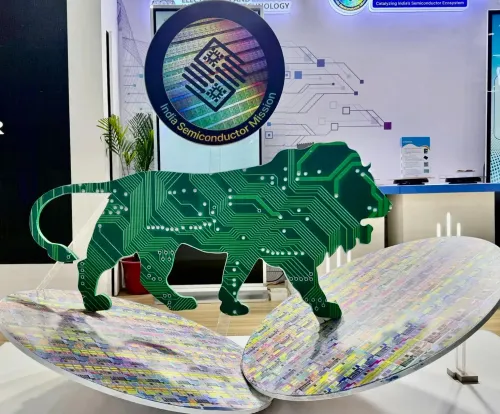
PLI schemes and semiconductor clusters in Gujarat , Tamil Nadu , and Karnataka mark progress, but the report says India must develop precision industrial machinery capability to close the gap.
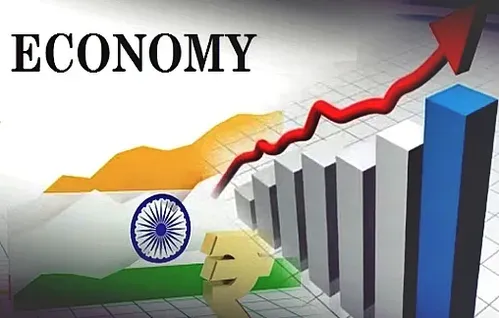
The IMF projects India will become the world's third-largest economy within a few years, but the report warns GDP rank alone does not equal industrial maturity.
India is making measurable strides toward becoming a global industrial power, but faces deep structural challenges in technology, energy dependence, and supply-chain resilience, according to a report by India Narrative released on 19 May. The assessment offers a candid audit of how far the country must travel before it can claim the kind of industrial depth that defines today's advanced economies.
Where India Stands Today
Long recognised as a services-sector powerhouse, India has begun pivoting toward manufacturing through Production-Linked Incentive (PLI) schemes and the 'Make in India' initiative. Semiconductor clusters are taking shape in Gujarat, Tamil Nadu, and Karnataka, signalling intent to move up the value chain. The International Monetary Fund (IMF) projects India will become the world's third-largest economy within the next few years — a milestone that underscores the country's growth momentum.
Yet the report cautions that headline GDP rankings do not capture industrial maturity. India, it notes, remains heavily dependent on external sources for many of the products, technologies, and systems that power its own development.
The Manufacturing Depth Problem
The report's central argument is that India must develop the capacity to manufacture precision and high-end industrial machinery — machines that can produce other machines. This 'machine-tool capability' is the bedrock of industrial self-reliance, and it is precisely what separates China, South Korea, and Taiwan from emerging economies.
India currently lacks the dense, vertically integrated manufacturing ecosystems seen in those countries, the report observed. Indian engineers and technology professionals have contributed significantly to global giants like Google and Microsoft, yet India has not built comparable companies or manufacturing ecosystems with equivalent technological depth and global reach — a contradiction the report flags as a structural gap rather than a talent deficit.
Energy and Critical Input Vulnerabilities
India imports approximately 85 per cent of its crude oil and 50 per cent of its natural gas, leaving its energy security exposed to external price shocks and geopolitical disruption. The country has, however, diversified supply chains, expanded renewable energy capacity, and accelerated domestic processing of battery materials and other critical inputs, the report acknowledged.
Reliance on China for processing and supply chains remains a particular concern, affecting the competitiveness of electric vehicles (EVs), renewables, electronics, and defence systems. The report also flagged fertiliser dependency as a direct food-security risk: India currently imports over 70 per cent of potash, phosphates, and related products from Russia, Saudi Arabia, China, and Morocco. Such concentration, the report cautioned, can easily trigger food inflation and farmer distress during supply shocks.
Two Futures for India
The report draws a sharp fork in the road. If India successfully builds technological capability and industrial depth, it could emerge as an advanced industrial and technological power. If it falls short, the country 'will still continue to grow and modernise, but without fully overcoming its structural constraints or its vulnerabilities,' the report warned.
It pointed out that today's global powers also faced resource dependencies in earlier stages, but overcame them through industrial depth, technological capability, and diversified supply chains — a path India must now chart for itself.
What Comes Next
The report stops short of prescribing a single policy fix, but the direction is clear: deeper domestic manufacturing capability, reduced import dependence in critical sectors, and an innovation ecosystem that retains and deploys Indian talent at home. Whether PLI schemes and semiconductor investments can catalyse that transformation at the required scale remains the defining question for India's industrial decade ahead.
Point of View
But the machine-tool deficit — the inability to manufacture the machines that manufacture things — is the structural ceiling that no amount of assembly-line investment alone can raise. The fertiliser import figure is particularly underreported: a 70% dependence on four geopolitically sensitive suppliers is a food-security time bomb that sits almost entirely outside the current policy conversation. India's talent paradox — engineers powering Google and Microsoft abroad while no equivalent ecosystem exists at home — points to an incentive and ecosystem failure, not a capability one. That distinction matters enormously for policy design.
NationPress
3 Oct 2026
Frequently Asked Questions
What does the India Narrative report say about India's industrial superpower ambitions?
The report concludes that India is on a positive trajectory but must develop precision industrial machinery capability and vertically integrated manufacturing ecosystems to truly qualify as an industrial superpower. It warns that without addressing structural gaps, India will grow but remain constrained by external dependencies.
How dependent is India on imports for energy and critical inputs?
India imports approximately 85% of its crude oil and 50% of its natural gas, according to the report. It also imports over 70% of potash and phosphate fertilisers from Russia, Saudi Arabia, China, and Morocco, creating significant food-security and energy-security vulnerabilities.
Why is India's reliance on China a concern for its industrial growth?
India's dependence on China for processing and supply chains directly affects the competitiveness of its electric vehicle, renewables, electronics, and defence sectors. This concentration creates both cost and geopolitical risk, particularly during periods of bilateral tension.
What is India doing to close its manufacturing gap?
India has launched Production-Linked Incentive (PLI) schemes across multiple sectors and is developing semiconductor clusters in Gujarat, Tamil Nadu, and Karnataka under its 'Make in India' initiative. The report acknowledges these as meaningful steps but argues deeper machine-tool and technology capability is still needed.
What are the two scenarios the report outlines for India's future?
The report presents two paths: if India builds genuine industrial and technological depth, it could emerge as an advanced global power; if it falls short, it will continue to grow and modernise but without overcoming its structural constraints or external vulnerabilities.