India's Transformative Journey in Renewable Energy: A Blueprint for Global Leadership
Synopsis
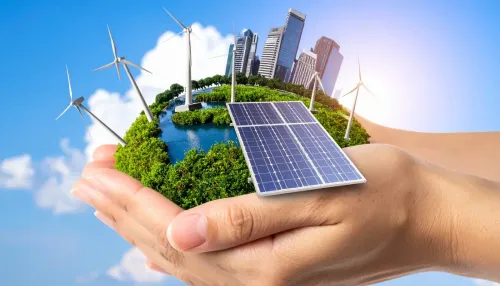
India is rapidly transforming its energy landscape, making strides in renewable energy that promise economic resilience and long-term security. This ambitious transition positions the country as a global leader in clean energy, attracting significant investments and influencing international markets.
Key Takeaways
India's renewable energy capacity has surpassed 51.93% of its total power capacity.
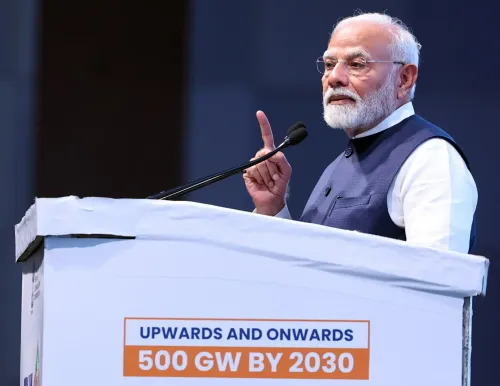
The country aims for 500 GW of renewable energy by 2030.
Strong policy support and private sector participation are driving growth.
Investment in green hydrogen and nuclear energy is part of India's diversification strategy.
India is focused on sustainability and energy independence.
New Delhi, March 25 (NationPress) India's swift shift towards renewable energy is now more than just an environmental concern; it has emerged as a pivotal element of economic resilience, strategic autonomy, and long-term energy security.
As global energy markets encounter persistent disruptions, India's robust initiative towards clean energy is establishing the nation as one of the fastest-evolving renewable energy leaders globally.
The nation has achieved a significant benchmark, with 51.93% of its total installed power capacity derived from non-fossil fuel sources, exceeding its original 50% target ahead of schedule. This transition signifies a crucial movement away from coal and imported oil, indicating a substantial transformation in India's energy landscape.
A decade of remarkable growth
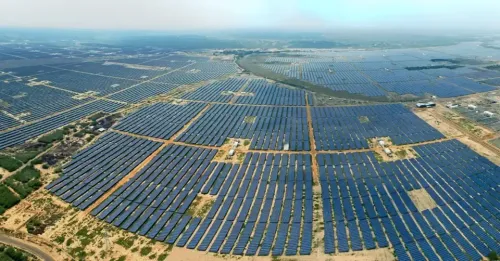
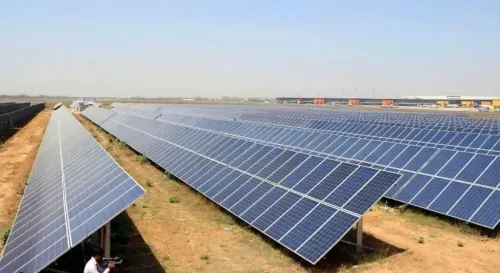
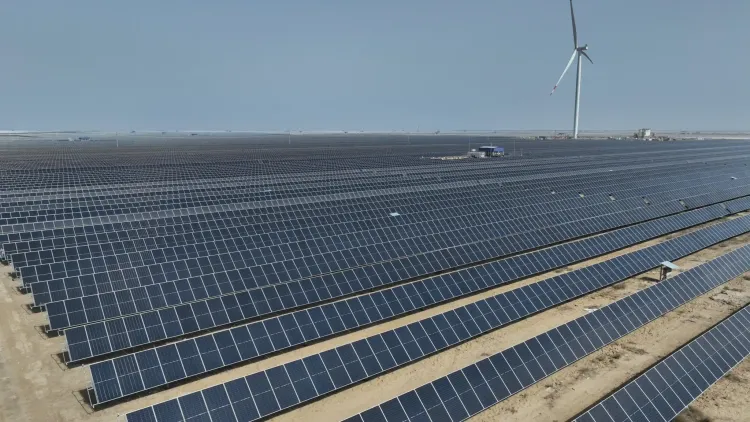
Over the last ten years, India's renewable energy capacity has surged more than threefold—from 76.38 GW in 2014 to 253.96 GW by November 2025. The rate of expansion has intensified, with the country adding 38.61 GW of renewable capacity during 2025–26 (up to December 2025), predominantly through solar energy (30.16 GW), followed by wind and hydro.
This growth is fueled by a blend of strong policy support, participation from the private sector, and flagship initiatives such as PM-KUSUM, PM Surya Ghar, CPSU solar programs, and production-linked incentives (PLI) designed to enhance domestic manufacturing.
Ambitious targets and strategic vision
India's long-term ambitions remain exceptionally high. The country aims to boost solar power generation by 400% and wind energy by 300% by 2035, while setting a target of 500 GW of renewable capacity by 2030. Furthermore, the overall transformation of India's power sector is anticipated to attract investments of $2.2 trillion in the next twenty years.
On a global scale, India currently ranks fourth in total installed renewable energy capacity, trailing behind China, the United States, and Brazil, as reported by the International Renewable Energy Agency (IRENA). This ranking not only highlights India’s scale but also its increasing influence in shaping international clean energy markets.
Beyond solar and wind: Diversifying the energy mix
India's clean energy strategy is broadening beyond traditional renewables. The government is actively investing in:
• Green Hydrogen: Through the National Green Hydrogen Mission, India intends to produce 5 million tonnes annually by 2030, with hydrogen hubs set to be developed at key ports.
• Nuclear Energy: The Nuclear Energy Mission has set a goal of achieving 100 GW capacity by 2047, ensuring a stable, low-carbon baseload power supply.
• Bioenergy and Small Hydro Projects: There is a growing focus on decentralized energy systems, particularly in remote and energy-deficient areas.
A significant initiative is the Small Hydro Power Development Scheme, with an investment of ₹2,584.60 crore, particularly beneficial for regions like Jammu & Kashmir and Ladakh, where untapped hydropower potential exceeds 20,000 MW. These smaller projects promise quicker implementation, reduced costs, and minimal environmental impact, while enhancing local employment and energy accessibility.
Energy security in a volatile world
Global geopolitical tensions—especially disturbances in vital oil supply routes such as the Strait of Hormuz—have unveiled the vulnerabilities tied to fossil fuel reliance. For economies dependent on imports, escalating oil and LNG prices lead to economic strain and inflation.
In this scenario, India's push for renewables is not just environmentally prudent but strategically essential. By diminishing reliance on imported fuels, India is safeguarding its economy from global shocks while improving energy self-sufficiency.
Innovation and grid transformation
To maintain this momentum, India is investing in next-generation energy solutions. The incorporation of Battery Energy Storage Systems (BESS) and Pumped Storage Hydropower (PSP) is becoming vital to manage the intermittent nature of renewable sources. These technologies will guarantee grid stability, efficient peak-load management, and reliable large-scale adoption of renewables.
Simultaneously, decreasing renewable tariffs and enhanced grid infrastructure are making clean energy increasingly competitive against fossil fuels.
Strengthening implementation for accelerated growth
India's journey in renewable energy continues to gain traction, bolstered by proactive policy measures aimed at overcoming challenges such as capital needs, land acquisition, and transmission infrastructure. Ongoing efforts to streamline regulations and improve institutional coordination are facilitating quicker and more efficient project execution, particularly in the hydropower sector.
Sustaining momentum towards global leadership
As the transition reaches a pivotal milestone, the government is now focused on consolidating achievements by ensuring reliable, affordable, and sustainable energy at scale. Supported by consistent policy backing, innovative financing, and strategic execution, India is well-prepared to establish itself as a global leader in renewable energy and a model for sustainable development.
Point of View
India's renewable energy evolution is a crucial step toward achieving energy independence and economic sustainability. The strategic push towards renewables reflects a commitment to environmental responsibility while simultaneously strengthening national security.
NationPress
23 Sept 2026
Frequently Asked Questions
What percentage of India's power capacity comes from renewable sources?
As of now, 51.93% of India's installed power capacity is derived from non-fossil fuel sources.
What is India's renewable energy capacity target for 2030?
India aims to achieve 500 GW of renewable capacity by 2030.
How much has India's renewable energy capacity grown over the last decade?
India's renewable energy capacity has more than tripled from 76.38 GW in 2014 to 253.96 GW by November 2025.
What initiatives support India's renewable energy growth?
Key initiatives include PM-KUSUM, PM Surya Ghar, and production-linked incentives to boost domestic manufacturing.
How does India plan to diversify its energy mix beyond solar and wind?
India is investing in green hydrogen, nuclear energy, and bioenergy to diversify its energy sources.