India's employment rate rises in July 2026: NSO PLFS data

Synopsis
India's July 2026 PLFS data carries a quiet but significant signal: female labour force participation jumped 1.7 percentage points in a single month, urban unemployment fell year-on-year, and rural worker ratios improved on both monthly and annual bases — a rare alignment of positive indicators across gender and geography in the same dataset.
Key Takeaways
India's overall LFPR rose to 55.4% in July 2026, up from 54.4% in June 2026, per NSO PLFS data.
Female LFPR increased by 1.7 percentage points month-on-month to 34.4% in July 2026.
Overall unemployment rate fell to 5.1% in July 2026 from 5.5% in June 2026.
Urban unemployment rate declined 0.5 percentage points year-on-year, from 7.2% in July 2025 to 6.7% in July 2026.
Rural WPR stood at 55.4% , rising 1.6 percentage points over June 2026 and 1.0 percentage point over July 2025.
Survey covered 3,71,021 persons across rural and urban India under the revised PLFS methodology effective January 2025 .
India's labour market showed measurable improvement in July 2026, with both the overall Labour Force Participation Rate (LFPR) and the Worker Population Ratio (WPR) rising year-on-year, according to monthly data released by the National Statistics Office (NSO) on Monday, 17 August 2026. The figures, drawn from the Periodic Labour Force Survey (PLFS), signal a broad-based uptick in employment conditions across genders and geographies.
Key Labour Force Indicators
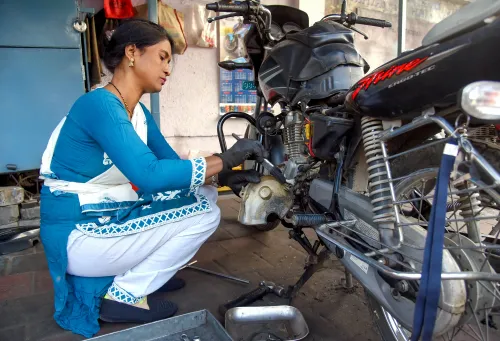
The overall LFPR for persons aged 15 years and above climbed to 55.4% in July 2026, up from 54.4% in June 2026. Female LFPR rose to 34.4% in July 2026, registering a gain of 1.7 percentage points over the previous month — one of the more notable single-month movements in the dataset.
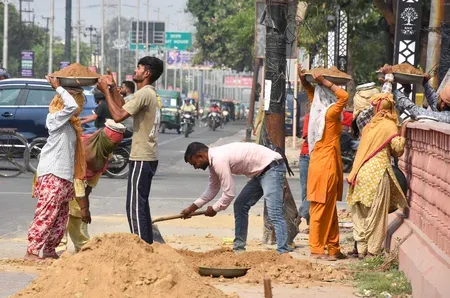
The overall WPR stood at 52.5% in July 2026. Rural WPR reached 55.4%, rising by 1.6 percentage points over June 2026 and 1.0 percentage point over July 2025, according to the NSO bulletin.
Unemployment Rate Declines
The overall unemployment rate (UR) among persons aged 15 and above fell to 5.1% in July 2026, down from 5.5% in June 2026. Both male and female unemployment rates declined month-on-month, indicating improvement across genders.
On a year-on-year basis, the overall UR and rural UR remained broadly stable compared with July 2025. However, the urban unemployment rate registered a more meaningful decline, dropping 0.5 percentage points from 7.2% in July 2025 to 6.7% in July 2026 — a trend that analysts may flag as a sign of strengthening urban job markets.
Survey Methodology and Coverage
The monthly estimates are based on responses from 3,71,021 persons surveyed across both rural and urban India. Of these, 2,11,411 were surveyed in rural areas and 1,59,610 in urban areas. The PLFS follows the Current Weekly Status (CWS) approach to estimate labour force indicators at the all-India level.
Notably, the PLFS survey methodology was revised from January 2025 to enable monthly and quarterly estimates — a structural upgrade that makes the data more responsive to near-term shifts in labour market conditions. Monthly bulletins present LFPR, WPR, and UR as the three headline indicators.
What the Numbers Mean
This is the NSO's primary source for tracking employment and unemployment trends in India, and the July 2026 bulletin is among the first to reflect a full cycle under the revised methodology. The combination of a rising female LFPR, a declining urban unemployment rate, and improving rural WPR points to a labour market that is broadening rather than concentrating gains in a single segment.
Whether these trends hold through the rest of the year will depend on monsoon outcomes affecting rural demand, urban services sector hiring, and broader macroeconomic conditions. The next monthly PLFS bulletin is expected to provide further clarity.
Point of View
But context matters. A 1.7-percentage-point rise in female LFPR in a single month is unusually sharp and warrants scrutiny — whether it reflects genuine structural entry of women into the workforce or seasonal agricultural absorption will only become clear over subsequent months. The urban unemployment decline from 7.2% to 6.7% year-on-year is the more durable signal, as urban labour markets are less seasonally volatile. India's broader challenge remains quality of employment, not just participation — the PLFS measures activity status, not wage levels or contract security, which means a rising WPR can coexist with widespread informal and low-productivity work.
NationPress
1 Oct 2026
Frequently Asked Questions
What does the July 2026 PLFS data show about India's employment?
The July 2026 PLFS data shows that India's overall Labour Force Participation Rate rose to 55.4% and the unemployment rate fell to 5.1%, both improvements over June 2026. The data, released by the National Statistics Office on 17 August 2026, also shows year-on-year gains in rural worker participation and a decline in urban unemployment.
What is the Periodic Labour Force Survey (PLFS)?
The PLFS is India's primary government survey for tracking employment and unemployment, conducted by the National Statistics Office. Since January 2025, its methodology was revised to produce monthly and quarterly estimates of key indicators — LFPR, WPR, and unemployment rate — at the all-India level using the Current Weekly Status approach.
How did female labour force participation change in July 2026?
Female LFPR rose to 34.4% in July 2026, an increase of 1.7 percentage points over June 2026. This was one of the sharper month-on-month movements recorded in the monthly PLFS bulletins.
Did urban unemployment improve in July 2026?
Yes. The urban unemployment rate fell from 7.2% in July 2025 to 6.7% in July 2026, a year-on-year decline of 0.5 percentage points. Month-on-month, both male and female unemployment rates also declined.
How large was the PLFS sample for July 2026?
The July 2026 PLFS estimates are based on data collected from 3,71,021 persons — 2,11,411 from rural areas and 1,59,610 from urban areas — surveyed across India.