Baloch activist slams Zardari's 'divisive' remarks on Hindus in Pakistan
Synopsis
A senior Baloch human rights defender has torn apart Pakistani President Zardari's Independence Day claim that Pakistan 'tolerates' its Hindu minority — invoking the Bangladesh genocide, Balochistan military operations, and decades of documented minority persecution to argue the word 'tolerance' itself is a distortion of Pakistan's record.
Key Takeaways
Baloch activist Mir Yar Baloch condemned Pakistani President Asif Ali Zardari 's Independence Day remarks calling Pakistan's treatment of Hindus one of 'tolerance'.
Zardari claimed Pakistan 'tolerates' its Hindu community, who make up approximately 3–4 per cent of the population.
Mir alleged the remarks were scripted by Pakistani military generals and cited documented incidents of forced conversions, business restrictions, and curbs on religious practice.
He drew a parallel with the 1971 Bangladesh crackdown under Zulfikar Ali Bhutto , stating 'hundreds of thousands of Bengalis were killed' and large numbers of women subjected to sexual violence.
Mir also referenced a 1973 military operation in Baloch areas under Bhutto 's government, alleging thousands were killed and many forcibly disappeared.
He alleged large-scale military operations in Balochistan have continued under the current government.
Leading Baloch human rights defender Mir Yar Baloch has sharply condemned Pakistani President Asif Ali Zardari's remarks about the Hindu community made during Pakistan's Independence Day address, calling them 'shameful', 'poisonous', and 'divisive'. Mir alleged the statement was scripted by Pakistani military generals and delivered through their 'political proxy'.
What Zardari Said
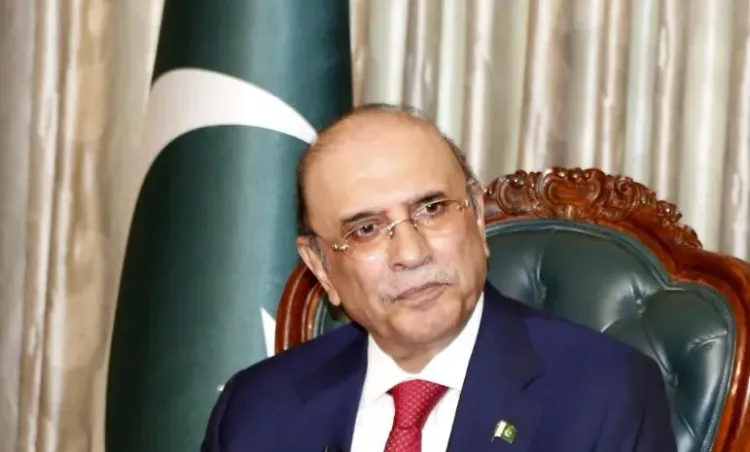
In a widely circulated video from a Pakistan Independence Day event, President Zardari claimed that Pakistan and its Muslim-majority population 'tolerate' the Hindu community, who account for approximately 3–4 per cent of the country's population. The remarks drew immediate criticism from minority rights advocates and diaspora voices.
Mir Yar Baloch's Rebuttal
Taking to X, Mir Yar Baloch argued that Zardari's framing of 'tolerance' erases the lived reality of religious minorities who remained in Pakistan after Partition. He said Hindus, Sikhs, Christians, Jains, and other minority communities have faced documented religious fanaticism, coercion to convert, restrictions on businesses and employment, and limitations on freely practising their faith — a history he described as a 'shameful chapter'.
'Pakistan has done little for the welfare, dignity and protection of Hindus, Sikhs and other minority communities. On the contrary, documented incidents involving pressure to convert, restrictions on their businesses and employment opportunities, and limitations on their ability to freely practice their religious traditions have remained part of Pakistan's ugly history,' Mir stated.
The Bangladesh and Balochistan Contradictions
Mir drew a pointed historical parallel, noting that Zardari — 'sitting in a presidential office bestowed upon him by the Punjabi generals' — appeared to have overlooked the brutal military crackdown on millions of Bangladeshi Bengalis under his father-in-law, former Pakistani Prime Minister Zulfikar Ali Bhutto. 'Hundreds of thousands of Bengalis were killed, and large numbers of Bengali women were subjected to sexual violence. Pakistan cannot even tolerate Muslims, let alone talk about tolerating Hindus,' he stated.
The Baloch activist further alleged that Zardari's party played a political role during what he described as the 'genocide' of Bangladeshi Bengalis, and similarly failed to distance itself from military operations and serious human rights violations against the people of Balochistan. He cited a 1973 military operation launched in Baloch areas during Zulfikar Ali Bhutto's government, which he said resulted in thousands of Baloch being killed and large numbers being forcibly disappeared.
Ongoing Concerns in Balochistan
According to Mir Yar Baloch, large-scale military operations and security actions have continued across Balochistan under the present government as well, prompting what he described as 'serious concerns and objections' from the region. Critics argue this pattern reflects a broader failure of civilian governments to assert authority over military conduct — a contradiction made starker, they say, when a president invokes the language of tolerance toward minorities.
The episode comes at a moment of heightened scrutiny over the treatment of religious minorities in Pakistan, and is likely to fuel fresh debate over the gap between official rhetoric and ground reality for non-Muslim communities in the country.
Point of View
Coming from a sitting head of state on national television, is not a gaffe; it reflects a structural hierarchy embedded in Pakistan's national identity. Mir Yar Baloch's intervention is notable precisely because it comes from a Baloch voice — a community that has its own unresolved grievances with the Pakistani state — lending the critique a cross-minority credibility that purely Hindu-focused advocacy might lack. The mainstream coverage will focus on the Hindu angle; the more uncomfortable story is the institutional one: civilian presidents in Pakistan have repeatedly invoked minority-friendly language while remaining dependent on a military establishment with a documented record of sectarian and ethnic violence.
NationPress
17 Aug 2026
Frequently Asked Questions
What did Pakistani President Zardari say about Hindus on Independence Day?
President Asif Ali Zardari claimed during a Pakistan Independence Day event that Pakistan and its Muslim-majority population 'tolerate' the Hindu community, who account for around 3–4 per cent of the country's population. The remarks were widely circulated in video form and drew sharp condemnation from minority rights advocates.
Who is Mir Yar Baloch and why did he criticise Zardari?
Mir Yar Baloch is a leading Baloch human rights defender based in Quetta. He condemned Zardari's remarks as 'poisonous and divisive', arguing they ignore decades of documented persecution of Hindus, Sikhs, Christians, and other minorities in Pakistan, including forced conversions and restrictions on religious practice.
What historical incidents did Mir Yar Baloch cite in his criticism?
Mir cited the 1971 military crackdown on Bangladeshi Bengalis under Zulfikar Ali Bhutto — Zardari's father-in-law — in which he says hundreds of thousands were killed and large numbers of women subjected to sexual violence. He also referenced a 1973 military operation in Baloch areas that allegedly resulted in thousands of deaths and enforced disappearances.
What is the situation of religious minorities in Pakistan according to the activist?
According to Mir Yar Baloch, religious minorities in Pakistan have faced documented incidents of pressure to convert, restrictions on businesses and employment, and limitations on freely practising their faith since Partition. He described this as a 'shameful chapter' in Pakistan's history that Zardari's remarks effectively erase.
What is the current situation in Balochistan that Mir Yar Baloch referred to?
Mir alleged that large-scale military operations and security actions have continued across Balochistan under the present government, prompting serious concerns from the region. He argued this pattern of military dominance over civilian governance undermines any official claims of tolerance or minority protection.