CM Himanta Sets Record Straight on Kaziranga ESZ Rules

Synopsis
Assam CM Himanta Biswa Sarma issued a three-point factual correction on Kaziranga's Eco-Sensitive Zone, clarifying that the park boundary is unchanged, the 10-km ESZ is measured from the boundary not the core, and the matter is already before the Supreme Court at indigenous communities' request.
Key Takeaways
Kaziranga National Park's boundary has not been altered, contrary to claims circulating online.
The 10-km Eco-Sensitive Zone is measured from the park boundary, not from the core zone — a distinction with significant land-use implications for surrounding communities.
Local indigenous groups have themselves moved the Supreme Court of India on the ESZ question, making it an active sub-judice matter.
CM Himanta Biswa Sarma publicly demanded that misinformation about the ESZ be stopped.
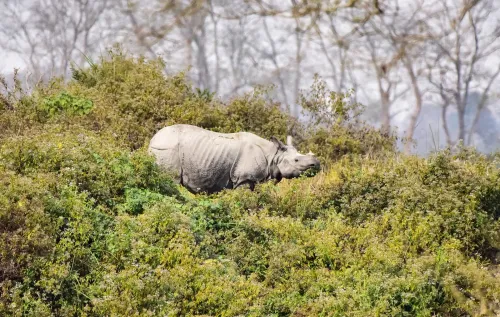
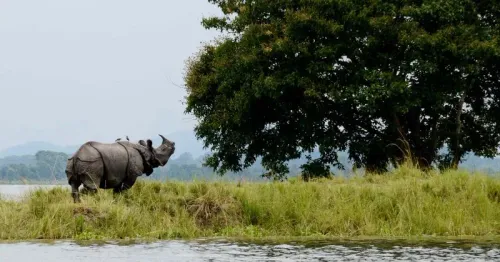
Kaziranga is a UNESCO World Heritage Site and home to the world's largest population of the Indian one-horned rhinoceros, making its buffer-zone rules a high-stakes conservation and community issue.
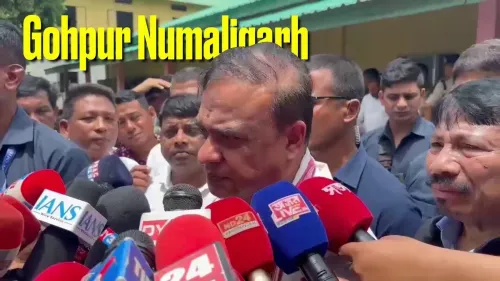
Misinformation about one of India's most protected wildlife corridors has drawn a sharp public rebuttal from Assam Chief Minister Himanta Biswa Sarma, who on Monday, August 17, 2026, posted a point-by-point correction on the rules governing Kaziranga National Park's Eco-Sensitive Zone (ESZ).
Three facts the CM wants on record
Sarma laid out his correction in numbered sequence. First, the park boundary itself has not changed. Second, the 10-kilometre ESZ radius is measured from the park boundary — not from the core zone, a distinction that significantly affects which villages and land parcels actually fall within the regulated area. Third, and perhaps most consequentially, the matter is already before the Supreme Court of India, at the initiative of local indigenous communities themselves.
'The misinformation must stop,' the Chief Minister stated bluntly, signalling that the dispute has moved beyond social-media noise into active judicial territory.
Why the boundary-versus-core distinction matters
The difference between measuring the ESZ from the park boundary and measuring it from the core zone is not a technicality — it can translate into kilometres of additional land falling under restrictions on construction, mining, and certain commercial activities. For the communities living on the fringes of Kaziranga, that distinction determines whether their homes, farms, and livelihoods are inside or outside the regulated perimeter. Conflating the two measurements, intentionally or otherwise, inflates the apparent footprint of the ESZ and fuels anxiety among residents who may not need to be affected at all.
Indigenous groups at the Supreme Court
The Chief Minister's third point carries the sharpest political edge: it is local indigenous groups — not the state government acting alone — who have brought the ESZ question before the Supreme Court. That framing repositions the debate. Rather than a top-down regulatory imposition, the legal process is being driven by the very communities whose interests critics claim are being ignored. With the matter sub judice, the CM's implicit message is clear: let the court, not viral misinformation, determine the outcome.
Kaziranga National Park, a UNESCO World Heritage Site in Assam, is home to the world's largest population of the Indian one-horned rhinoceros and sits at the intersection of conservation imperatives and the land rights of surrounding communities — a tension that has made its ESZ one of the most contested wildlife-buffer zones in the country.
With the Supreme Court seized of the issue and the state government publicly pushing back on factual distortions, the next move belongs to the bench — not to those circulating unchecked claims online.
Point of View
He attempts to neutralise the narrative that the ESZ is a government imposition on local people. The post signals that the BJP-led Assam government is alert to the electoral sensitivity of land and forest rights in a state with a large tribal and indigenous population. How the Supreme Court ultimately delineates the ESZ will set a precedent not just for Kaziranga but for wildlife-buffer governance across India's biodiversity hotspots.
NationPress
17 Aug 2026
Frequently Asked Questions
What is the Kaziranga Eco-Sensitive Zone?
The Kaziranga Eco-Sensitive Zone (ESZ) is a regulated buffer area surrounding Kaziranga National Park, within which activities such as mining, large construction, and certain commercial operations face restrictions. The ESZ extends up to 10 kilometres from the park's boundary.
Has Kaziranga National Park's boundary changed?
No. Assam CM Himanta Biswa Sarma explicitly stated on August 17, 2026 , that the park boundary remains unchanged, pushing back against claims suggesting otherwise.
Is the Kaziranga ESZ measured from the core zone or the park boundary?
It is measured from the park boundary , not the core zone. This distinction matters because measuring from the core zone would place a much larger area under ESZ restrictions than is actually the case.
Why is the Kaziranga ESZ before the Supreme Court?
Local indigenous communities have themselves approached the Supreme Court of India over the ESZ, making it a sub-judice matter. CM Sarma cited this to underscore that the legal process is community-driven, not solely a state-government action.
Why is Kaziranga National Park significant?
Kaziranga National Park in Assam is a UNESCO World Heritage Site and hosts the world's largest population of the Indian one-horned rhinoceros , making its conservation rules among the most closely watched in India.