India building long-range strike power aimed at China, SIPRI data shows
Synopsis
India is no longer just managing a two-front threat — it is building for it. SIPRI data shows India's military spending hit $92 billion in 2025, its arsenal now includes 24 Agni-V missiles with 5,000 km reach, and domestic defence production has nearly quadrupled in a decade. The China-Pakistan axis is driving a structural shift in Indian strategic doctrine.
Key Takeaways
India's military expenditure rose 7.5% to $92 billion in 2025 , making it the world's fifth-largest military spender, per SIPRI .
India possessed approximately 190 nuclear warheads as of January 2026 .
India held 24 Agni-V intercontinental ballistic missiles as of January 2026 , with a claimed range of up to 5,000 km .
India has expanded missile reach from 2,000 km to systems capable of striking targets 3,000 km and beyond .
Domestic defence production grew from ₹46,400 crore in FY2015 to ₹1.78 lakh crore in FY2025 ; exports hit a record ₹38,400 crore .
The China-Pakistan strategic partnership is cited as the primary driver of India's modernisation shift, alongside growing roles for drones and cyber operations.
India's military modernisation is shifting decisively toward long-range strike capabilities designed to reach targets deep inside China, even as defence planners continue to factor in threats from Pakistan, according to an assessment by the Stockholm International Peace Research Institute (SIPRI) cited by Nikkei Asia. The analysis, published in June 2025, underscores a structural reorientation of Indian strategic doctrine driven by China's military rise and its deepening defence ties with Islamabad.
India's Military Spending and Nuclear Arsenal
According to the SIPRI assessment, India's military expenditure rose 7.5% to $92 billion in 2025, placing it among the world's fifth-largest military spenders. The institute also estimated that India possessed approximately 190 nuclear warheads as of January 2026 — a figure that reflects steady, if measured, expansion of its nuclear deterrent.
Shift Toward Longer-Range Missile Systems
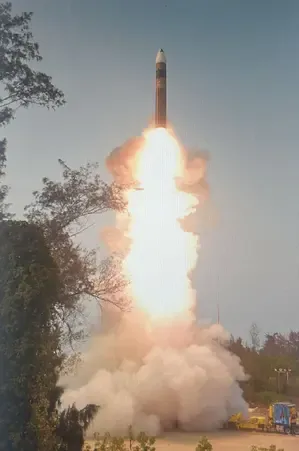
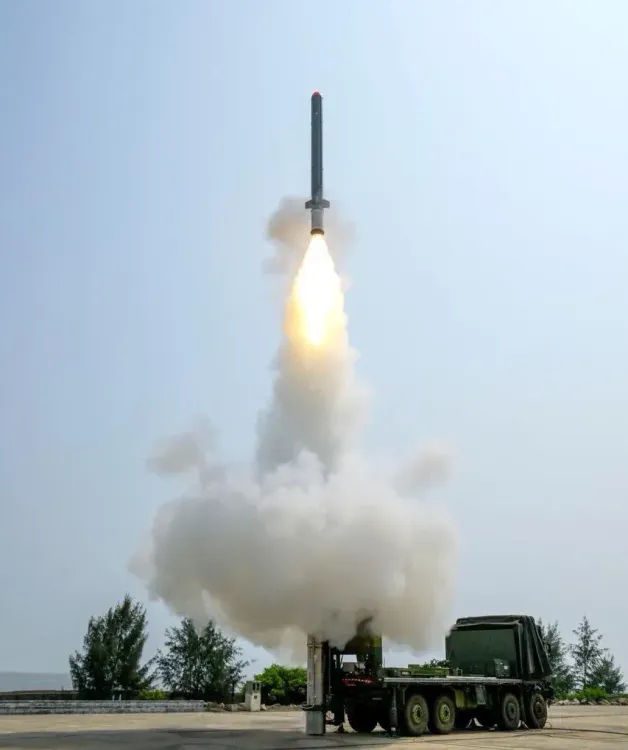
India's arsenal has evolved considerably in reach. Where earlier nuclear-capable systems were limited to ranges of up to 2,000 km, India has progressively inducted missiles capable of striking targets at 3,000 km and beyond. The report noted that India possessed 24 Agni-V nuclear-capable intercontinental ballistic missiles as of January 2026, with the Agni-V carrying a claimed range of up to 5,000 km — sufficient to cover virtually all of China's strategic depth.
This is not an incremental upgrade; it represents a qualitative shift in deterrence posture, moving India from a primarily sub-continental deterrent to one with genuine inter-theatre reach.
The China-Pakistan Axis as a Strategic Driver
The Nikkei Asia analysis highlighted that India's modernisation calculus is increasingly shaped by the China-Pakistan strategic partnership. Beijing's growing military footprint — from the Line of Actual Control (LAC) to its naval presence in the Indian Ocean — has compelled Indian planners to recalibrate. This comes amid heightened regional tensions and a post-Galwan security environment that has made the China threat more operationally immediate than at any point in recent decades.
Notably, the report also flagged the expanding roles of drones, cyber operations, and precision-strike weapons in shaping modern warfare — domains where India is accelerating investment, partly informed by lessons from recent regional conflicts.
Domestic Defence Production Surges
India's push toward indigenous manufacturing has yielded measurable results. Domestic defence production climbed from ₹46,400 crore in FY2015 to ₹1.78 lakh crore in FY2025, according to the report. Defence exports reached a record ₹38,400 crore in the same period, reflecting both policy intent and industrial capacity that did not exist a decade ago.
India is also reportedly pursuing technology-transfer-based defence partnerships to accelerate capability development in advanced drones and long-range weapons — areas where self-reliance remains a work in progress. With regional security dynamics continuing to shift, India's defence modernisation trajectory shows little sign of slowing.
Point of View
Not just doctrine. The Agni-V numbers are telling — 24 operational ICBMs is a meaningful capability, not a symbolic one. What the report does not fully interrogate is whether India's command-and-control architecture and second-strike survivability have kept pace with the expansion of warheads and delivery systems. Quantity without resilience is a vulnerability, not a deterrent. The domestic production surge is real, but the gap between production value and genuine technological self-reliance — particularly in propulsion, seekers, and electronic warfare — remains significant and underreported.
NationPress
24 Sept 2026
Frequently Asked Questions
Why is India developing long-range strike capabilities focused on China?
According to a SIPRI assessment cited by Nikkei Asia, India's strategic planning has shifted toward capabilities aimed at deterring China due to Beijing's growing military power and its deepening defence partnership with Pakistan. This has driven India to induct missiles capable of striking targets at 3,000 km and beyond, including the Agni-V with a claimed range of 5,000 km.
How much does India spend on defence, and how does it rank globally?
India's military expenditure rose 7.5% to $92 billion in 2025, making it the world's fifth-largest military spender, according to SIPRI data. This reflects sustained budgetary priority given to modernisation amid evolving regional threats.
How many nuclear warheads does India possess?
SIPRI estimated that India possessed approximately 190 nuclear warheads as of January 2026. India also held 24 Agni-V nuclear-capable intercontinental ballistic missiles as of the same date, with the missile carrying a claimed range of up to 5,000 km.
How has India's domestic defence production changed in the past decade?
Domestic defence production grew from ₹46,400 crore in FY2015 to ₹1.78 lakh crore in FY2025, according to the report. Defence exports also reached a record ₹38,400 crore, reflecting significant industrial and policy progress in indigenisation.
What role are drones and cyber capabilities playing in India's defence strategy?
The SIPRI-backed analysis highlighted the growing importance of drones, cyber operations, and precision-strike weapons in modern warfare. India is reportedly accelerating investment in these domains, informed in part by lessons from recent regional conflicts and through technology-transfer-based defence partnerships.